
Water parameters
Overview
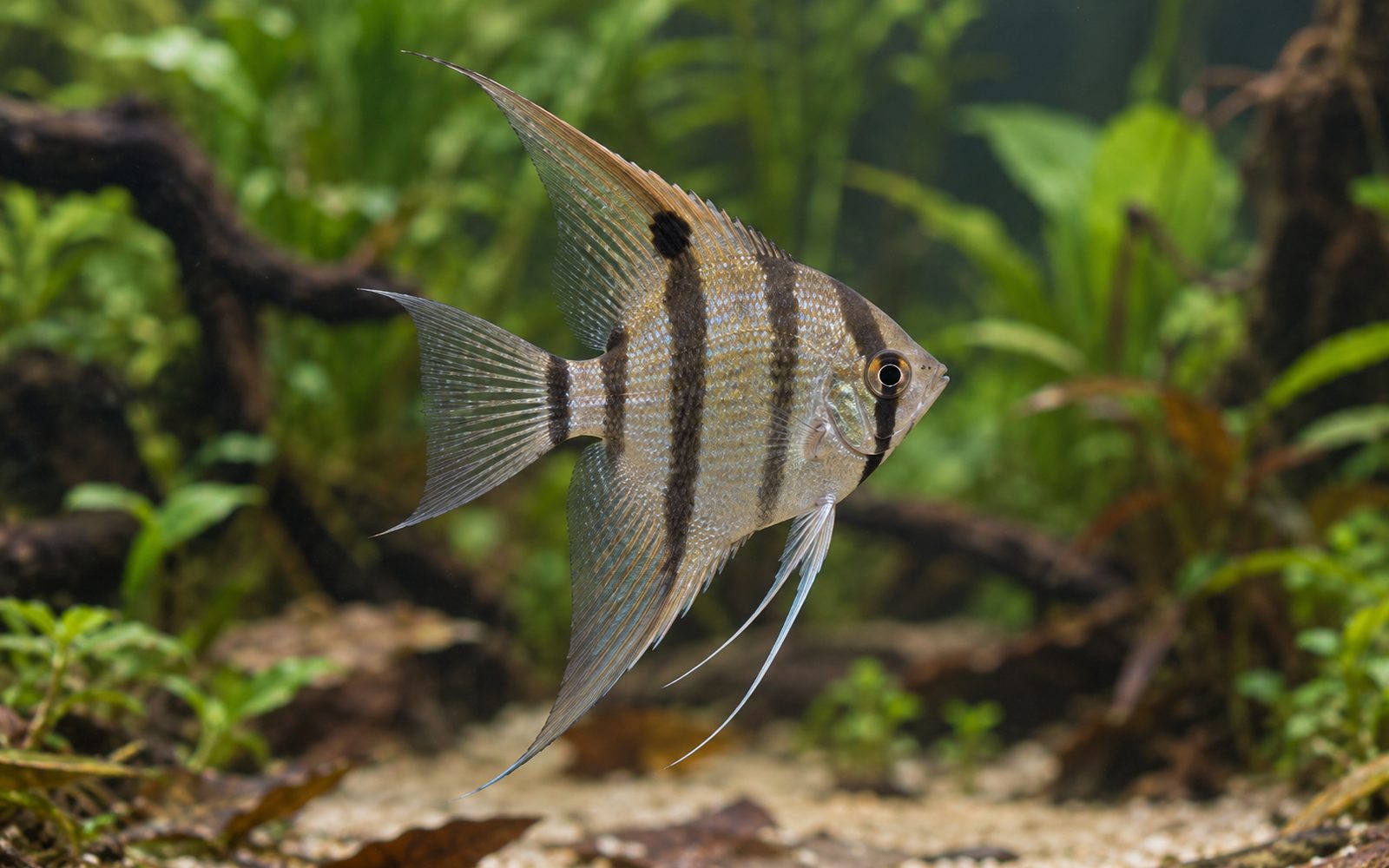
Leopold's angelfish is the smallest and least known species of the genus Pterophyllum. The dark vertical bands on its silver body resemble those of the common angelfish, but its forehead profile is straight and there is a distinct dark spot at the base of the dorsal fin. Its fins are shorter, so its body looks stockier. It is rare in the trade and is sold as wild-caught or as a small number of captive-bred fish.
Tank Setup
- At least 200 liters for a group of 4–6; water height of 45–50 cm or more.
- Soft, slightly acidic water at 27–29°C; a tannin-rich setting with leaves and roots.
- Vertical roots, tall plants and dim light; a quiet corner.
- A 25–30% water change weekly; avoid sudden changes in values.
Diet
Omnivorous. Alongside small granules and flakes, offer frozen brine shrimp, bloodworms and mosquito larvae. Newly arrived fish may at first accept only frozen food.
Behavior and Compatibility
Calm and shy; it becomes bolder in a group. Like the common angelfish, it may eat small fish that fit in its mouth.
Good companions: medium-sized tetras (rummy-nose tetra, Congo tetra), corydoras, otocinclus, Biotodoma, discus.
Avoid: very small fish such as neons and cardinals, fin-nipping barbs, aggressive cichlids, shrimp.
A short profile for this species
The Leopold's Angelfish page has the basics, but the sections below have not been written yet. If you keep this species, write a section from your own experience; it will be published under your name after editor approval.
Tank mates
This list is calculated automatically from the species profile and grows as new species are added to the catalog. Try it in the planner for a definite answer.
Usually compatible
 Emerald Betta
 Altum Angelfish
 Firemouth Cichlid
 Cupid Cichlid
 Buffalohead Cichlid
 Chocolate Cichlid
 Discus
 Festivum
 Geophagus altifrons
 Geophagus surinamensis
Should not be kept together






Hobbyist notes
Things you won't find in books, learned by trial and error. The most helpful ones are on top.
Change history and contributors
- Page created · October 16, 2026