
Water parameters
Overview
Furcifer takes its name from its deeply forked, lyre-shaped tail with elongated tips (furcifer: fork-bearer). With a body that ranges from dark brown to gray and its large eyes, it is a species adapted to dim surroundings. Its most interesting trait is that it stays close to the ceilings of rock overhangs and caves, often turned upside down. It reaches around 14 cm. Although it looks shy, it determinedly defends its own cave.
Tank Setup
- 150 liters for a pair; deep caves and large rock overhangs are essential.
- Dim or moderate light; shaded areas make the fish more visible.
- pH 8–9, hard and stable water; a 25% water change every week.
- The rocks must be built securely so that they form wide ceilings underneath.
Diet
Carnivorous. Cichlid granules, frozen mysis, brine shrimp and cyclops are suitable; it mostly catches food near the cave mouth.
Behavior and Compatibility
It lives in and around its cave and rarely comes out into open water. It becomes harsh toward its own species and fish competing for caves. It lays its eggs on the cave ceiling, and the pair guards the fry.
Good companions: Cyprichromis, Paracyprichromis, Altolamprologus, shell dwellers (in a separate sandy section).
Avoid: Neolamprologus and Julidochromis species that compete for the same caves, large quarrelsome cichlids, shrimp.
A short profile for this species
The Neolamprologus furcifer page has the basics, but the sections below have not been written yet. If you keep this species, write a section from your own experience; it will be published under your name after editor approval.
Tank mates
This list is calculated automatically from the species profile and grows as new species are added to the catalog. Try it in the planner for a definite answer.
Usually compatible
 Yellow Regal Peacock
 Egyptian Mouthbrooder
 Yellow Tail Acei
 Butterfly Goodeid
Anatolian Killifish
Eastern Happy
Red Shoulder Peacock
Butterfly Goodeid
Anatolian Killifish
Eastern Happy
Red Shoulder Peacock
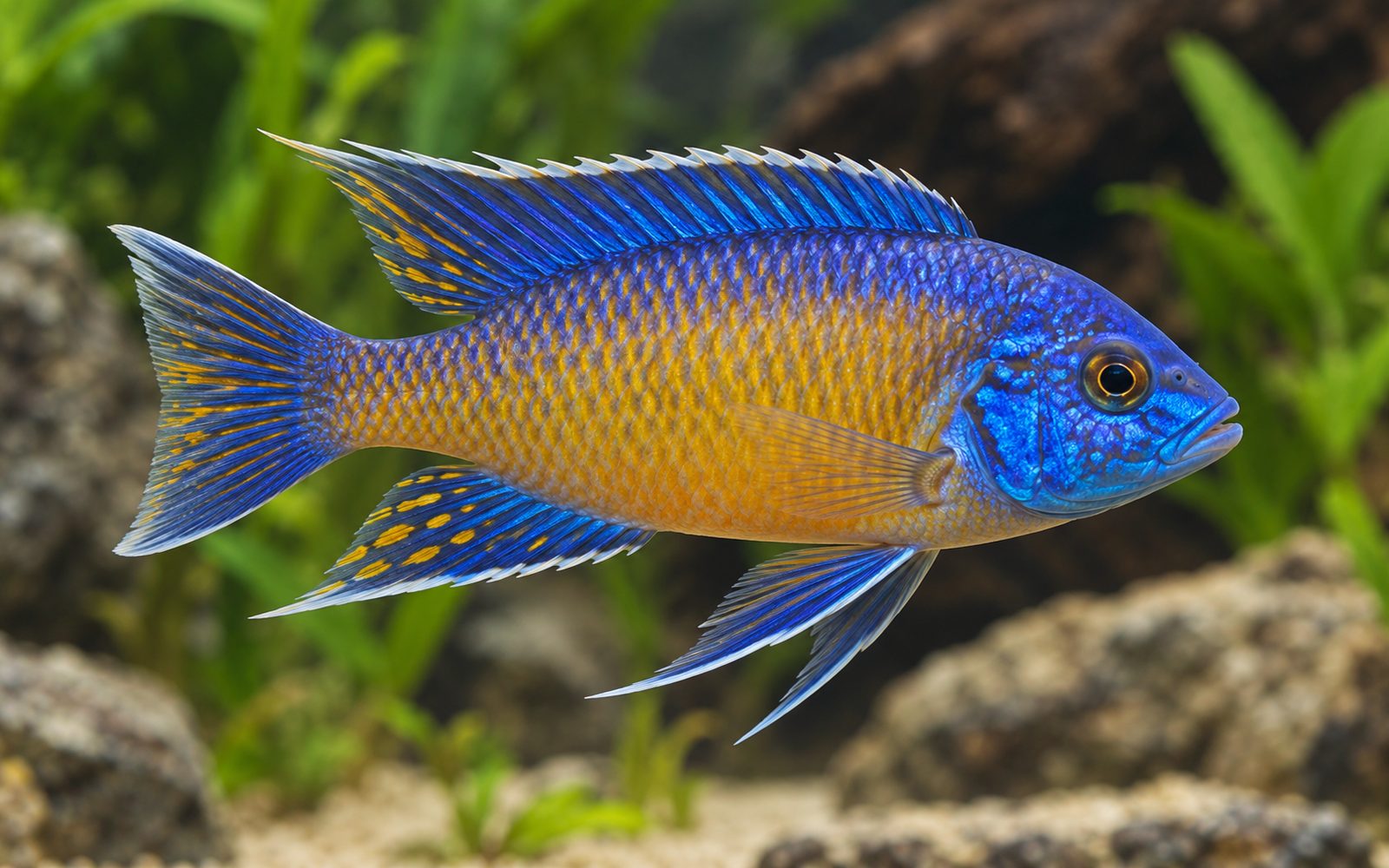 Fairy Cichlid
Blue Orchid Peacock
Sulphur Head Peacock
Fairy Cichlid
Blue Orchid Peacock
Sulphur Head Peacock
Should not be kept together




Hobbyist notes
Things you won't find in books, learned by trial and error. The most helpful ones are on top.
Change history and contributors
- Page created · October 16, 2026