
Water parameters
Overview
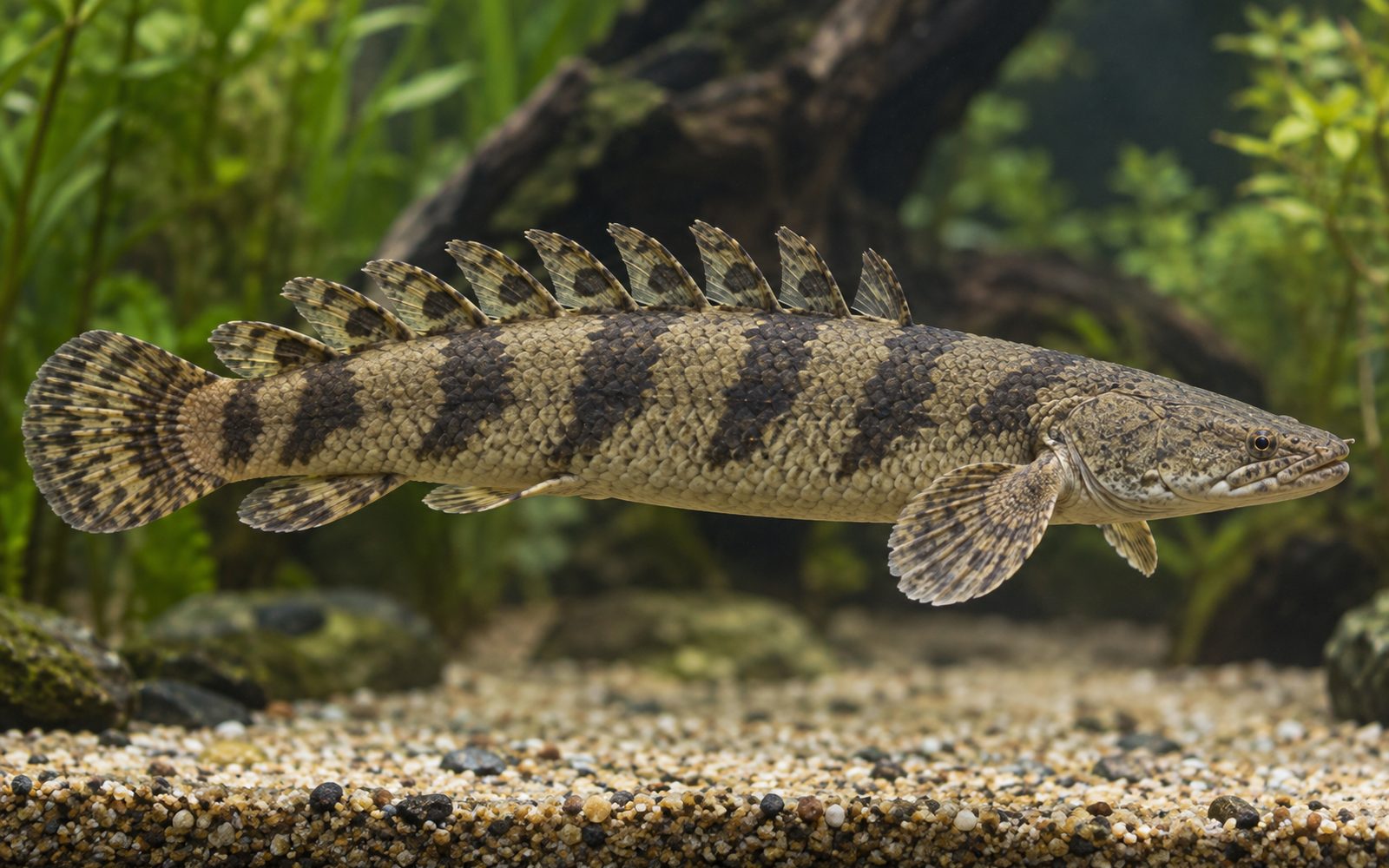
The saddled bichir is recognized by the dark saddle markings that slant down from its back to its flanks, its broad head and its lower jaw protruding beyond the upper jaw. It is one of the largest and thickest-bodied bichir species; in the aquarium it can exceed 60 cm.
Like other bichirs it breathes air from the surface and hunts at night. It grows slowly and lives long; when buying a juvenile, take into account its adult size and a care commitment that can exceed ten years.
Natural Habitat
It lives in the large rivers of West and Central Africa, along shallow, vegetated banks and in floodplains. During the day it lies motionless among plants and roots; after dark it roams along the banks, feeding on fish, frogs and large crustaceans. When oxygen in the water drops, it survives these conditions by gulping air from the surface.
Its eyesight is poor, but its sense of smell is highly developed. The tubular nostrils at the tip of its snout constantly sample the water, which lets it find food even in the dark.
Tank Setup
- Volume: at least 800 liters for an adult; a 200 × 70 cm footprint is recommended.
- Lid: a tight, heavy lid; it is prone to escaping.
- Decor: sand substrate, large roots and pipes; plenty of open floor space.
- Filter: strong filtration, 30% water change weekly; large food items foul the water quickly.
Diet
Carnivorous. Fish fillet, shrimp, mussels, worms and large sinking pellets. Adults are fed every two to three days. Individuals accustomed to live feeder fish may eventually refuse frozen food; it is best to accustom them to a variety of frozen foods while young.
Behavior and Compatibility
Calm and slow-moving, but its mouth is very wide and it can swallow fish nearly half its own length.
Good companions: large, calm species: arowanas, clown knifefish, tigerfish, large cichlids and large catfish.
Avoid: any fish that could fit in its mouth, shrimp.
Group and Colony Structure
Usually kept alone; in a very large aquarium it can live with other bichirs of similar size.
Breeding
Breeding in a home aquarium is very rare; most of those sold in the trade are bred on farms in Asia.
Health and Common Problems
- Escape: getting out through gaps in the lid and drying out.
- Obesity and fatty buildup: in overfed fish.
- Skin wounds: from sharp decor and hard substrate.
- Blocked air breathing: if the water level touches the lid it cannot take air from the surface; leave an air gap.
Sexing
Males have a thicker, broader anal fin.
Tank mates
This list is calculated automatically from the species profile and grows as new species are added to the catalog. Try it in the planner for a definite answer.
Usually compatible
 Spotted Tilapia
 Chocolate Cichlid
 Flowerhorn
 Jack Dempsey
 Redhead Cichlid
 Red Devil Cichlid
 Red Terror Cichlid
 Cryptocoryne Parva
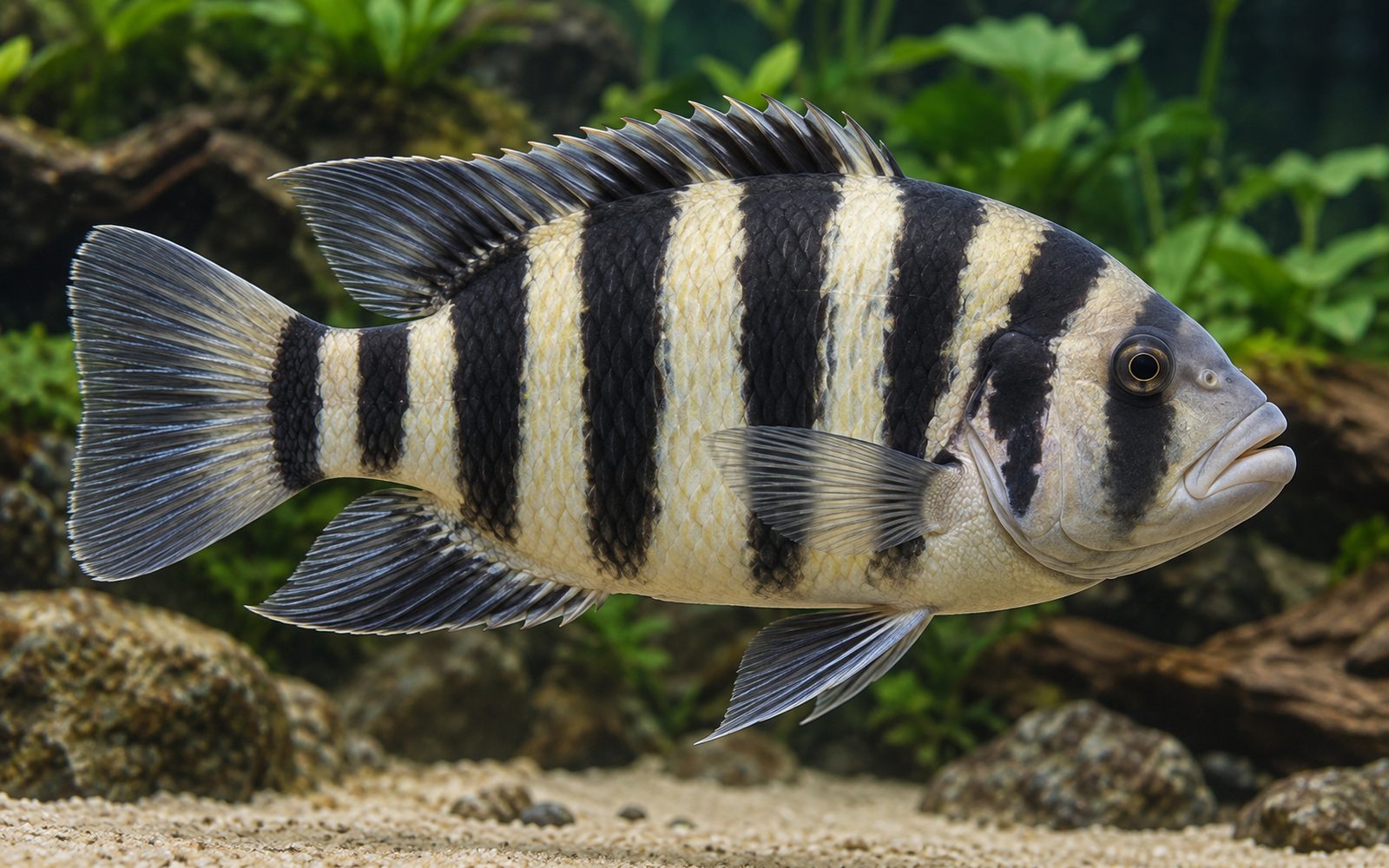 Zebra Tilapia
Adonis Pleco
Zebra Tilapia
Adonis Pleco
Should not be kept together








Hobbyist notes
Things you won't find in books, learned by trial and error. The most helpful ones are on top.
Change history and contributors
- Page created · October 16, 2026