
Water parameters
Overview
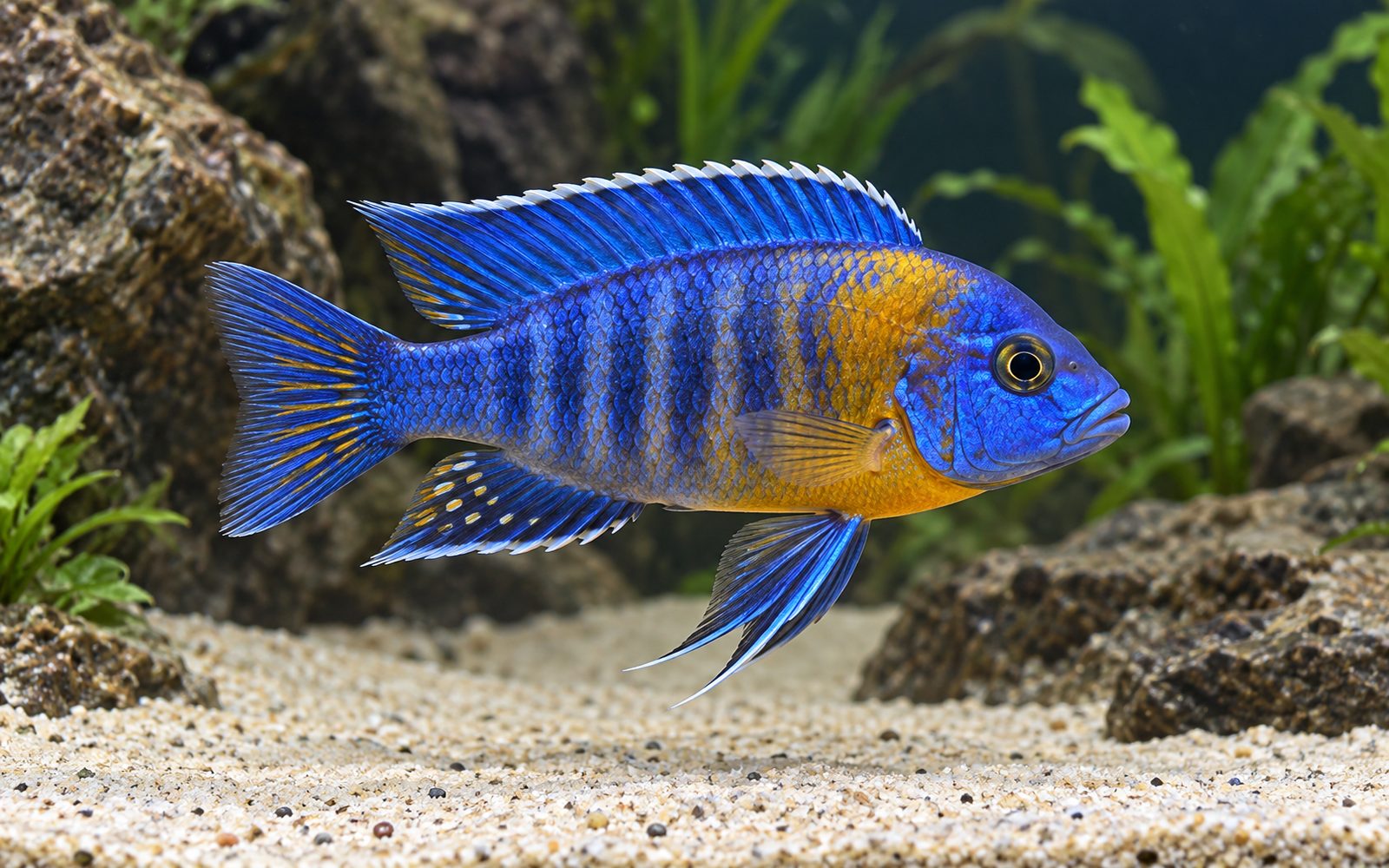
The genus Aulonocara is known as the "peacock cichlids" because of the bright colors of the males. The forms most often seen in the aquarium are the blue-yellow local variants of A. stuartgranti and its relatives. In addition, selectively bred and hybrid forms such as "OB", "Red Rubin" and "Sunshine" are also common.
Unlike the mbuna (Labidochromis, demasoni), they are a calmer group that hunts over sandy areas. That is why they are often bullied in the same aquarium as mbuna.
Natural Habitat
It lives in Lake Malawi's transition zones where sand meets rock, at depths of 5–40 m. Using the large sensory pits on its head, it detects and hunts insect larvae and small crustaceans in the sand.
Tank Setup
- Volume: At least 300 liters and 150 cm of length; a wide sandy area with rock groups at the edges.
- Substrate: Fine sand (essential for its feeding behavior).
- Water: Hard and alkaline (pH 7.8–8.5); Malawi salt or aragonite substrate. A 30–50% water change every week.
Diet
Mainly carnivorous. Quality cichlid granules, frozen mysis and brine shrimp, cyclops. Bloodworms and foods containing mammalian meat can lead to Malawi bloat; they should not be given.
Behavior and Compatibility
Males put on color and fin displays for each other and set up territories over the sand. It is calmer than the mbuna; when kept with aggressive mbuna its colors fade and it hides.
Good companions: other Aulonocara species (in different colors), calm Malawi haplochromines (Copadichromis), synodontis catfish suited to hard water.
Avoid: quarrelsome mbuna (demasoni and similar), community fish, shrimp and snails.
Group and Colony Structure
There are two common setups:
- Harem: 3–4 females per male; for those who want to breed them.
- All-male aquarium: 6–10 males of different colors together; since there are no females, the males show their brightest colors all the time and the aggression is spread out.
Small groups such as two males of the same color or one male and one female are problematic. Because different Aulonocara species can hybridize with each other, only one species should be kept in a harem aquarium.
Breeding
A mouthbrooder. The male digs a nest pit in the sand and invites the female; the female takes the eggs into her mouth and carries them for 3–4 weeks. Once released, the fry grow on finely crushed food.
Health and Common Problems
- Malawi bloat: Wrong diet and stress.
- Color loss and hiding: Incompatible (aggressive) tankmates.
Sexing
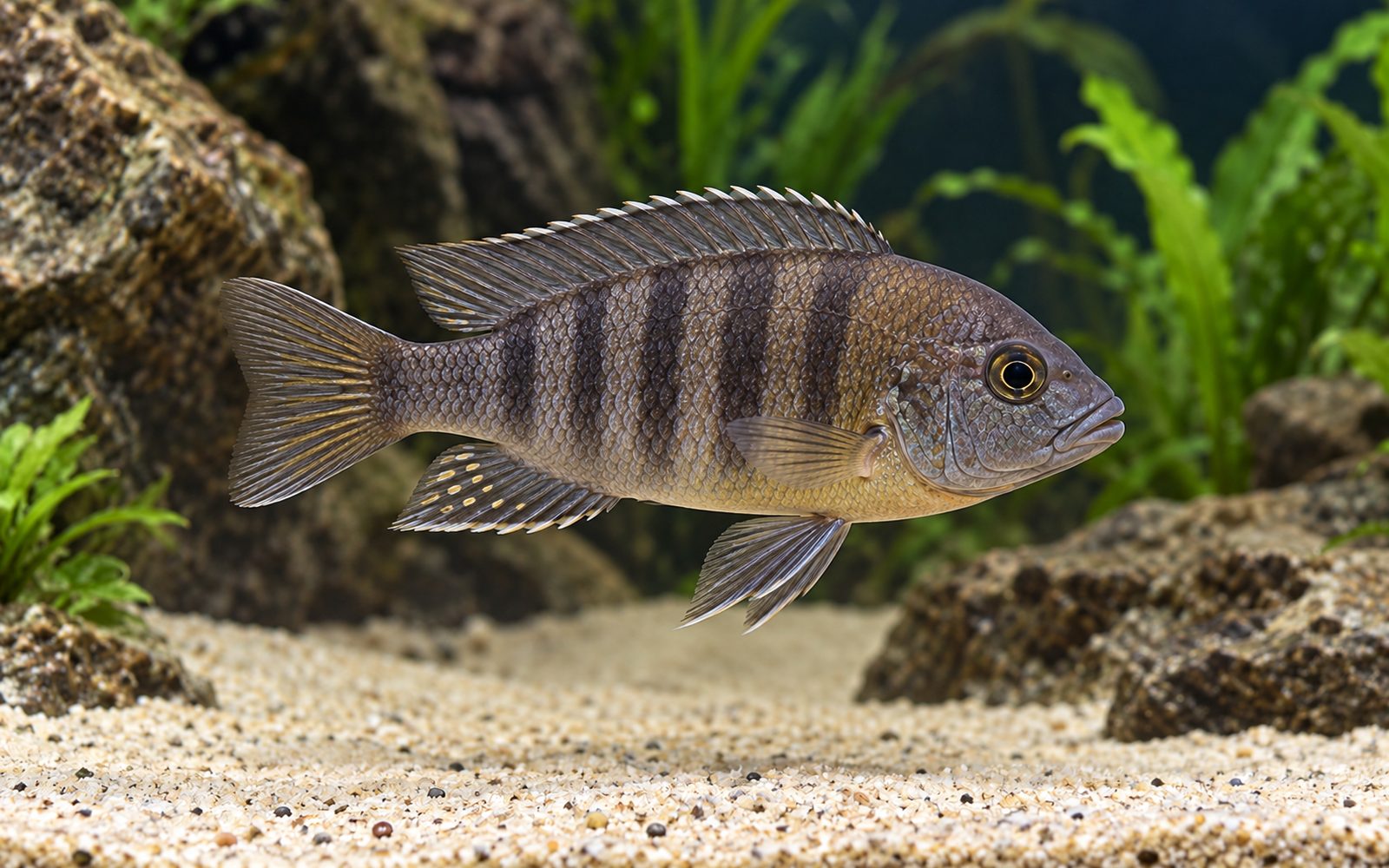
Telling them apart is easy: mature males are bright blue, yellow or orange with long fins. Females are brown-gray with dark vertical bands and plain. Juveniles look like females; males color up at 6–12 months.
Tank mates
This list is calculated automatically from the species profile and grows as new species are added to the catalog. Try it in the planner for a definite answer.
Usually compatible
 Yellow Regal Peacock
 Firemouth Cichlid
 Rainbow Cichlid
 Pearl Cichlid
 Redhead Cichlid
 Red Hump Eartheater
 Egyptian Mouthbrooder
 Yellow Tail Acei
 Butterfly Goodeid
American Flagfish
Butterfly Goodeid
American Flagfish
Should not be kept together





Hobbyist notes
Things you won't find in books, learned by trial and error. The most helpful ones are on top.
Change history and contributors
- Page created · October 16, 2026