
Water parameters
Overview
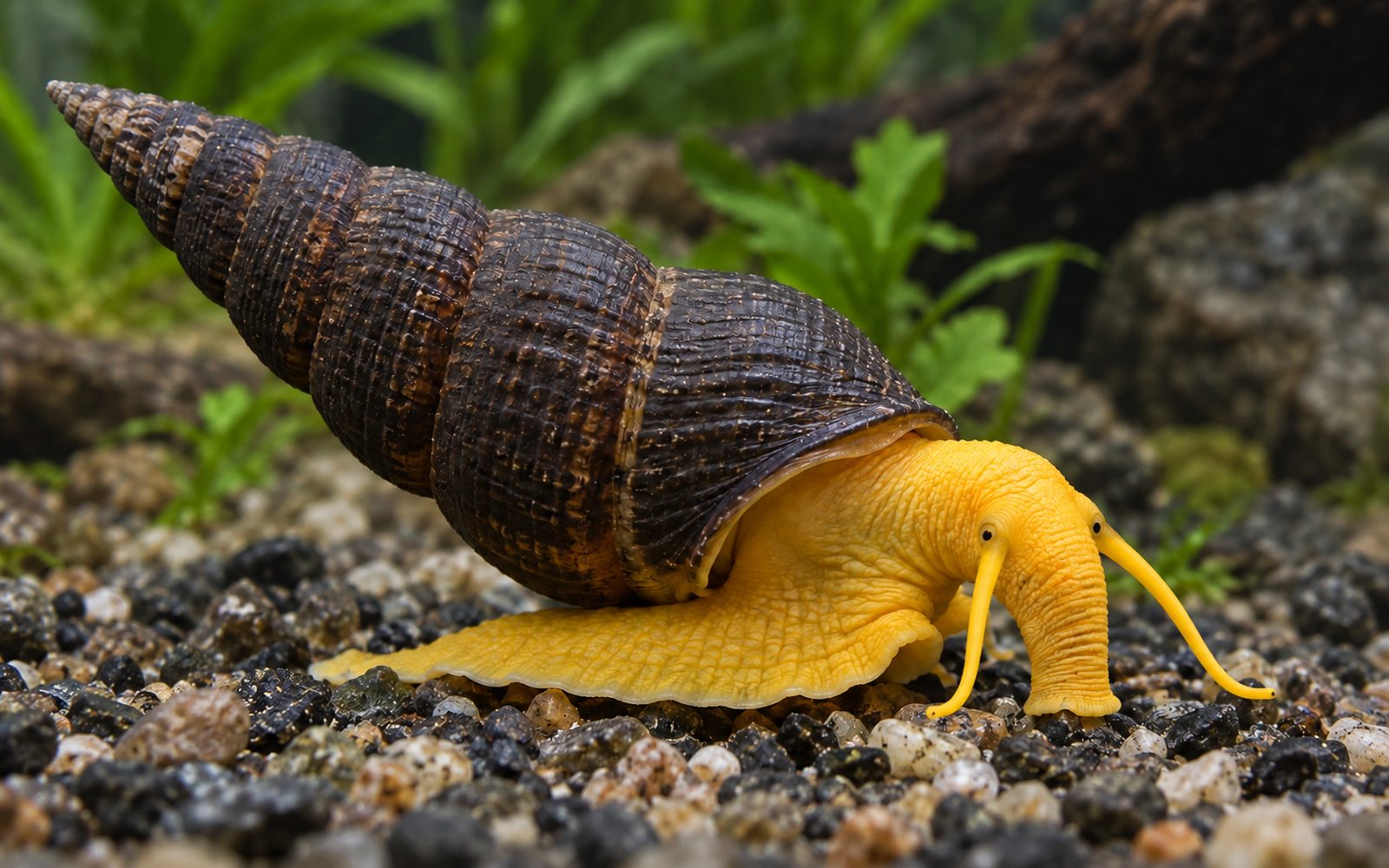
Rabbit snails include many species of the genus Tylomelania, which is endemic to the lakes and streams of the island of Sulawesi. The ones most often seen in the hobby have yellow or orange bodies, but there are also black, brown and spotted-bodied ones. Their shells are long, pointed and dark; depending on the species they grow from 5 cm to over 10 cm.
It takes its name from the broad, wrinkled snout at the front of its face and the long tentacles drooping to either side. It is a slow, calm and long-lived snail. The species name is often not given when they are sold; the care of the different species is largely the same.
Natural Habitat
It lives in the Malili lake system of Sulawesi (Matano, Towuti and surroundings) and in Lake Poso, as well as in the streams connected to these lakes. What these waters have in common is warmth, high pH and low to moderate hardness. Some species are found on sandy bottoms, others on rocky ones.
Tank Setup
- Volume: 60 liters or more for a few individuals.
- Water: 26–29°C, pH 7.5–8.5. Below 24°C it becomes inactive and weakens.
- Substrate: fine sand; some species like to bury themselves partly in the sand.
- Decor: stones and roots; the biofilm on these surfaces is an important food source.
- Copper: lethal to snails.
Diet
Omnivorous with a good appetite. It eats biofilm, algae, decaying leaves, sinking tablets, spirulina and blanched vegetables. If it goes hungry for a long time it may nibble soft-leaved plants; regularly fed individuals generally leave plants alone. Calcium-rich foods are beneficial for the shell.
Behavior and Compatibility
Completely peaceful. It feeds by slowly roaming over the substrate and stones throughout the day.
Good companions: Sulawesi shrimp (such as the cardinal shrimp), peaceful fish that like warm, alkaline water, nerite snails.
Avoid: snail-eating fish (clown loach, puffers), assassin snails (they may prey on the young and small individuals), panther crabs, crayfish.
Group and Colony Structure
The sexes are separate; a male and a female are needed for breeding. Since the sex cannot be determined externally, starting with a group of 4–6 individuals increases the chance of breeding. Reproduction is slow; it does not overrun the aquarium.
Breeding
It is a livebearer: every few weeks the female releases a single large white egg containing a developed young. The young soon breaks out of the shell and starts living directly on the substrate. While small, the young are vulnerable to fish and crayfish.
Health and Common Problems
- Shell erosion: low pH and low calcium; the tip of the shell may wear away over time.
- Low temperature: staying below 24°C for long periods leads to inactivity and death.
- Poisoning: copper and many antiparasitic medications are lethal.
Sexing
Cannot be distinguished externally. The individual that lays eggs is female.
Tank mates
This list is calculated automatically from the species profile and grows as new species are added to the catalog. Try it in the planner for a definite answer.
Usually compatible










Hobbyist notes
Things you won't find in books, learned by trial and error. The most helpful ones are on top.
Change history and contributors
- Page created · October 16, 2026