
Water parameters
Overview
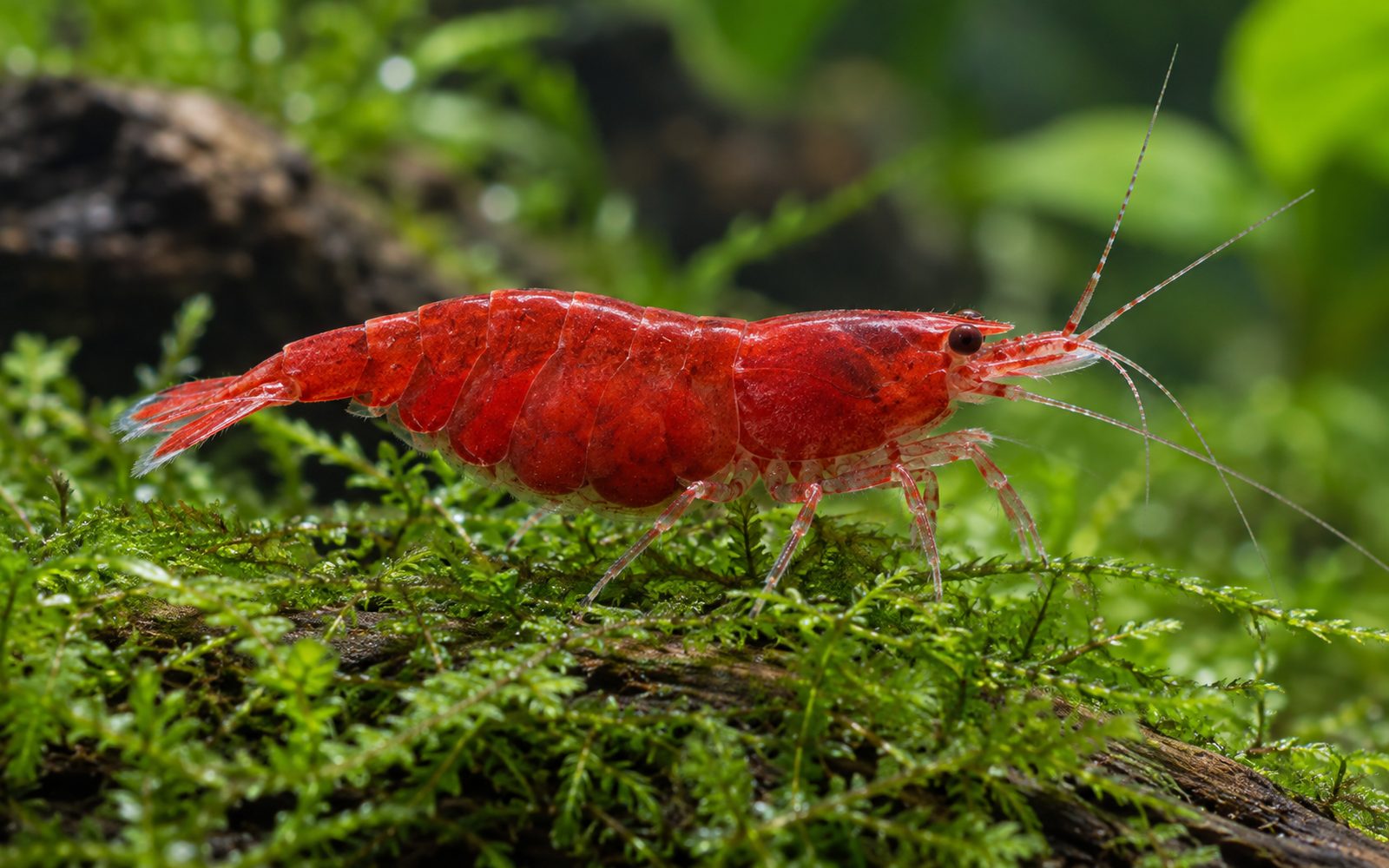
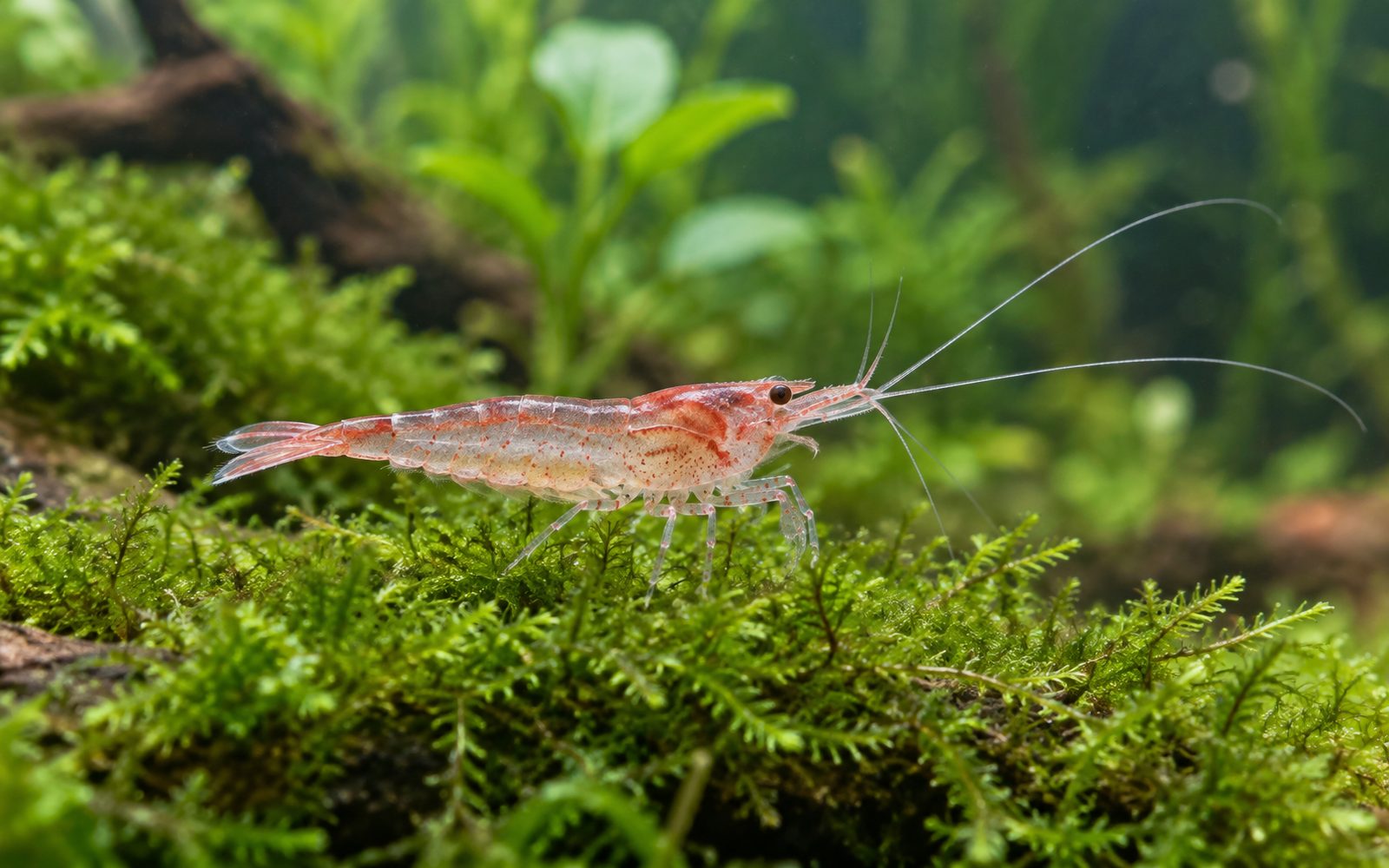
The red cherry is the selectively bred red form of Neocaridina davidi. The same species also comes in yellow, blue, orange, black and green forms; all have the same care. Depending on the intensity of the red, it is divided into quality grades such as "cherry", "sakura", "fire red" and "painted fire red".
It is both decorative and useful: it cleans up biofilm, algae, leftover food and decaying plant matter. Easy to breed and hardy, it is the starter species of the shrimp hobby.
Natural Habitat
It lives in the shallow, vegetated ponds, stream edges and rice paddies of East Asia. The wild form is a brown-green, camouflaged shrimp.
Tank Setup
- Volume: 20 liters or more. A larger volume keeps water parameters more stable.
- Maturity: A fully cycled aquarium with established biofilm.
- Filter: A sponge filter is ideal; fit a sponge over the intake of powered filters, or the young will be sucked in.
- Plants and moss: Java moss and similar mosses are both a food source and a hiding place.
- Water: 20–24°C is ideal, GH 6–12, KH 2–8. Copper is toxic to shrimp: avoid copper-containing medications, fertilizers and some snail treatments.
Diet
Omnivorous. The biofilm in the aquarium is its main food; in addition, give shrimp food, spirulina tablets, blanched spinach or zucchini and dried Indian almond (catappa) leaves. Feed sparingly: remove food not eaten within 2–3 hours. Overfeeding is the most common source of problems in a shrimp aquarium.
Behavior and Compatibility
Completely peaceful. It is more relaxed and visible in a group; starting with at least 10 individuals is recommended.
Good companions: Otocinclus, nerite snails, small rasboras and tetras (they leave adults alone but may eat some of the young). Those who want zero losses of young keep the shrimp on their own.
Avoid: Bettas (most bettas hunt shrimp), angelfish, cichlids, goldfish, large loaches other than kuhlis, and any fish whose mouth can fit a shrimp.
Group and Colony Structure
The red cherry is thought of as a colony: the goal is not a few shrimp but a self-sustaining population.
- Start the colony with at least 10, preferably 15–20 shrimp. In colonies started with small numbers, losses can wipe out the group before it has a chance to breed.
- A mix of sexes is essential; a female-heavy start helps the colony grow faster.
- In good conditions 20 shrimp can reach hundreds within a few months. A 20–30 liter aquarium will eventually support 100–200 shrimp.
- To maintain color quality, selection is made so that only the reddest individuals breed, and pale individuals are removed. Different Neocaridina colors are not kept in the same colony.
Breeding
It breeds on its own. The female carries a yellow-green cluster of eggs on her back called the "saddle"; after mating she moves the eggs under her abdomen and carries them for about 30 days, fanning them. There is no larval stage: tiny but fully formed shrimp hatch from the eggs. If plants and moss are plentiful, most of the young survive.
Different color forms interbreed and revert to the wild brown color after a few generations; to keep the colors, only one color should be kept.
Health and Common Problems
- Failed molts: The shrimp gets stuck while molting and dies (the "white ring"). Usually caused by sudden water changes or unsuitable GH; do small, frequent water changes.
- Sudden mass deaths: Copper, pesticides (agricultural chemicals on plants) or ammonia. Rinse new plants thoroughly or use "tissue culture" plants.
- Vorticella and internal parasites: White, fuzzy growths on the shell; improve water quality.
Sexing
Females are larger, darker in color and have a wider underside; mature females show an egg "saddle" on the back. Males are smaller, slimmer and paler.
Tank mates
This list is calculated automatically from the species profile and grows as new species are added to the catalog. Try it in the planner for a definite answer.
Usually compatible
 Flame Tetra
 Blackfin Corydoras
 Polystictus Corydoras
 Emerald Cory
 Emerald Dwarf Rasbora
 Porthole Catfish
 Cryptocoryne Parva
 Gold Spot Pleco (L001)
 European Bitterling
 Adolfo's Cory
Should not be kept together






Hobbyist notes
Things you won't find in books, learned by trial and error. The most helpful ones are on top.
Change history and contributors
- Page created · October 16, 2026