
Water parameters
Overview
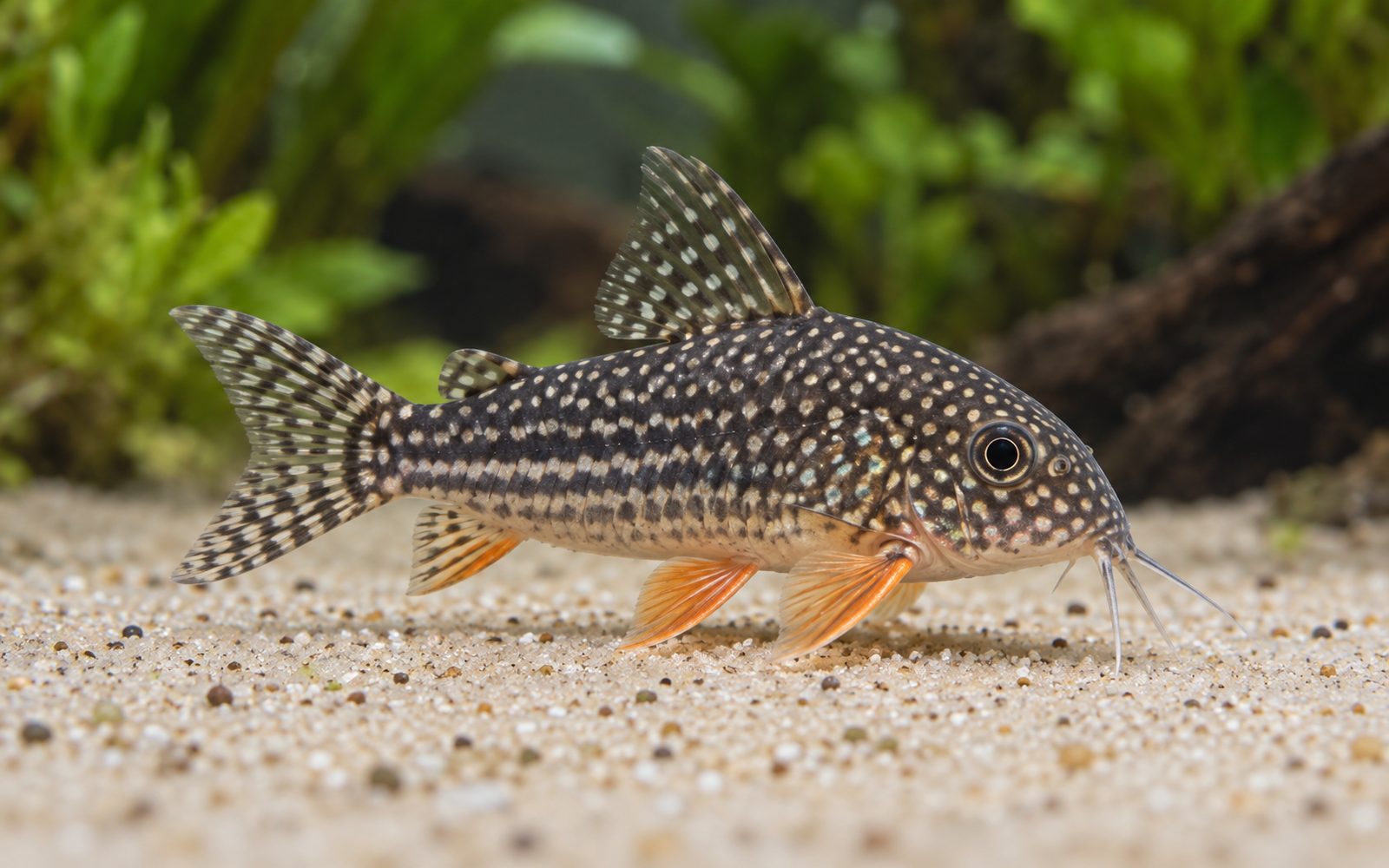
With dense white spots covering its dark gray-black body and orange pectoral and pelvic fins, the sterbai cory is one of the most beautiful corydoras. Its real value is that, unlike many corydoras, it can tolerate 28–29°C for long periods; this makes it the classic bottom fish for discus, ram and cardinal tetra aquariums. It is long-lived: individuals over 15 years old are known.
Natural Habitat
It lives in warm, clear streams and river branches with sandy bottoms in the Guaporé River basin.
Tank Setup
- Volume: at least 80 liters for a group of 6–10; a large footprint.
- Substrate: fine, rounded sand.
- Water: 25–28°C; soft to moderately hard, clean and oxygen-rich.
Diet
Sinking tablets and granules, frozen bloodworms, brine shrimp. In discus aquariums it also cleans up leftover food, but it must be fed separately.
Behavior and Compatibility
Extremely peaceful. In a group the fish roam the bottom together and sift through the sand.
Good companions: discus, ram, cardinal tetra, rummy-nose tetra, apistogrammas, angelfish.
Avoid: aggressive cichlids that claim the bottom, large and predatory fish.
Group and Colony Structure
At least 6, ideally 10 or more individuals. In a large group it is more active and visible. For breeding, a ratio of 2 males to each female improves spawning success.
Breeding
Like other corydoras, spawning is triggered by a large, somewhat cooler water change; the female sticks the eggs to the glass and leaves. The eggs hatch in 4–5 days.
Health and Common Problems
It is hardy. Barbel erosion occurs on dirty or sharp substrate; it is sensitive to nitrate buildup.
Sexing
Viewed from above, females are broader and plumper; males are smaller and slimmer, with slightly longer pectoral fins.
Tank mates
This list is calculated automatically from the species profile and grows as new species are added to the catalog. Try it in the planner for a definite answer.
Usually compatible
 Flame Tetra
 Blackfin Corydoras
 Polystictus Corydoras
 Emerald Betta
 Emerald Cory
 Porthole Catfish
 Keyhole Cichlid
 Cupid Cichlid
 Geophagus altifrons
 Geophagus surinamensis
Should not be kept together






Hobbyist notes
Things you won't find in books, learned by trial and error. The most helpful ones are on top.
Change history and contributors
- Page created · October 16, 2026