
Water parameters
Overview
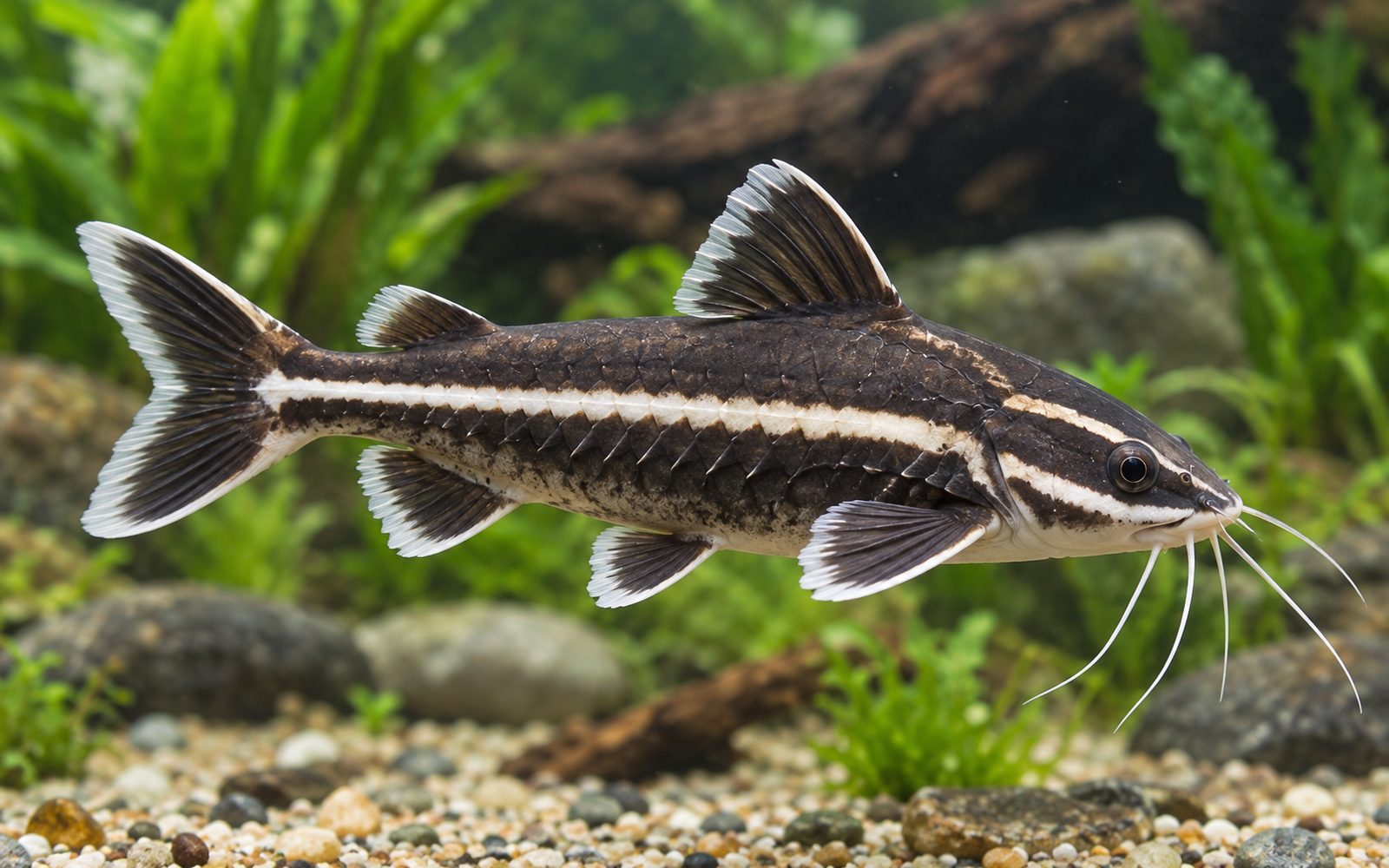
The family Doradidae are the "thorny catfish", which carry spiny bony plates along the sides of the body. The striped Raphael catfish is the member of this family seen most often in aquariums. By rubbing its pectoral fin spines in their sockets it produces creaking or grunting sounds; this is where the word "talking" in its Turkish and English names comes from. These sounds are heard most when the fish is taken out of the water or feels threatened.
For many years it was sold as Platydoras costatus; today the great majority of fish in the trade are considered to be P. armatulus. It is very hardy and under the right conditions can live more than 20 years, which means a long-term commitment.
Natural Habitat
It lives in the large river systems of South America, in slow-flowing tributaries, lakes and flooded areas. It spends the day under sunken trees, roots and leaf litter or in hollows in the banks, and forages on the bottom at night.
Tank Setup
- Volume: at least 200 liters and 100–120 cm of length for one or two individuals.
- Decor: caves, root hollows or pipes it can fit into. It often wedges itself into a narrow crevice and shows only its barbels.
- Substrate: soft sand; it occasionally buries itself in it.
- Water: 23–27°C, pH 6.0–7.5; it adapts to a wide range.
- Filter: as a large bottom fish it needs strong filtration and weekly water changes.
Diet
Omnivorous and greedy. It eats sinking granules and tablets, frozen bloodworms, mysis, pieces of shrimp and vegetable tablets. Because it eats snails shell and all, it is useful for controlling snail outbreaks. Leave the main feeding for the evening; over time it learns to come out when food is offered during the day as well.
Behavior and Compatibility
A very peaceful and calm species that spends most of the day hiding. While roaming at night it may eat fish small enough to fit in its mouth — especially neon-sized species sleeping near the bottom.
Good companions: medium to large peaceful fish: large tetras, barbs, gouramis, angelfish, American cichlids, plecos.
Avoid: small schooling fish such as neons, dwarf shrimp, tanks where snails are being bred.
Group and Colony Structure
It lives perfectly well alone. It is tolerant of its own kind; in a large aquarium 3 or more individuals may even rest side by side in the same cave. The sex ratio does not matter.
Breeding
Breeding in the home aquarium is very rare. Fish sold in the trade are mostly produced on farms with hormone treatment.
Health and Common Problems
- Net hazard: the pectoral spines and the hooks on the side plates get caught in nets; pulling the fish out by force injures it. Catch it with a container or plastic box.
- Spines: when handled it opens and locks its spines and can cause deep wounds.
- It is hardy; the real risks are copper-based medications and water left unmaintained for long periods.
Sexing
Difficult to tell apart externally. Mature females look plumper and wider when viewed from above.
Tank mates
This list is calculated automatically from the species profile and grows as new species are added to the catalog. Try it in the planner for a definite answer.
Usually compatible
 Porthole Catfish
 Keyhole Cichlid
 Firemouth Cichlid
 Cupid Cichlid
 Buffalohead Cichlid
 Festivum
 Geophagus altifrons
 Geophagus surinamensis
 Rainbow Cichlid
Should not be kept together





Hobbyist notes
Things you won't find in books, learned by trial and error. The most helpful ones are on top.
Change history and contributors
- Page created · October 16, 2026