
Water parameters
Overview
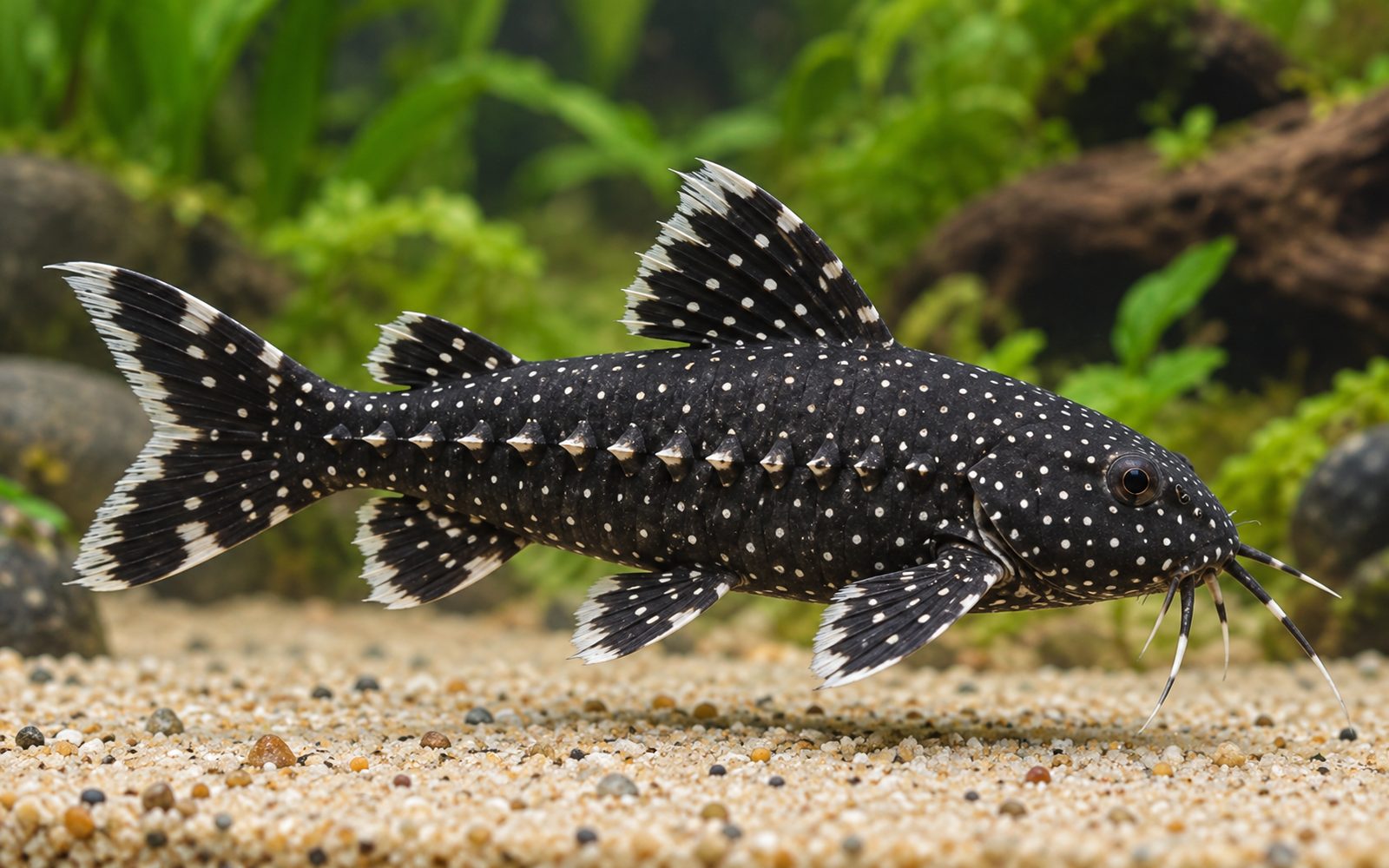
Agamyxis pectinifrons is the smaller, spotted relative of the striped Raphael catfish. Its coal-black body is covered in small white spots, with white bands on the tail and fin spines. It carries hooked bony plates along its flanks and strong, serrated spines in its pectoral fins. By rubbing these spines it produces creaking sounds.
Adults reach 14–15 cm and, in good conditions, live for more than 15 years. A very similar relative from Venezuela, Agamyxis albomaculatus, is sometimes sold under the same name in the trade; their care is identical.
Natural Habitat
It lives in slow-flowing river tributaries, lakes and flooded forest areas of the upper Amazon basin. It spends the day hiding in hollows of sunken trees, among roots and under thick layers of leaf litter.
Tank Setup
- Volume: at least 150 liters and 100 cm of length for one to three individuals.
- Decor: root hollows, caves or pipes; the fish likes to wedge itself into tight gaps.
- Substrate: soft sand with dried leaves on top.
- Lighting: dim corners; floating plants increase how often it is seen during the day.
- Water: 23–27°C, pH 6.0–7.5, soft to moderately hard water.
Diet
Omnivorous and not fussy. It eats sinking granules and tablets, frozen bloodworms, mysis, brine shrimp, worms and vegetable tablets. It happily hunts small snails. Feed after the lights go out; nighttime feeding suits its natural rhythm.
Behavior and Compatibility
A peaceful, calm fish that is shy during the day. It lives without problems alongside fish its own size and larger. It is reported to eat very small fish sleeping near the bottom while it roams at night. Over time it learns the feeding schedule and will poke its head out of its hiding place during the day when food is offered.
Good companions: medium-sized tetras, barbs, gouramis, angelfish, calm cichlids, corydoras, plecos.
Avoid: very small fish such as neons and rasboras, dwarf shrimp, tanks where snails are being bred.
Group and Colony Structure
It can live alone and is tolerant of its own kind. 2–3 or more individuals often rest together in the same hollow. The sex ratio does not matter.
Breeding
There are very few records of it being bred in home aquariums. The fish sold are mostly wild-caught. Quarantining new arrivals for a few weeks is a good precaution to avoid bringing wild parasites into the main tank.
Health and Common Problems
- Nets: the hooked plates and spines get caught in nets; catch it with a container.
- Spines: when handled it locks its spines, which can pierce the skin.
- It is hardy; poor water and copper-based medications are the main risks.
Sexing
Difficult to tell apart externally. Mature females look plumper and wider when viewed from above.
Tank mates
This list is calculated automatically from the species profile and grows as new species are added to the catalog. Try it in the planner for a definite answer.
Usually compatible
 Emerald Betta
 Emerald Cory
 Porthole Catfish
 Keyhole Cichlid
 Firemouth Cichlid
 Cupid Cichlid
 Buffalohead Cichlid
 Festivum
 Geophagus surinamensis
Should not be kept together







Hobbyist notes
Things you won't find in books, learned by trial and error. The most helpful ones are on top.
Change history and contributors
- Page created · October 16, 2026