
Water parameters
Overview
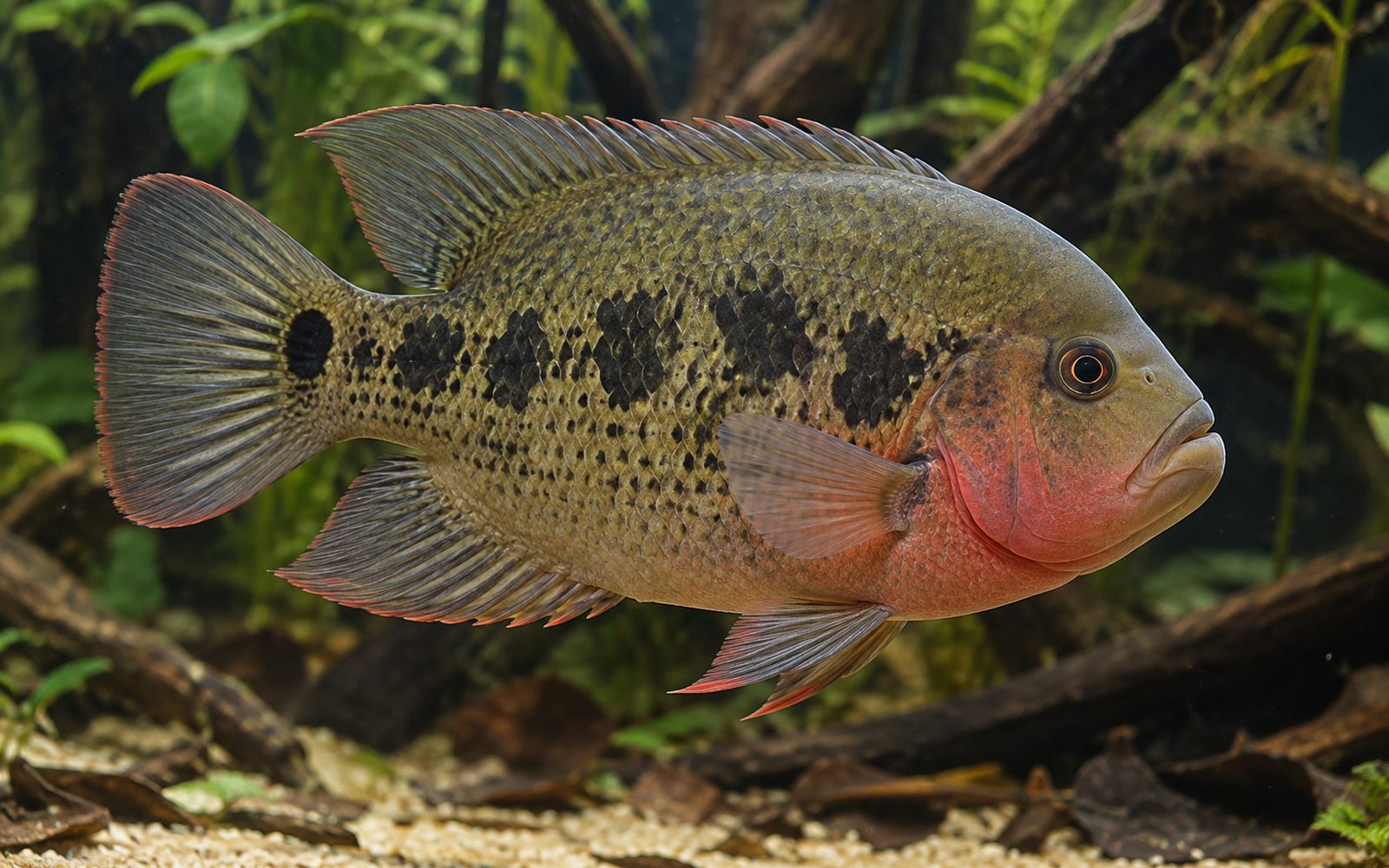
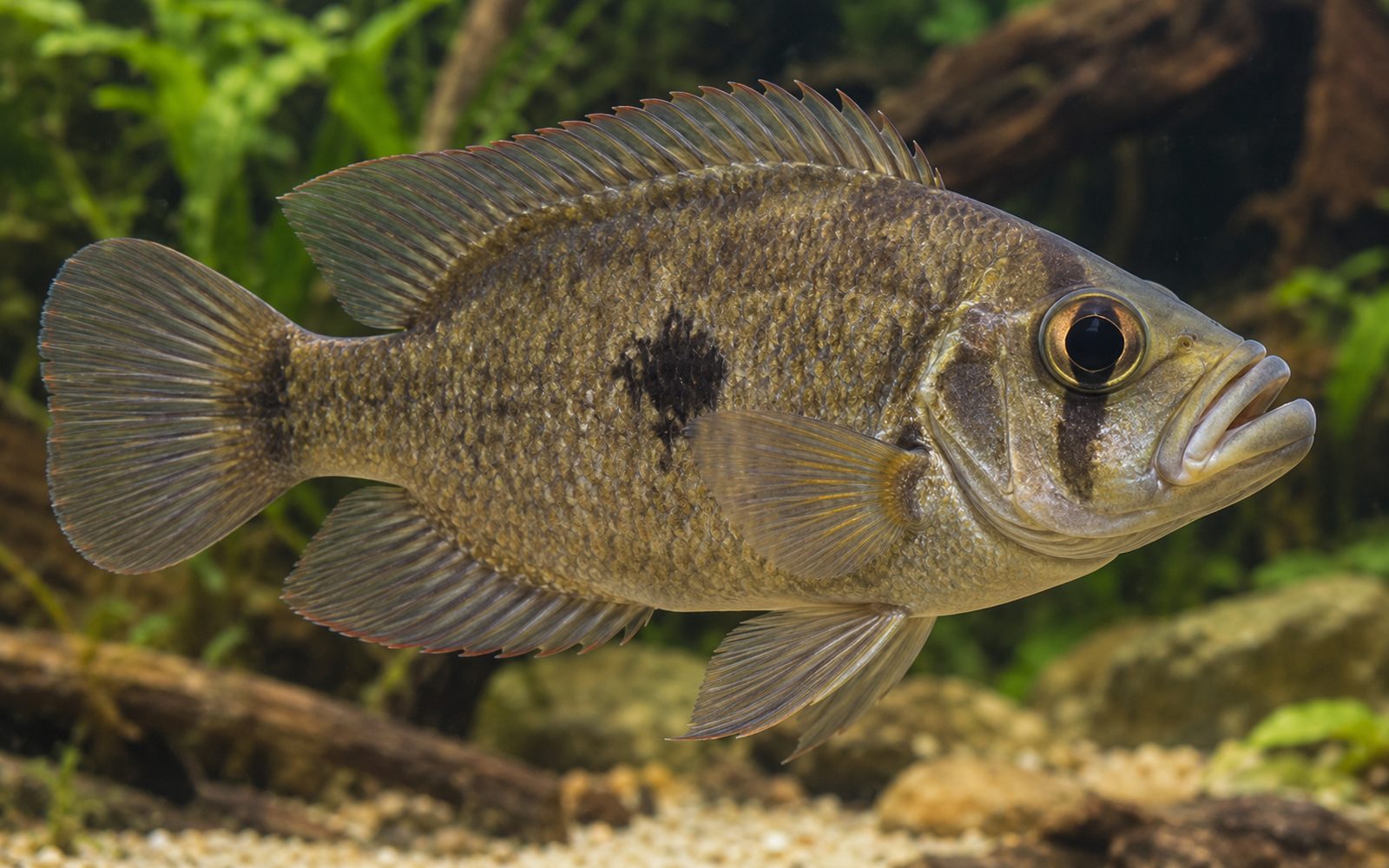
The true parrot cichlid is the original species that deserves the name "parrot": its mouth structure and facial profile are reminiscent of a parrot. Its greenish gray–olive body has dark blotches along the middle and a dark spot on the caudal peduncle; in mature fish the lower head and throat take on reddish–pink tones. It has nothing to do with the hybrid blood parrot commonly seen in the trade. It is a rare species for experts, coming from the blackwaters of the Rio Negro and Orinoco.
Tank Setup
- At least 600 liters and 200 cm of length for a single fish or a pair.
- Very soft, acidic water prepared with reverse osmosis water; a tannin-rich setting with roots and leaves.
- Large roots, round stones and a wide open area; dim light.
- A 30–50% water change weekly; it is sensitive to nitrate.
Diet
Omnivorous. Make a quality cichlid granule the staple; vary it with frozen shrimp, mysis, bloodworms and blanched vegetables.
Behavior and Compatibility
Calm for its large size; it usually has no problems with fish of similar size. It eats small fish that fit in its mouth.
Good companions: uaru, severum, large Geophagus species, discus and altum angelfish (in a very large aquarium), large tetras, plecos.
Avoid: small fish, shrimp, aggressive Central American cichlids, species that need hard water.
A short profile for this species
The True Parrot Cichlid page has the basics, but the sections below have not been written yet. If you keep this species, write a section from your own experience; it will be published under your name after editor approval.
Tank mates
This list is calculated automatically from the species profile and grows as new species are added to the catalog. Try it in the planner for a definite answer.
Usually compatible
 Festivum
 Altum Angelfish
 Chocolate Cichlid
 Threadfin Acara
Adonis Pleco
Threadfin Acara
Adonis Pleco
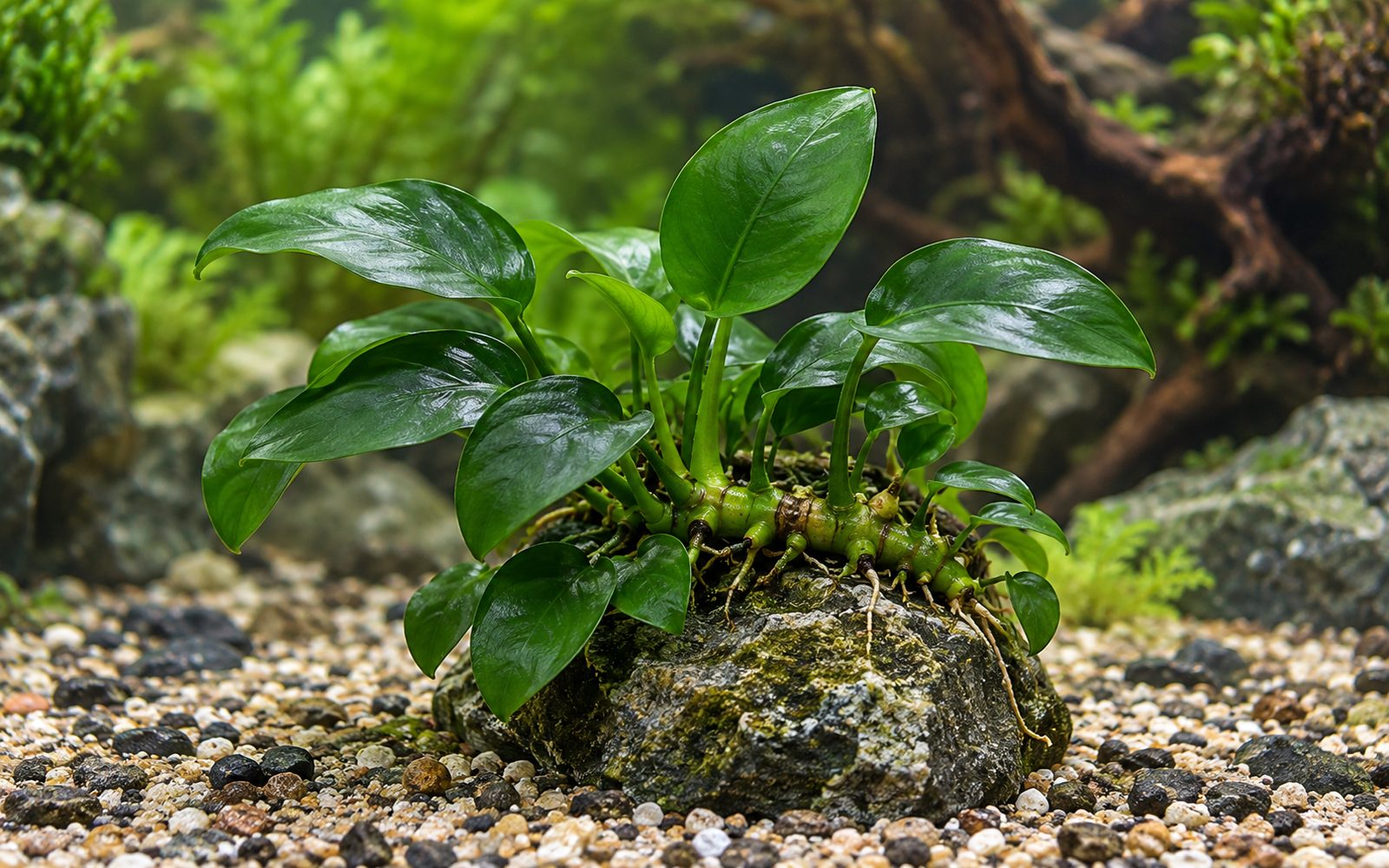 Anubias Nana
 Asian Arowana
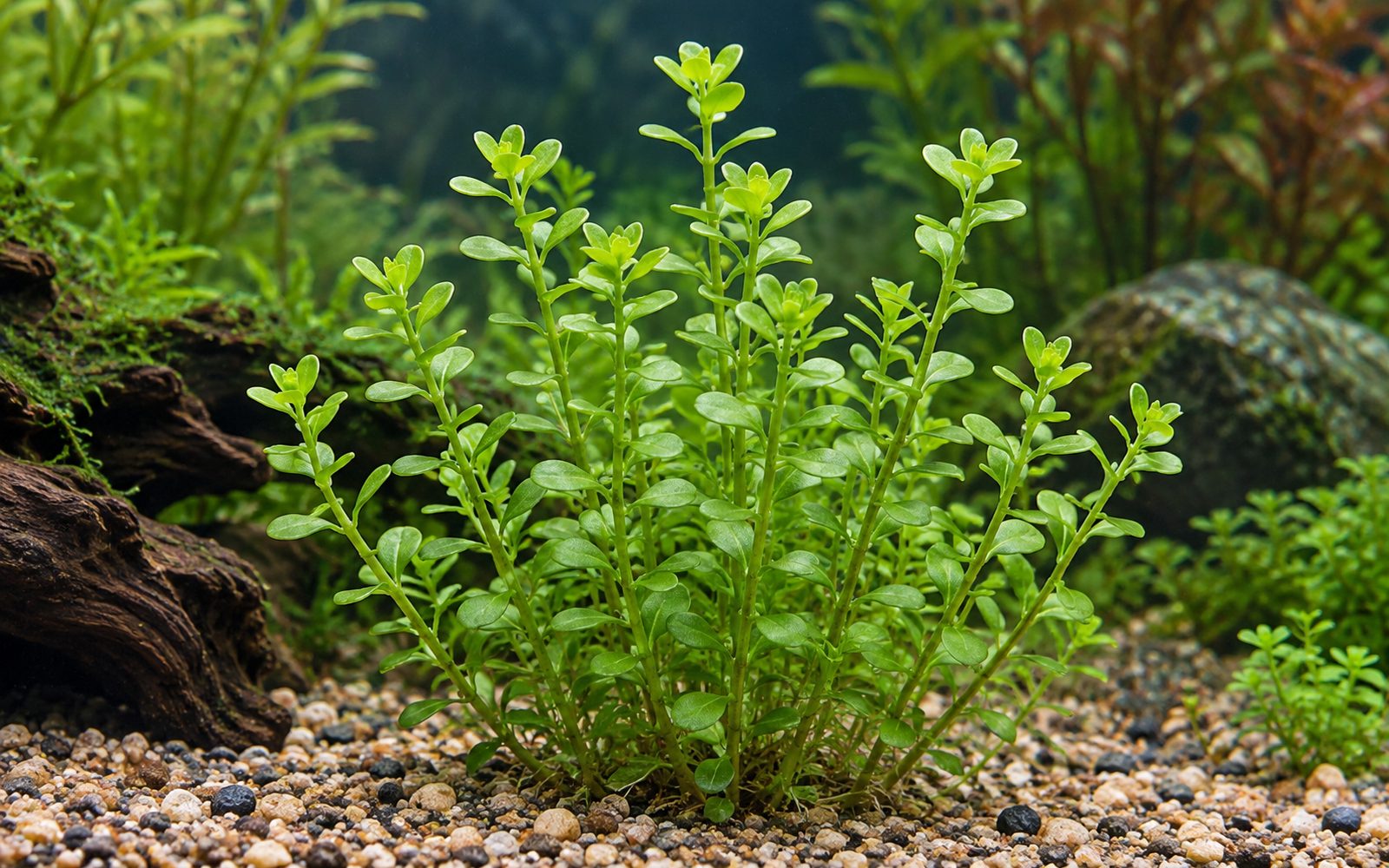 Bacopa Monnieri
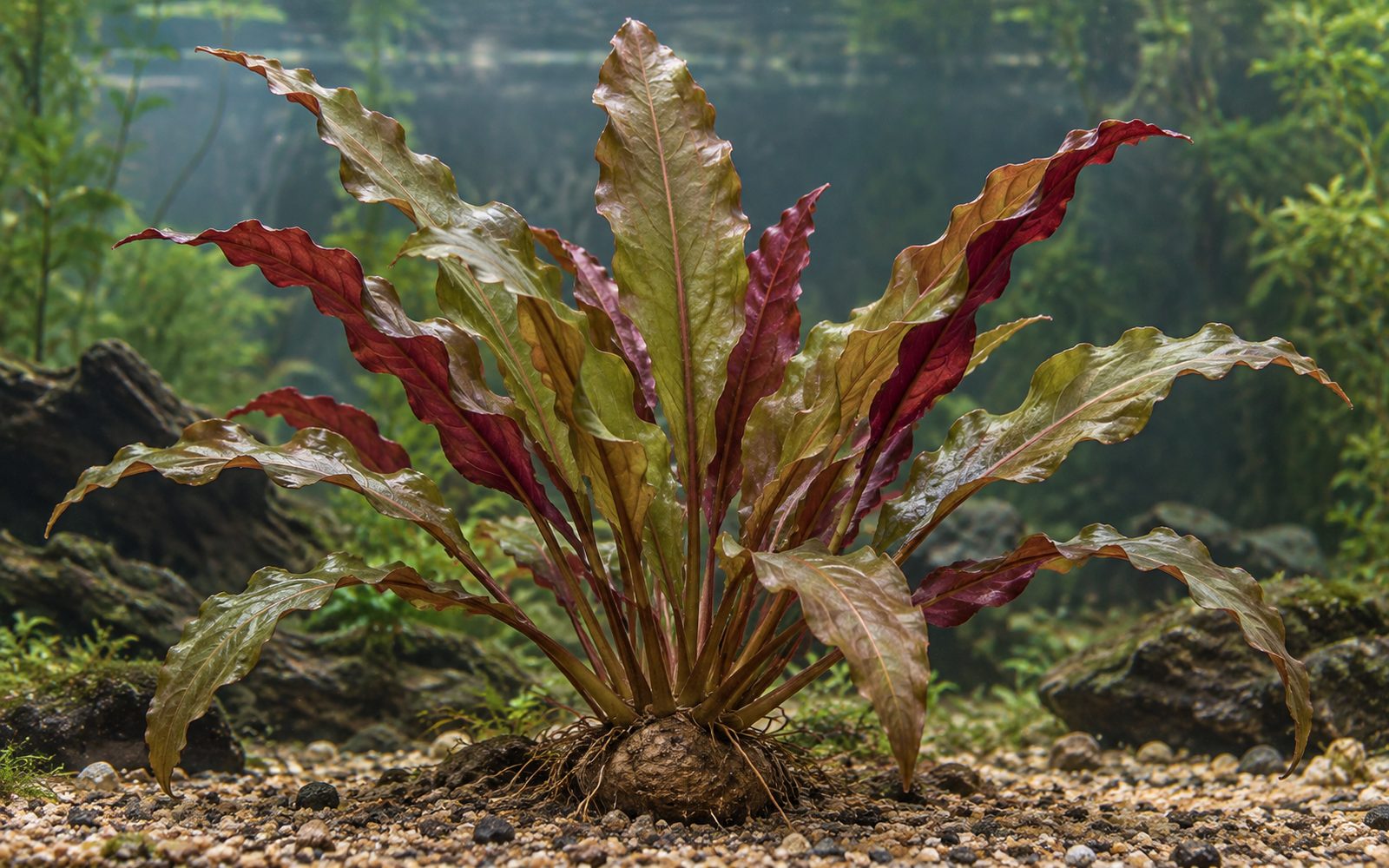 Barclaya Longifolia
 Bigeye Cichlid
Should not be kept together








Hobbyist notes
Things you won't find in books, learned by trial and error. The most helpful ones are on top.
Change history and contributors
- Page created · October 16, 2026