
Water parameters
Overview
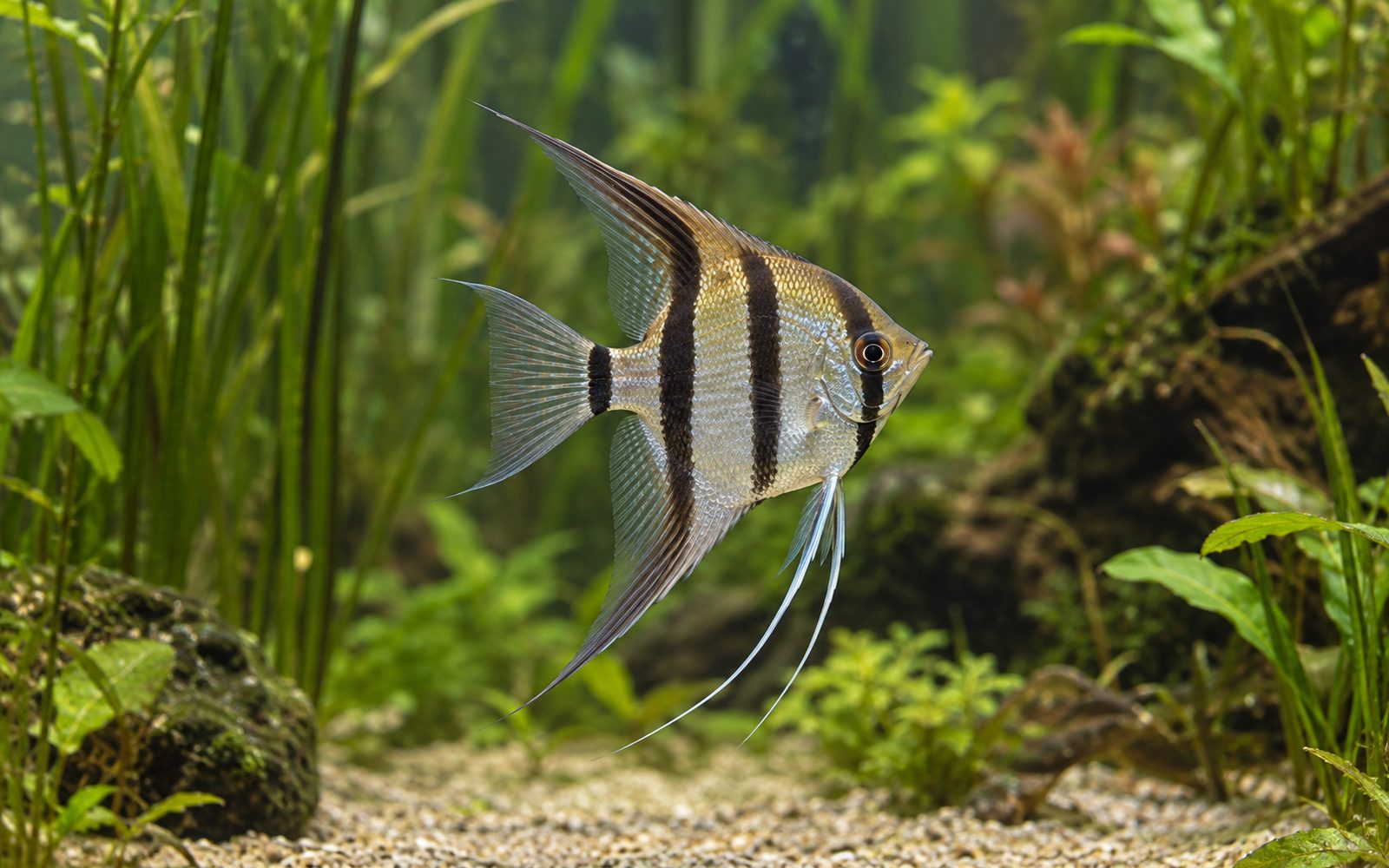
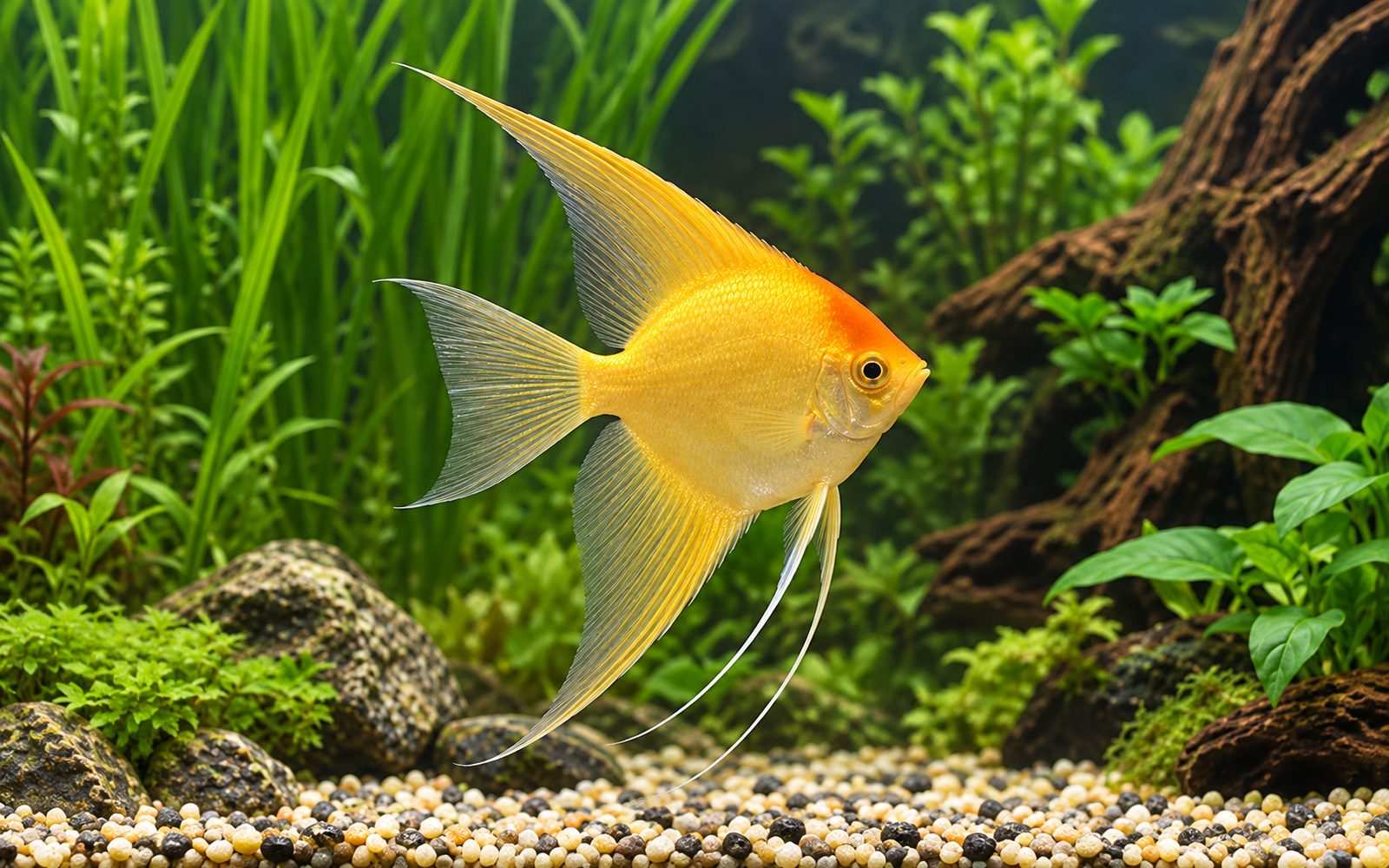
The angelfish is instantly recognizable by its flat body and the sail-like fins that extend up and down. Besides the wild form, black-striped on silver, there are many varieties such as marble, gold, black, koi and "smokey". In adults the body length reaches 15 cm and the height including fins 20–25 cm; this is why it needs a tall aquarium.
In stores it is usually sold at about the size of a coin. When buying, you need to take its adult size and temperament into account: within a year it can become the most dominant fish in the tank.
Color and Fin Varieties
The varieties have not been described yet. Be the first to write it.
Natural Habitat
It lives along the slow-flowing, vegetated banks of the Amazon and in flooded forest areas, among vertical roots and reeds. Its flat body helps it hide among these vertical structures. The water is soft, slightly acidic and warm.
Tank Setup
- Volume: At least 150 liters for a pair; 250 liters or more for a group of 4–6.
- Height: At least 50 cm, preferably 60 cm. In a low tank the fins do not develop.
- Decor: Vertical roots, long-leaved plants (Vallisneria, Amazon sword), open space in the middle.
- Water: 26–28°C, pH 6.5–7. Farm-bred angels also adapt to hard water, but changes must be gradual.
- Flow: Gentle.
Diet
Omnivorous with a protein-rich diet. Use a quality cichlid granule or flake food as the staple; vary the diet with frozen bloodworms, brine shrimp and mysis shrimp. Feed small amounts twice a day. Adults eat anything that fits in their mouth, including neon tetras, guppy fry and shrimp.
Behavior and Compatibility
When young it swims about in a group. Once mature, pairs form and claim a corner; during breeding they may fiercely chase other fish, even their own species.
Good companions: Large tetras (not false neons; rummy-nose and larger), corydoras, ancistrus, calm gouramis, discus (the temperature suits, but there is a risk of passing on disease).
Avoid:
- Neon tetras and similar small fish — an adult angel will eat them. The belief that "they get used to each other if raised together from a young age" usually does not hold.
- Fin-nippers such as tiger barbs — long fins become a target.
- Shrimp.
- Malawi cichlids — water values and temperament do not match.
Group and Colony Structure
The angelfish moves in a group when young and forms pairs once mature. The most reliable way to get a pair is to raise 5–6 juveniles together and wait for them to pair up naturally.
Once a pair forms, territorial fights begin; in a tank under 200 liters, the fish other than the pair need to be moved to another tank. In a tank of 300 liters or more, 5–6 adults can live together; in a crowd the hierarchy fights are spread out. A single angel also does fine but may be more skittish; two fish of the same sex, on the other hand, often bicker constantly.
Breeding
Pairs clean a flat surface (leaf, stone, aquarium glass, a pipe placed at an angle) and lay 200–1000 eggs. The parents fan and guard the eggs. The eggs hatch in 2–3 days; the fry stay stuck to the surface for a few days, then become free-swimming and are fed newly hatched brine shrimp. Young pairs may eat the eggs in the first few attempts; this is normal.
Health and Common Problems
- Hole-in-the-head disease (hexamita): Small pits on the head, white feces, loss of appetite. Triggered by poor water quality and a monotonous diet.
- White spot and velvet: After adding new fish.
- Angelfish virus ("angelfish AIDS"): Seen in store fish; sudden deaths and excessive mucus. Quarantine is important.
Sexing
Difficult to tell from the outside. Mature males may show a slight hump on the forehead and a thicker nape. The most reliable method is to check the breeding papilla during spawning: the female's is blunt and broad, the male's thin and pointed. To get a pair, people usually buy 6 young fish and wait for them to pair up naturally.
Tank mates
This list is calculated automatically from the species profile and grows as new species are added to the catalog. Try it in the planner for a definite answer.
Usually compatible
 Emerald Betta
 Altum Angelfish
 Firemouth Cichlid
 Buffalohead Cichlid
 Chocolate Cichlid
 Discus
 Festivum
 Geophagus altifrons
 Geophagus surinamensis
 Rainbow Cichlid
Should not be kept together








Hobbyist notes
Things you won't find in books, learned by trial and error. The most helpful ones are on top.
Change history and contributors
- Page created · October 16, 2026