
Water parameters
Overview
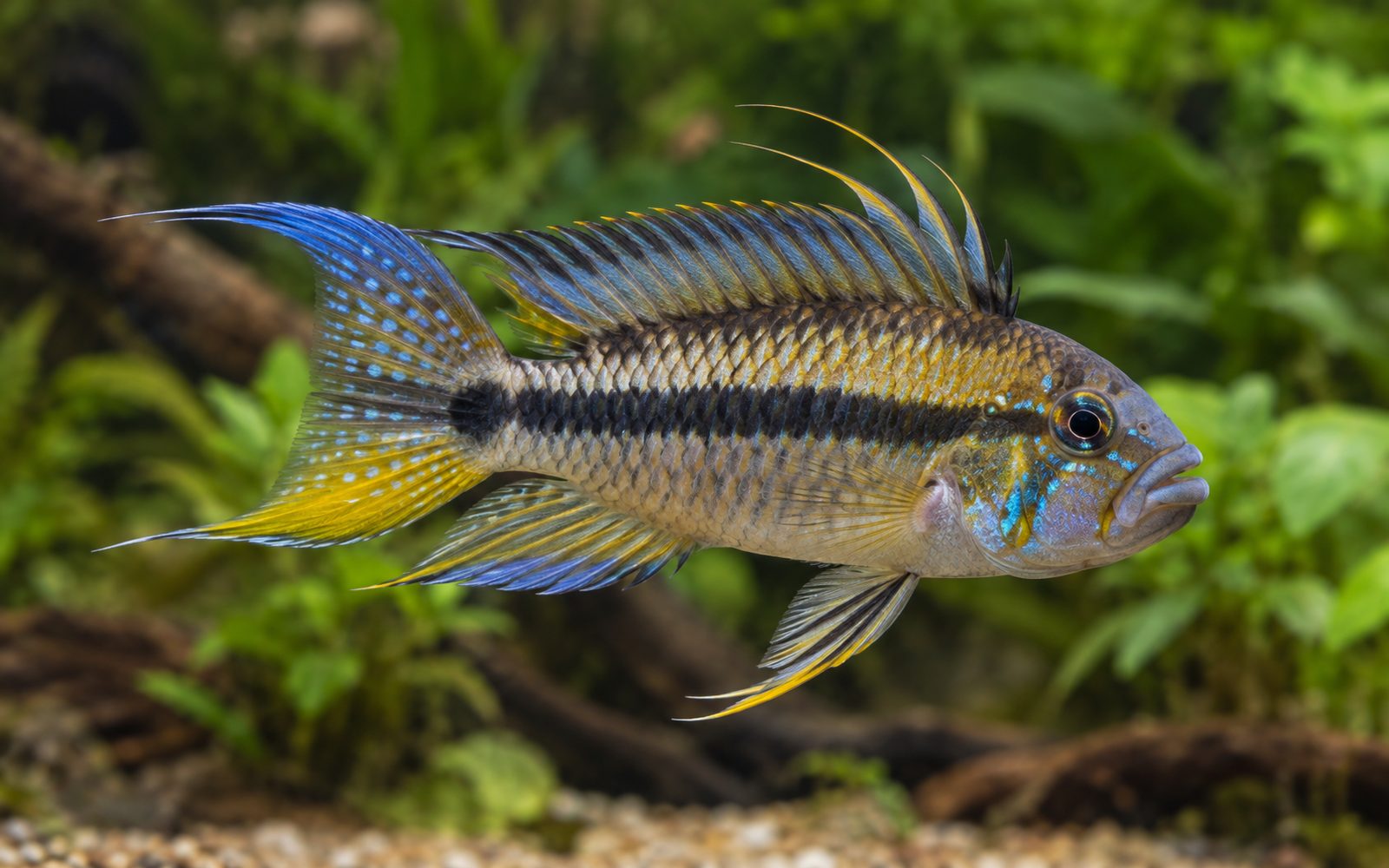
Apistogramma barlowi was described in 2008 and is most likely endemic to the Ampiyacu River system in Peru. It has a breeding method that is almost unique in the genus: it is a biparental, facultative mouthbrooder that carries its larvae in the mouth. Sometimes one parent mouthbroods, sometimes both; sometimes the larvae are kept in a shallow pit in the sand. Males have a large head and thick lips; two separate populations are known, one with red markings ("Glaser") and one pale ("Hauswell").
Tank Setup
- At least 80 liters for a pair.
- 24–27°C, pH 4.5–6.5, very soft water; gentle flow and good oxygenation.
- Fine sand (makes mouthbrooding and digging pits easier), roots, leaf litter and a few caves.
Diet
Carnivorous. Frozen or live foods such as brine shrimp, mysis, bloodworms and daphnia should be the staple; it accepts sinking granules once accustomed to them.
Behavior and Compatibility
It sets up a territory as a pair; the male is harsh toward males of its own species. During the fry period the parents are quite protective. It gets along with calm midwater fish; it hunts shrimp.
Good companions: tetras that like soft water, pencilfish, hatchetfish, otocinclus.
Avoid: hard-water species, large cichlids, shrimp, other Apistogramma males.
A short profile for this species
The Apistogramma barlowi page has the basics, but the sections below have not been written yet. If you keep this species, write a section from your own experience; it will be published under your name after editor approval.
Tank mates
This list is calculated automatically from the species profile and grows as new species are added to the catalog. Try it in the planner for a definite answer.
Usually compatible
 Emerald Betta
 Emerald Cory
 Porthole Catfish
 Keyhole Cichlid
 Cupid Cichlid
 Festivum
 Geophagus altifrons
 Geophagus surinamensis
 Threadfin Acara
Should not be kept together





Hobbyist notes
Things you won't find in books, learned by trial and error. The most helpful ones are on top.
Change history and contributors
- Page created · October 16, 2026