
Water parameters
Overview
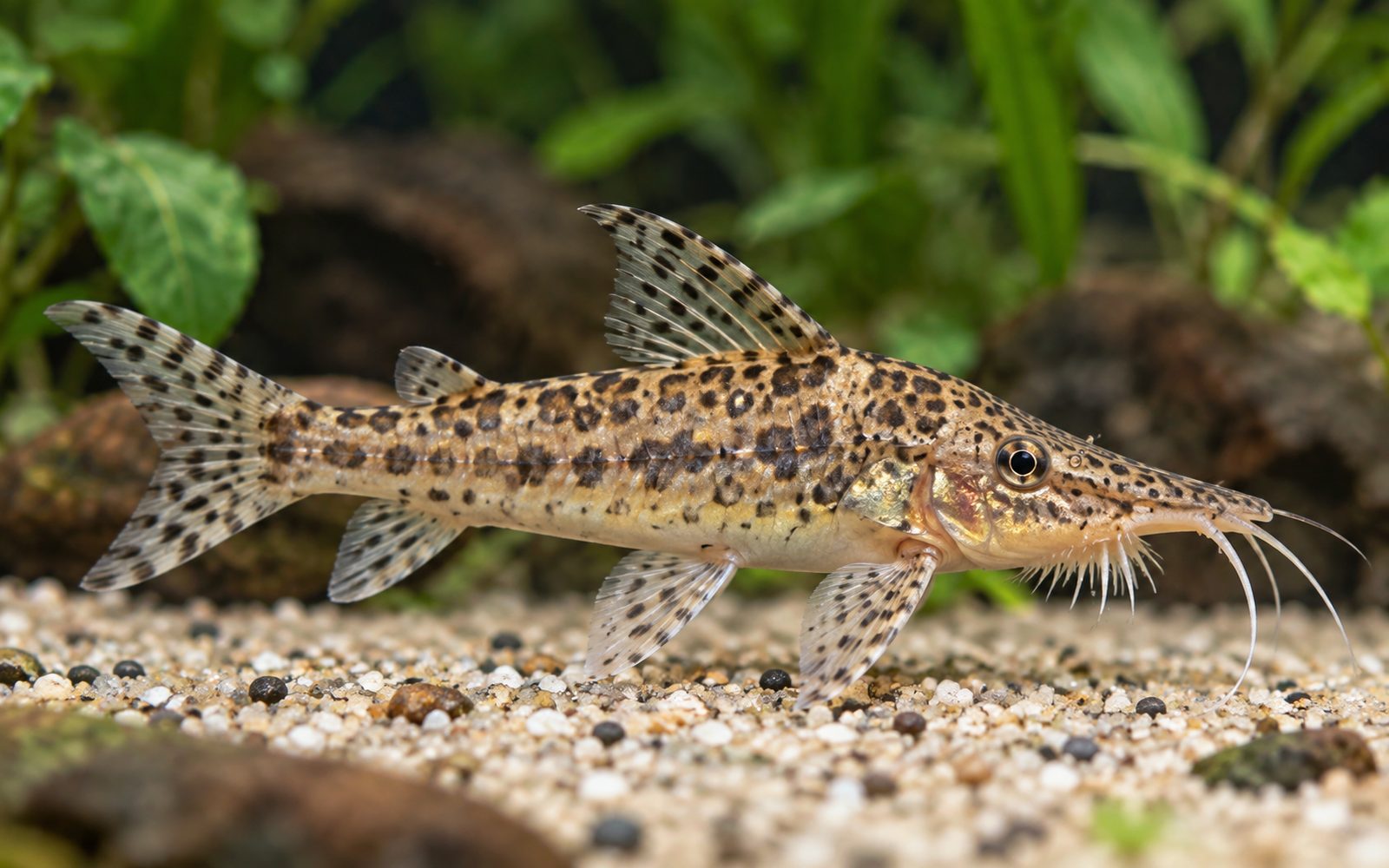
Scleromystax barbatus, known for many years as Corydoras barbatus, is a large, long-bodied species that reaches 8–10 cm. It carries a mosaic pattern of irregular dark blotches on a pale beige–gold background. Mature males develop fine bristle-like spines (odontodes) on their cheeks; this is where the name "bearded" comes from, and males are usually more colorful. Because it comes from coastal streams in Brazil's Atlantic forests, it likes distinctly cooler water than tropical corydoras; temperatures constantly above 25°C do not suit it.
Tank Setup
- At least 100 liters for a group of 6–8; a base length of around 100 cm.
- Fine, rounded sand substrate; a large open area for sifting.
- 18–24°C; soft to moderately hard, very well-oxygenated water with gentle flow.
- A 25–30% water change every week; it is sensitive to nitrate buildup.
Diet
Sinking tablets and granules, frozen bloodworms, brine shrimp and tubifex. Since it is a large species, adjust the amount of food to the size of the group; it cannot live on leftovers alone.
Behavior and Compatibility
A peaceful, social bottom dweller; it sifts the bottom in a group. It does not harm fish, but its temperature needs do not match those of tropical species that want warm water.
Good companions: peaceful species that like cool water: zebra danios, White Cloud Mountain minnows, peppered and panda corydoras, cool-water barbs.
Avoid: species that need warm water (discus, rams), cichlids that claim the bottom, large predatory fish.
A short profile for this species
The Banded Corydoras page has the basics, but the sections below have not been written yet. If you keep this species, write a section from your own experience; it will be published under your name after editor approval.
Tank mates
This list is calculated automatically from the species profile and grows as new species are added to the catalog. Try it in the planner for a definite answer.
Usually compatible
 Flame Tetra
 Blackfin Corydoras
 Polystictus Corydoras
 Emerald Cory
 Emerald Dwarf Rasbora
 Porthole Catfish
 Keyhole Cichlid
 Cryptocoryne Parva
 Egyptian Mouthbrooder
 European Bitterling
Should not be kept together






Hobbyist notes
Things you won't find in books, learned by trial and error. The most helpful ones are on top.
Change history and contributors
- Page created · October 16, 2026