
Water parameters
Overview
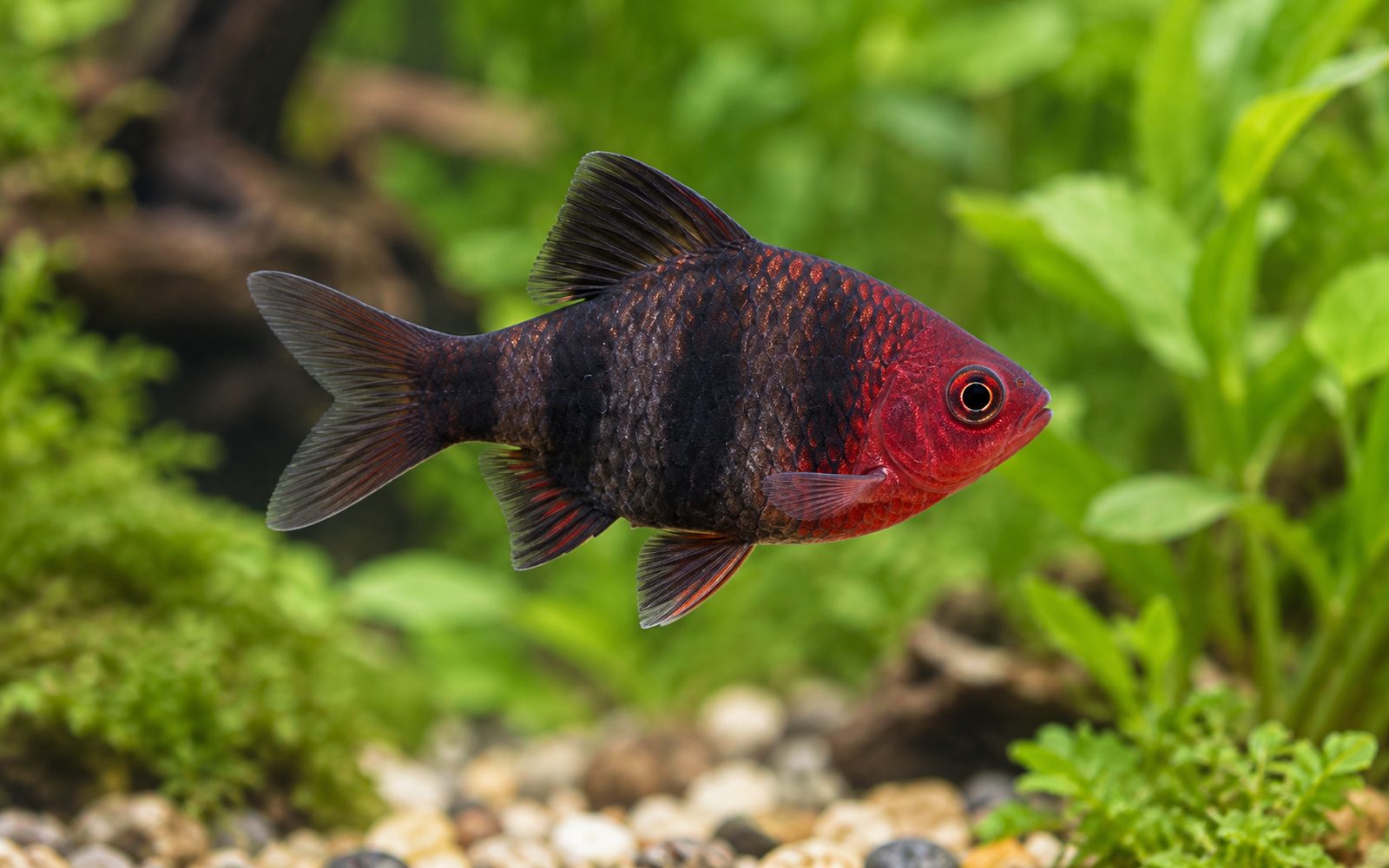
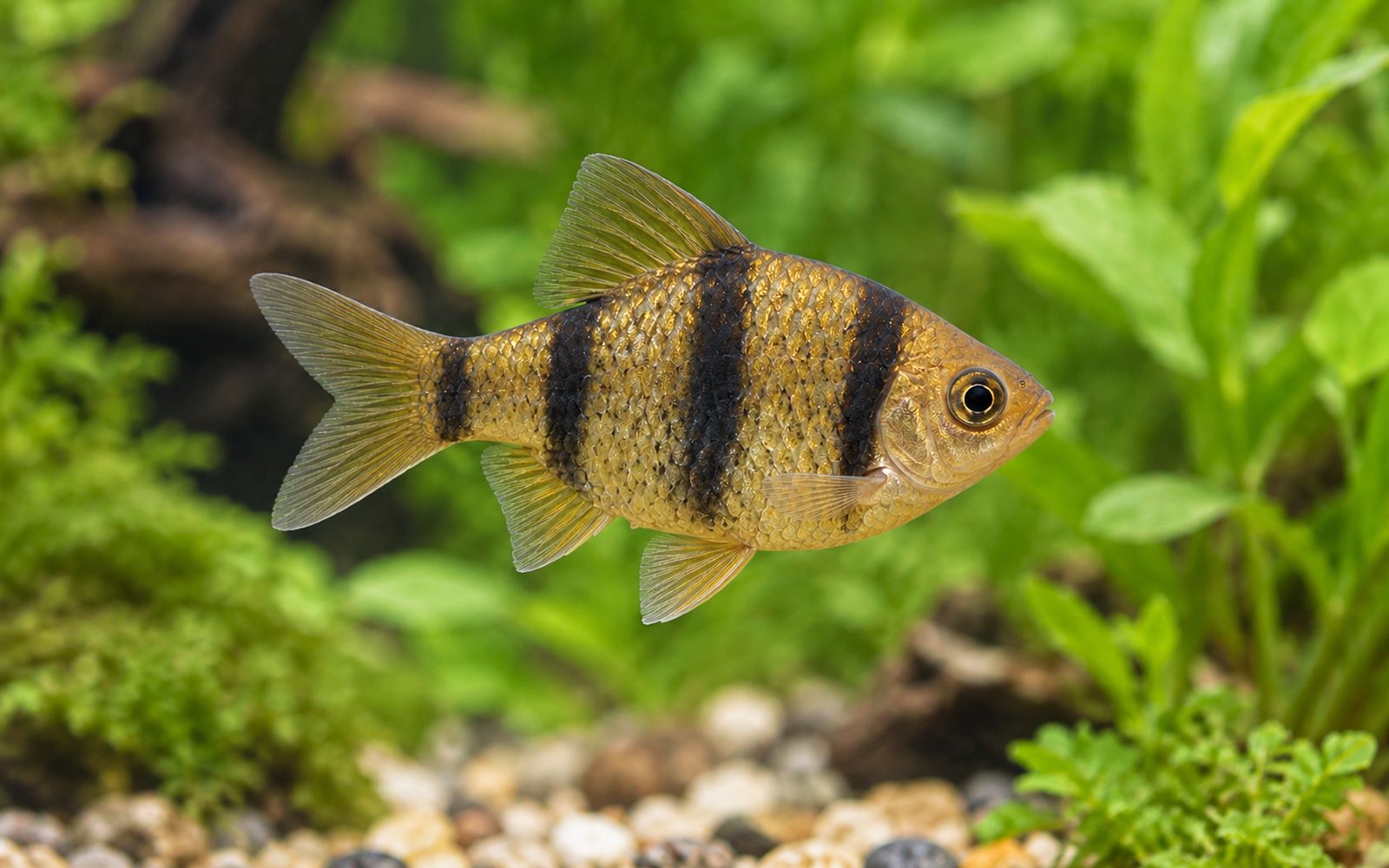
The black ruby barb is a species endemic to Sri Lanka. At rest, the fish shows three or four thick black vertical bands on a golden-yellow base. In the breeding season, the head and throat of males turn purple-ruby red and the body becomes almost velvet black; the dorsal fin darkens too. This transformation makes it one of the most interesting small barbs.
It is a calm barb compared to its relatives. Because its natural range is narrow, specimens in the trade are largely captive-bred.
Natural Habitat
It lives in shaded, clear, slow-flowing streams in the rainforests of southwestern Sri Lanka. The bottom is covered with sand and leaf litter, the water is soft and slightly acidic, and the banks are covered with plants and roots.
Tank Setup
- Volume: at least 80 liters and 80 cm in length for a group of 6–10.
- Water: 23–25°C is ideal; slightly acidic, soft to moderately hard water. Keeping the parameters stable is important.
- Decor: densely planted edges, roots and a dark substrate. Dim light and floating plants enhance both colors and boldness.
- Maintenance: a 25% weekly water change; clean, oxygenated water.
Diet
Omnivorous. Use flakes and granules as the staple; vary the diet with frozen bloodworms, brine shrimp and daphnia. Plant supplements such as spirulina food and blanched vegetables are also beneficial. Live and frozen foods bring out the males' breeding colors.
Behavior and Compatibility
Peaceful and active; it spends most of its time in the middle and lower levels among the plants. Males display to each other and engage in short chases; this is harmless. In a very small group it becomes shy and hides.
Good companions: cherry barbs, tetras, rasboras, danios, corydoras, bristlenose plecos, gouramis.
Avoid: large and aggressive fish, very large cichlids; still, be careful with species that have very long, flowing fins (such as bettas).
Group and Colony Structure
Keep at least 6, ideally 10 or more. A female-heavy group (1 male : 2 females) keeps the males from wearing out the females. In a large group, males color up more often and behave more boldly.
Breeding
An egg scatterer that provides no parental care. Spawning usually takes place in the morning over fine-leaved plants or moss. Since the parents eat the eggs, they need to be separated after spawning. Pairs conditioned with soft, slightly acidic water and live food spawn more readily. The eggs hatch in 1–2 days; the fry are fed first infusoria and then baby brine shrimp (Artemia nauplii).
Health and Common Problems
Hardy. White spot and fin rot in poor water are the most common problems. In hard water and high nitrate, the colors fade and the fish hides.
Sexing
In the breeding season, males are easy to recognize by their purple-red head, darkened body and black dorsal fin. Females are golden-yellow with black bands and plumper; their fins are clear or yellowish.
Tank mates
This list is calculated automatically from the species profile and grows as new species are added to the catalog. Try it in the planner for a definite answer.
Usually compatible
 Flame Tetra
 Blackfin Corydoras
 Polystictus Corydoras
 Emerald Cory
 Emerald Dwarf Rasbora
 Porthole Catfish
 Keyhole Cichlid
 Geophagus surinamensis
 Cryptocoryne Parva
 Gold Spot Pleco (L001)
Should not be kept together






Hobbyist notes
Things you won't find in books, learned by trial and error. The most helpful ones are on top.
Change history and contributors
- Page created · October 16, 2026