
Water parameters
Overview
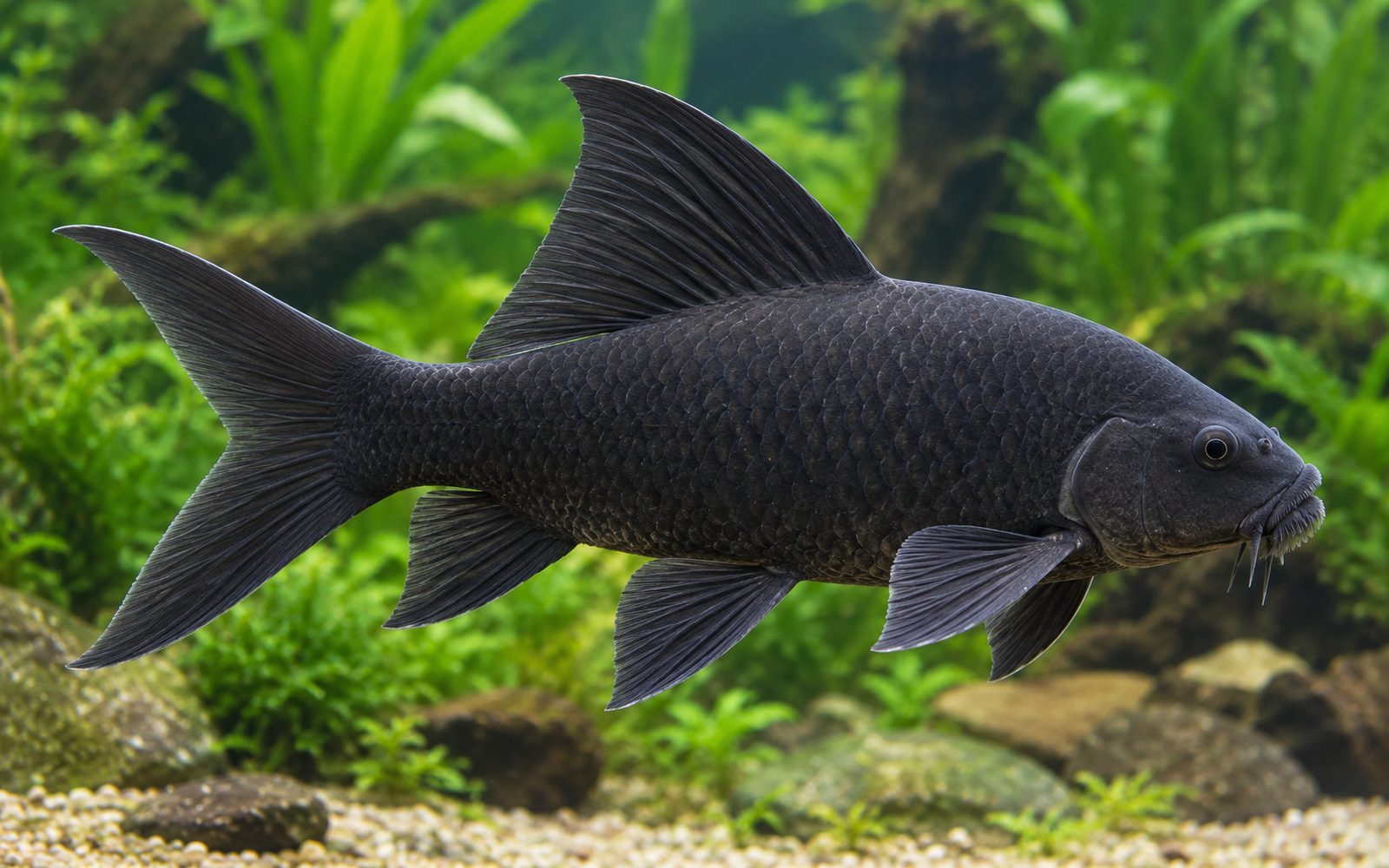
The black shark is a large labeo that lives in the big rivers of Southeast Asia. With their velvety black color and shark-like silhouette, juveniles resemble the red-tailed black shark and are sold for small tanks. However, adults exceed 60 cm and grow even larger in the wild; in Southeast Asia it is also caught as a food fish. As it grows, both its size and its territoriality take it far beyond home aquariums.
Tank Setup
- At least 1500 liters and 250 cm in length for a single adult.
- 24–27°C; very powerful filtration, high oxygen levels, a 30–50% weekly water change.
- Large roots, rocks and a large footprint; a shelter where it can set up a territory.
- It jumps; a heavy, tight-fitting lid is needed.
Diet
Omnivorous; in the wild it feeds on algae and biofilm on surfaces and organic matter on the bottom. It is fed sinking pellets and tablets, spirulina, vegetables and frozen foods.
Behavior and Compatibility
It looks shy and docile when young; as it matures it claims a large territory on the bottom and fiercely defends it against its own kind, similar bottom fish and any other fish that enter it.
Good companions: in a very large tank, large and fast species that can defend themselves: large barbs, big cichlids, large plecos.
Avoid: a second black shark and other "shark" species, small and peaceful fish, peaceful bottom fish.
A short profile for this species
The Black Shark page has the basics, but the sections below have not been written yet. If you keep this species, write a section from your own experience; it will be published under your name after editor approval.
Tank mates
This list is calculated automatically from the species profile and grows as new species are added to the catalog. Try it in the planner for a definite answer.
Usually compatible
 Banded Jewel Cichlid
 Spotted Tilapia
 Flowerhorn
 Jack Dempsey
 Jaguar Cichlid
 Red Devil Cichlid
 Red Terror Cichlid
 Convict Cichlid
 Cryptocoryne Parva
 Wolf Cichlid
Should not be kept together








Hobbyist notes
Things you won't find in books, learned by trial and error. The most helpful ones are on top.
Change history and contributors
- Page created · October 16, 2026