
Water parameters
Overview
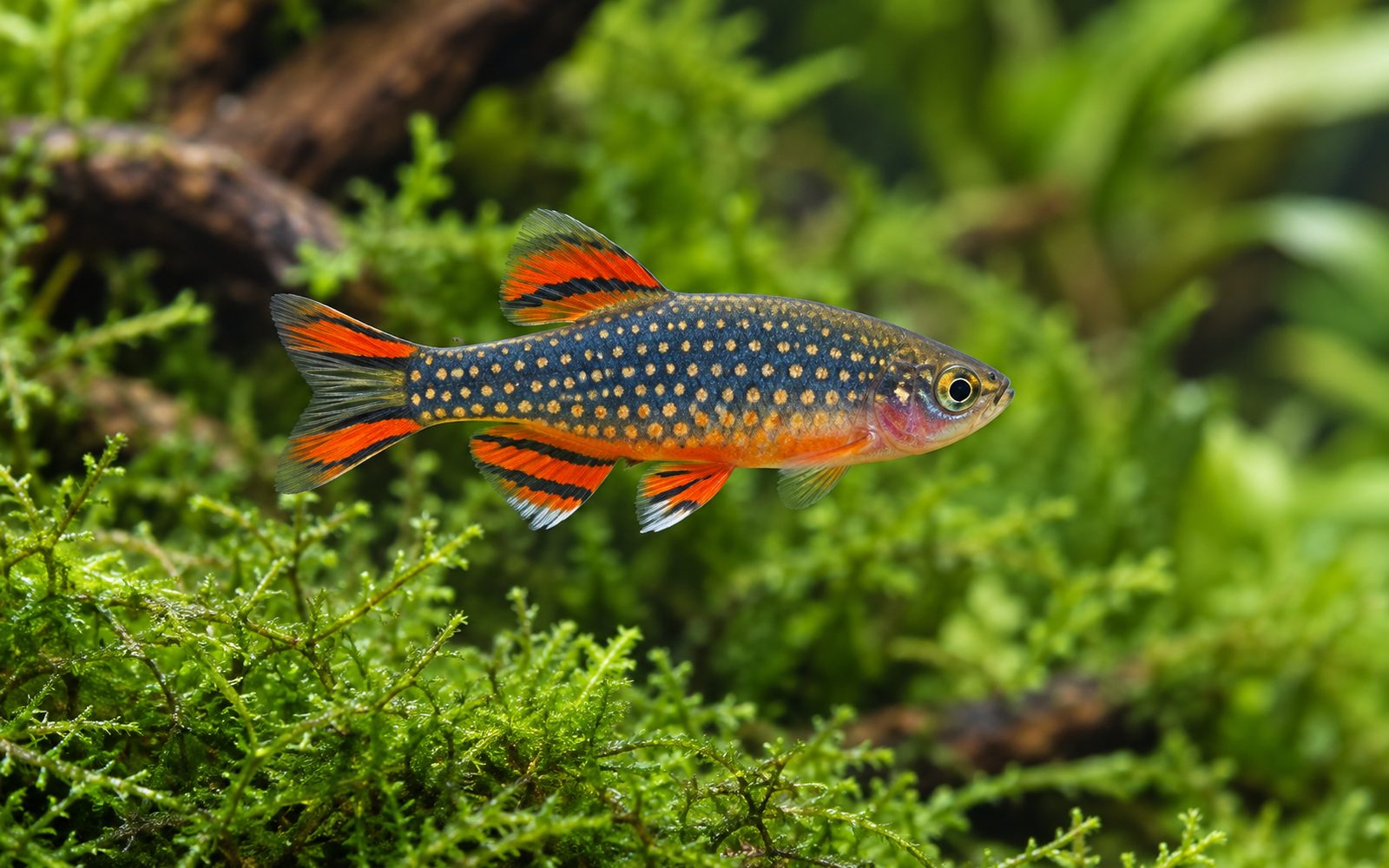
The celestial pearl danio (sold as the galaxy rasbora, though scientifically a danio) was discovered in 2006 and quickly became popular worldwide. Its dark blue-green body is covered with pearl-like golden spots; its fins have orange-red and black stripes. The males' belly and fins are bright red-orange.
It is a small, shy fish: it looks its best in a densely planted, quiet nano aquarium.
Natural Habitat
It lives in shallow, densely vegetated ponds and marshes fed by spring water on Myanmar's high plateau. The water is clear, moderately hard and relatively cool.
Tank Setup
- Volume: 30 liters or more for a group of 8–12.
- Plants: very dense planting (moss, fine-leaved plants, floating plants); it is bolder when there is little open space.
- Water: 22–25°C, neutral and moderately hard. Gentle flow is enough.
- Tankmates: it does very well in shrimp tanks; large, active fish drive it into hiding.
Diet
Omnivorous, but its mouth is very small. Micro granules, finely crushed flakes, frozen cyclops, newly hatched brine shrimp and daphnia. Newly arrived fish usually accept live or frozen food first.
Behavior and Compatibility
Peaceful and shy; rather than schooling, it moves in a loose group. Males display to each other by flaring their fins and have short chases; this is natural.
Good companions: red cherry and other Neocaridina shrimp, otocinclus, harlequin rasboras, small corydoras (C. pygmaeus, C. habrosus), nerite snails.
Avoid: large, active fish, bettas (depending on the individual), any fish with a mouth big enough to swallow it.
Group and Colony Structure
At least 8, ideally 12 or more individuals; a female-heavy group is the most balanced arrangement. Celestial pearl danios kept in small numbers almost always hide. The males' display sparring softens as the number of females increases.
Breeding
It spawns on its own in an aquarium with plenty of moss; the eggs are laid among the moss and plants. The parents eat the eggs, but in very dense moss some fry survive. The fry are very small and are fed infusoria and microworms.
Health and Common Problems
- Starvation: newly arrived fish may refuse dry food; start with live and frozen food.
- Stress and hiding: in an open, unplanted aquarium.
- It is generally hardy but does not like sudden water changes.
Sexing
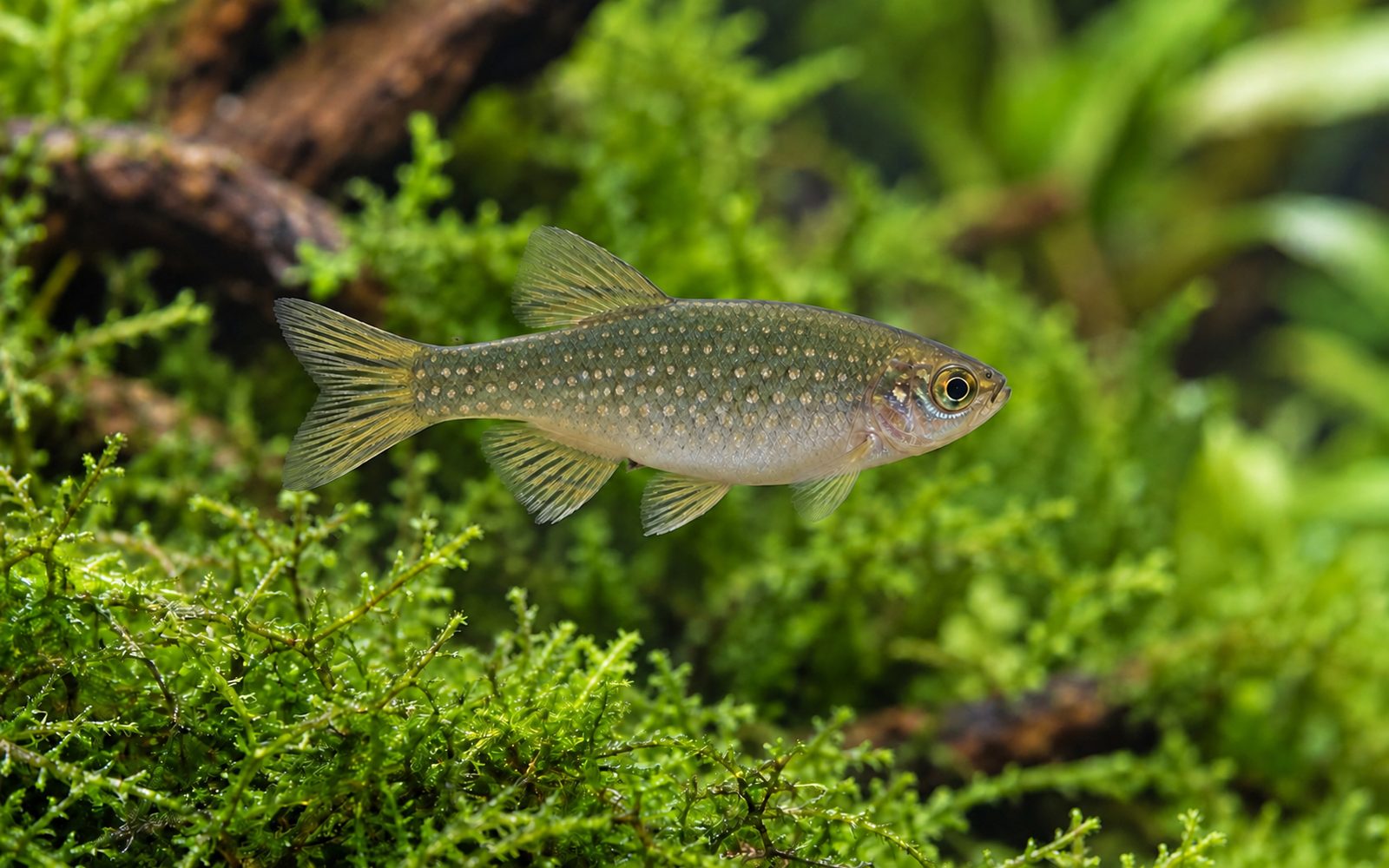
Males are more brightly colored: red-orange belly and fins, dark blue body. Females are paler, with a greenish body, and plumper; their fins are pale orange. Mature females show a dark spot in front of the ventral fin.
Tank mates
This list is calculated automatically from the species profile and grows as new species are added to the catalog. Try it in the planner for a definite answer.
Usually compatible
 Flame Tetra
 Blackfin Corydoras
 Polystictus Corydoras
 Emerald Cory
 Emerald Dwarf Rasbora
 Porthole Catfish
 Keyhole Cichlid
 Geophagus surinamensis
 Cryptocoryne Parva
 Gold Spot Pleco (L001)
Should not be kept together





Hobbyist notes
Things you won't find in books, learned by trial and error. The most helpful ones are on top.
Change history and contributors
- Page created · October 16, 2026