
Water parameters
Overview
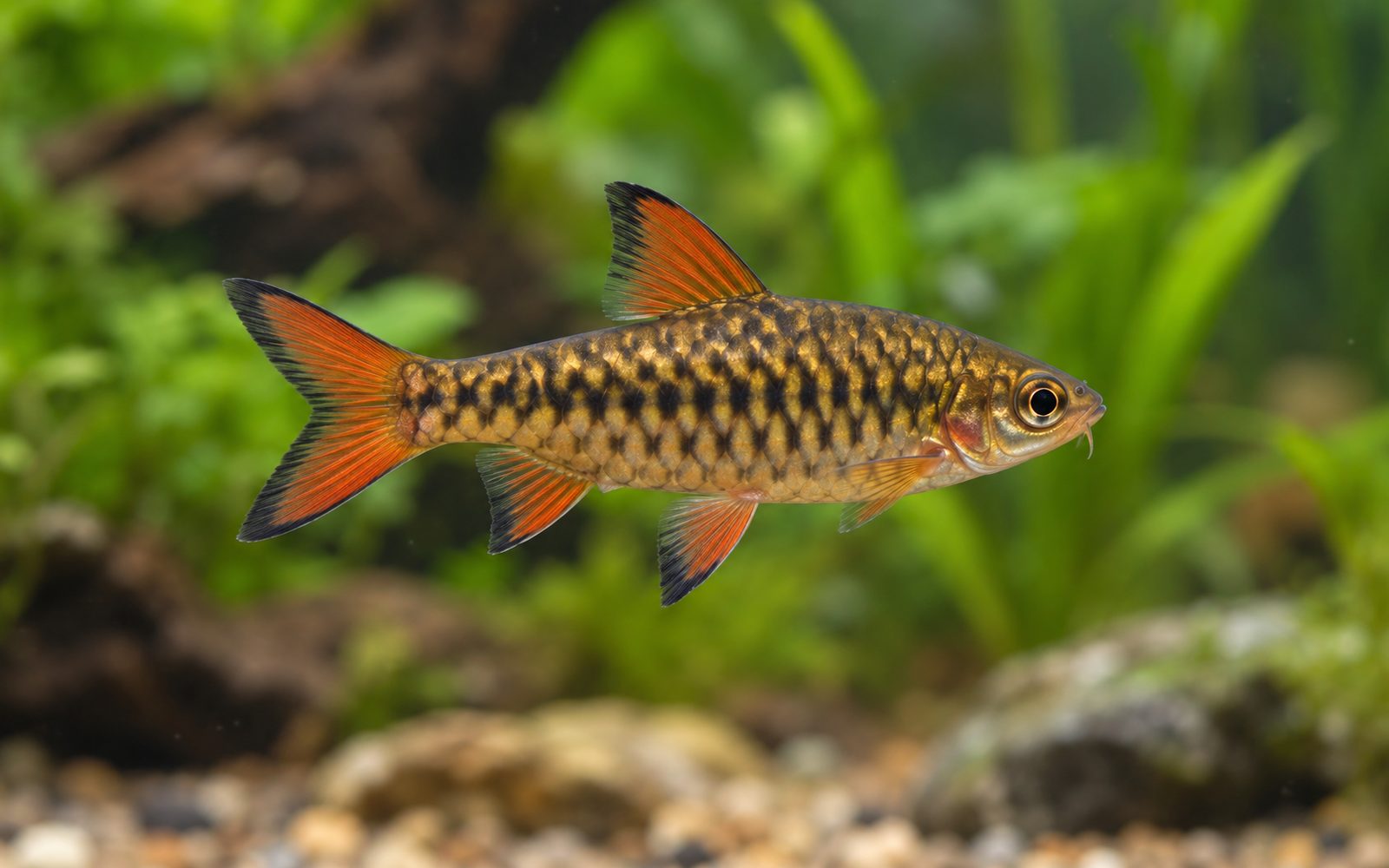
The checker barb is a small barb endemic to Sumatra. Its scales are large and few in number; the dark edge of each scale forms a checkerboard-like pattern on the body. The males' orange–red fins are bordered by a thin black edge.
With its peaceful, hardy nature and small size, it suits medium-sized community aquariums. Unlike its relative the tiger barb, it has a low tendency to nip fins.
Natural Habitat
It lives in slow-flowing streams, lakes and ponds in the lowlands of Sumatra. In these waters the banks are planted, the bottom is soft and the water is slightly acidic to neutral.
Tank Setup
- Volume: at least 60 liters and 60 cm of length for a group of 6–10.
- Water: 22–25°C is ideal; soft to moderately hard, slightly acidic or neutral water.
- Decor: densely planted edges with open swimming space in the middle; a dark substrate makes its pattern stand out.
- Maintenance: a 25% water change weekly; gentle flow is enough.
Diet
Omnivorous. Small flakes and granules can be the staple; vary them with frozen brine shrimp, daphnia and bloodworms. Also give plant matter such as spirulina-based food.
Behavior and Compatibility
Peaceful and active. Males display to each other by spreading their fins; these contests are harmless. It feels safe in a school and becomes shy when kept in small numbers.
Good companions: small tetras, rasboras, cherry barbs, danios, corydoras, otocinclus, dwarf gouramis.
Avoid: large or aggressive fish and large species that could fit it in their mouths.
Group and Colony Structure
Kept with at least 6, ideally 10 or more individuals. A female-heavy group (1 male : 2 females) spreads out the males' display behavior and gives the females some relief. In a large group the colors and behavior look more natural.
Breeding
Breeds easily. Pairs spawn over fine-leaved plants or a spawning mop; the eggs are sticky. The parents eat the eggs; remove the adults after spawning. In a separate breeding tank, soft, slightly acidic water, plenty of fine-leaved plants and dim light increase success; pairs should be conditioned beforehand with live and frozen foods. The eggs hatch in 1–2 days, and the fry are fed infusoria and baby brine shrimp.
Health and Common Problems
Hardy. White spot and, in poor water, fin rot can appear. Quarantining newly arrived fish for a few weeks reduces the risk. The black edges and orange color on the males' fins are a good indicator of health: they are the first to fade with stress, poor water or a monotonous diet.
Sexing
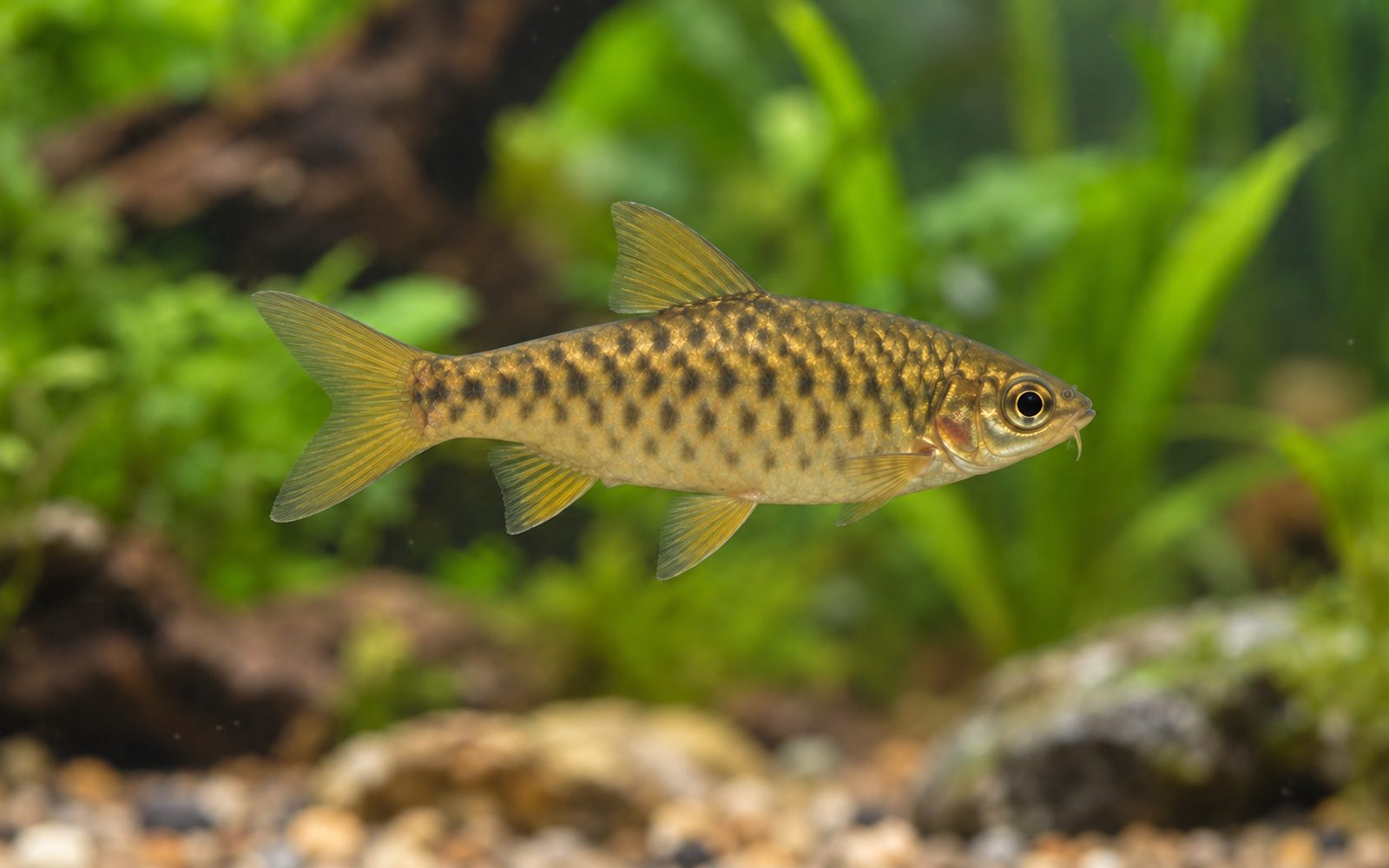
Males have orange–red fins with black edges; their body pattern is more contrasting. Females are paler, in beige–gold tones and with a plump belly; their fins are yellowish without black edges.
Tank mates
This list is calculated automatically from the species profile and grows as new species are added to the catalog. Try it in the planner for a definite answer.
Usually compatible
 Flame Tetra
 Blackfin Corydoras
 Polystictus Corydoras
 Emerald Cory
 Emerald Dwarf Rasbora
 Porthole Catfish
 Keyhole Cichlid
 Geophagus surinamensis
 Cryptocoryne Parva
 Gold Spot Pleco (L001)
Should not be kept together






Hobbyist notes
Things you won't find in books, learned by trial and error. The most helpful ones are on top.
Change history and contributors
- Page created · October 16, 2026