
Water parameters
Overview
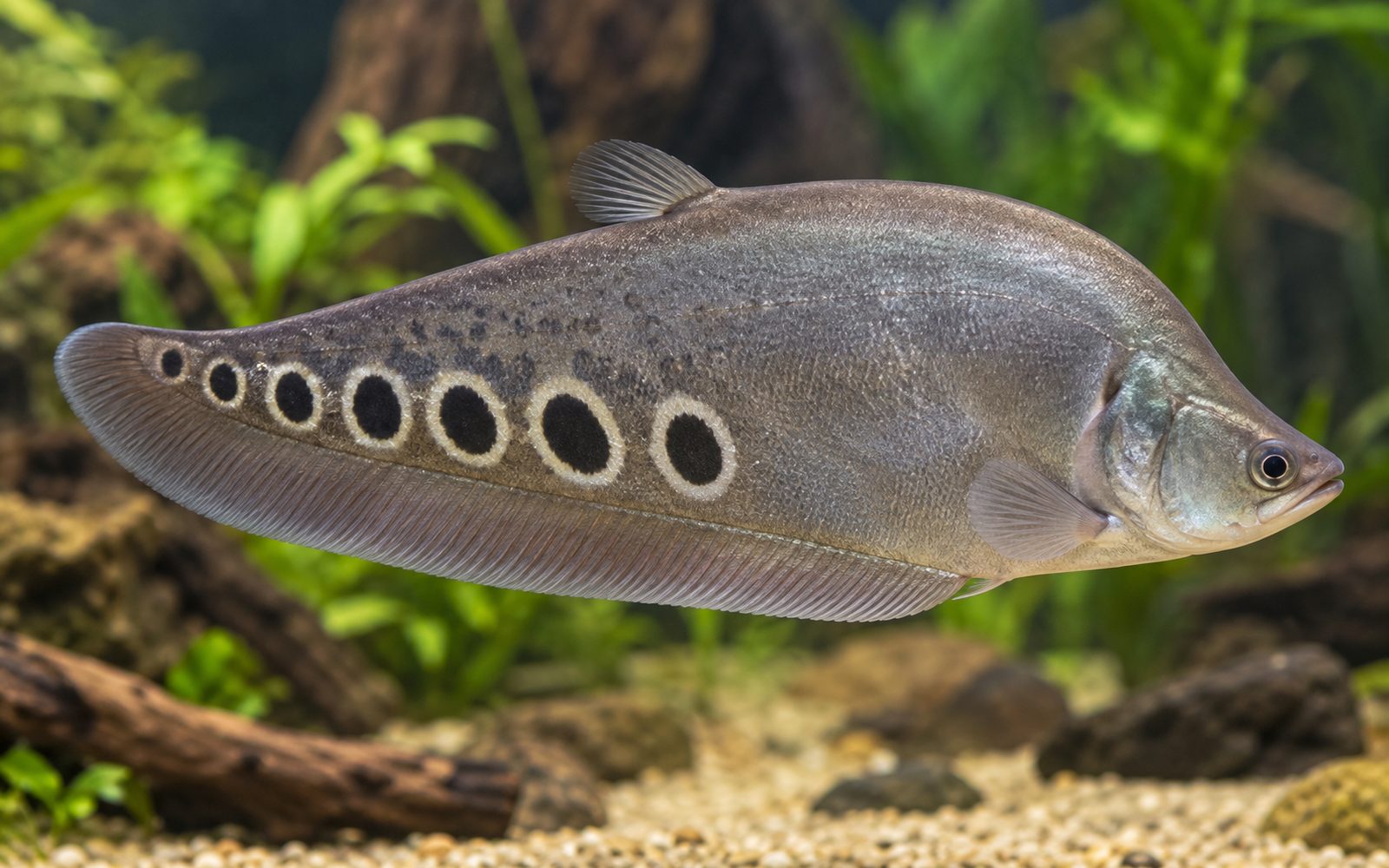
The clown knifefish is recognized by the white-ringed black spots on the rear part of its silver-gray body. Its back becomes noticeably humped with age; the long anal fin running along its belly merges with the tail, and the fish glides by rippling this fin. On its back it has only a small, feather-like fin.
Juveniles of 10 cm are often sold in stores; however, this species is a predator that reaches 80–100 cm and can only be kept in very large aquariums. When needed, it can support its breathing by gulping air from the surface.
Warning: Fish released into the wild in the US state of Florida have established permanent populations. Never release a fish that has outgrown its tank; pass it on to a hobbyist with a large aquarium or to a public aquarium.
Natural Habitat
It lives in the lakes, still river backwaters and floodplains of the Mekong and Chao Phraya basins. During the day it stays among submerged trees and plants, and it hunts at night.
Tank Setup
- Volume: at least 1500 liters for an adult; a 250 × 80 cm footprint is recommended.
- Cover: large roots or pipe-shaped hiding places; dim light.
- Filter: strong filtration, 30–40% water change weekly. The fish eats a lot and produces a lot of waste.
- Lid: it moves suddenly when startled; use a sturdy lid.
Diet
Carnivorous. Shrimp, fish fillet, mussels, worms and large sinking pellets. Feeding live feeder fish carries a risk of disease; it is best to accustom it to frozen foods while young. Feed in the evening.
Behavior and Compatibility
Shy during the day, active at night. It swallows any fish that fits in its mouth; in an adult, even fish of 15–20 cm are not safe. It becomes territorial toward conspecifics with age.
Good companions: large, calm species too big for its mouth: arowanas, large plecos, bichirs, large catfish, tigerfish.
Avoid: small and medium-sized fish, shrimp, a second clown knifefish (in a small aquarium).
Group and Colony Structure
Juveniles can get along in a group, but adults are usually kept alone. More than one adult requires a very large system.
Breeding
In the wild it lays its eggs on hard submerged surfaces (roots, stones), and the male guards the eggs. Breeding in a home aquarium is very rare; it is bred in ponds in Southeast Asia.
Health and Common Problems
- White spot and skin problems: it is sensitive because of its small scales; be careful with medication doses.
- Diseases from live food: feeder fish carry parasites and bacteria.
- Collision injuries: it may crash into the glass when the light changes suddenly.
Sexing
The sexes are hard to tell apart externally; during the breeding season females have fuller bellies.
Tank mates
This list is calculated automatically from the species profile and grows as new species are added to the catalog. Try it in the planner for a definite answer.
Usually compatible
 Jaguar Cichlid
 Cryptocoryne Parva
Adonis Pleco
Cryptocoryne Parva
Adonis Pleco
 Weeping Moss
 Flame Moss
 Alternanthera Reineckii 'Mini'
 Alternanthera Reineckii
 Amazon Sword
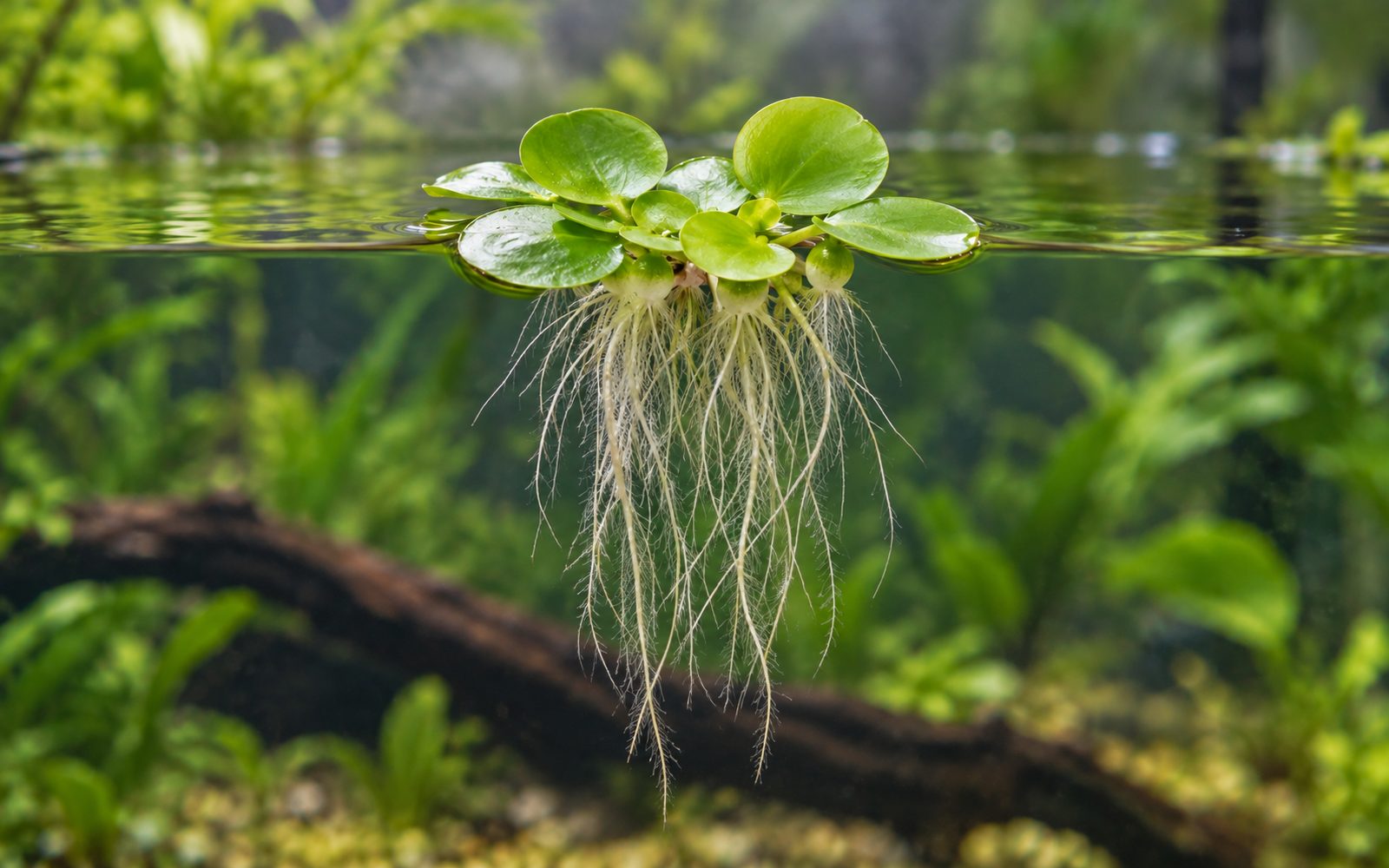 Amazon Frogbit
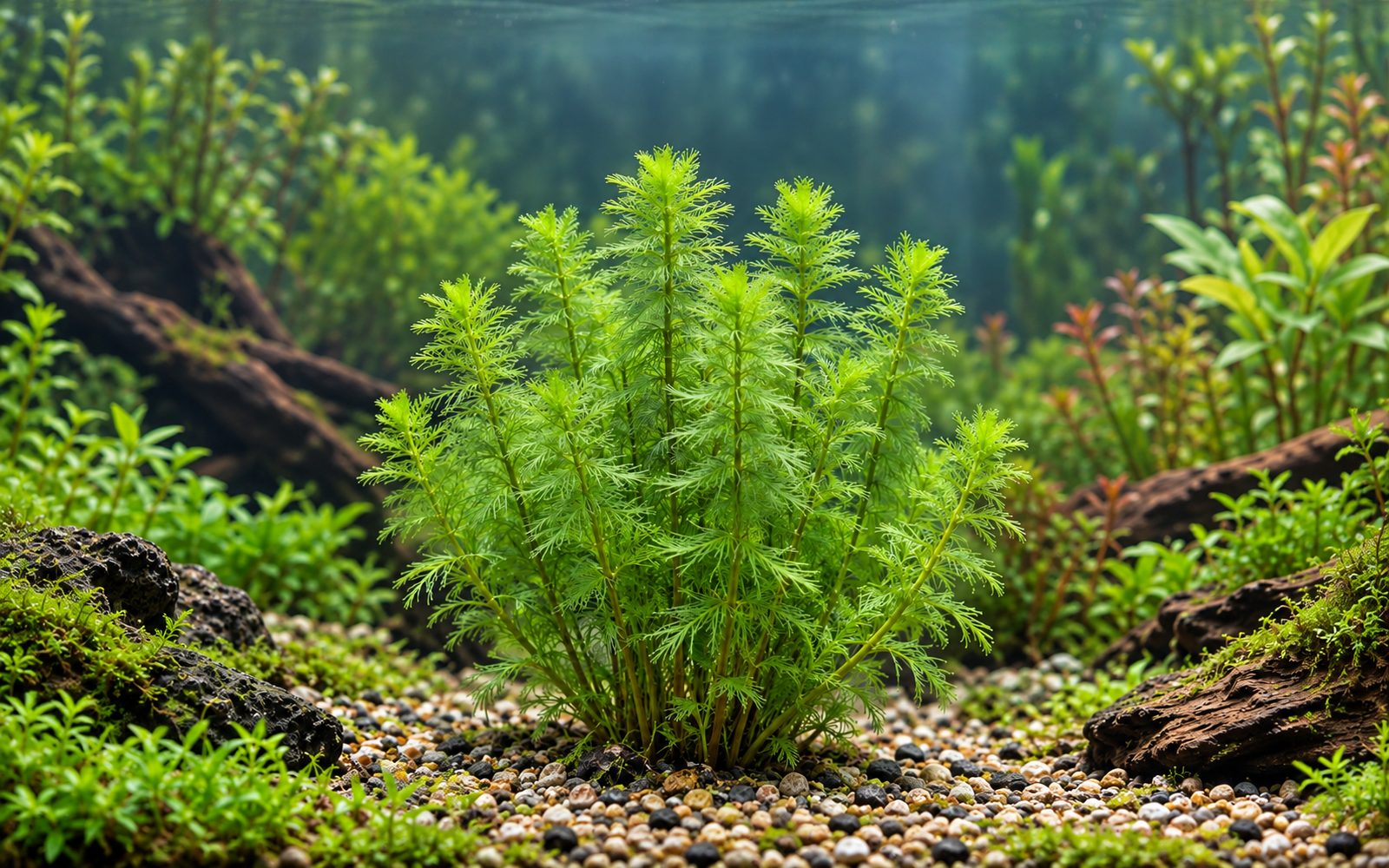 Ambulia
Should not be kept together








Hobbyist notes
Things you won't find in books, learned by trial and error. The most helpful ones are on top.
Change history and contributors
- Page created · October 16, 2026