
Water parameters
Overview
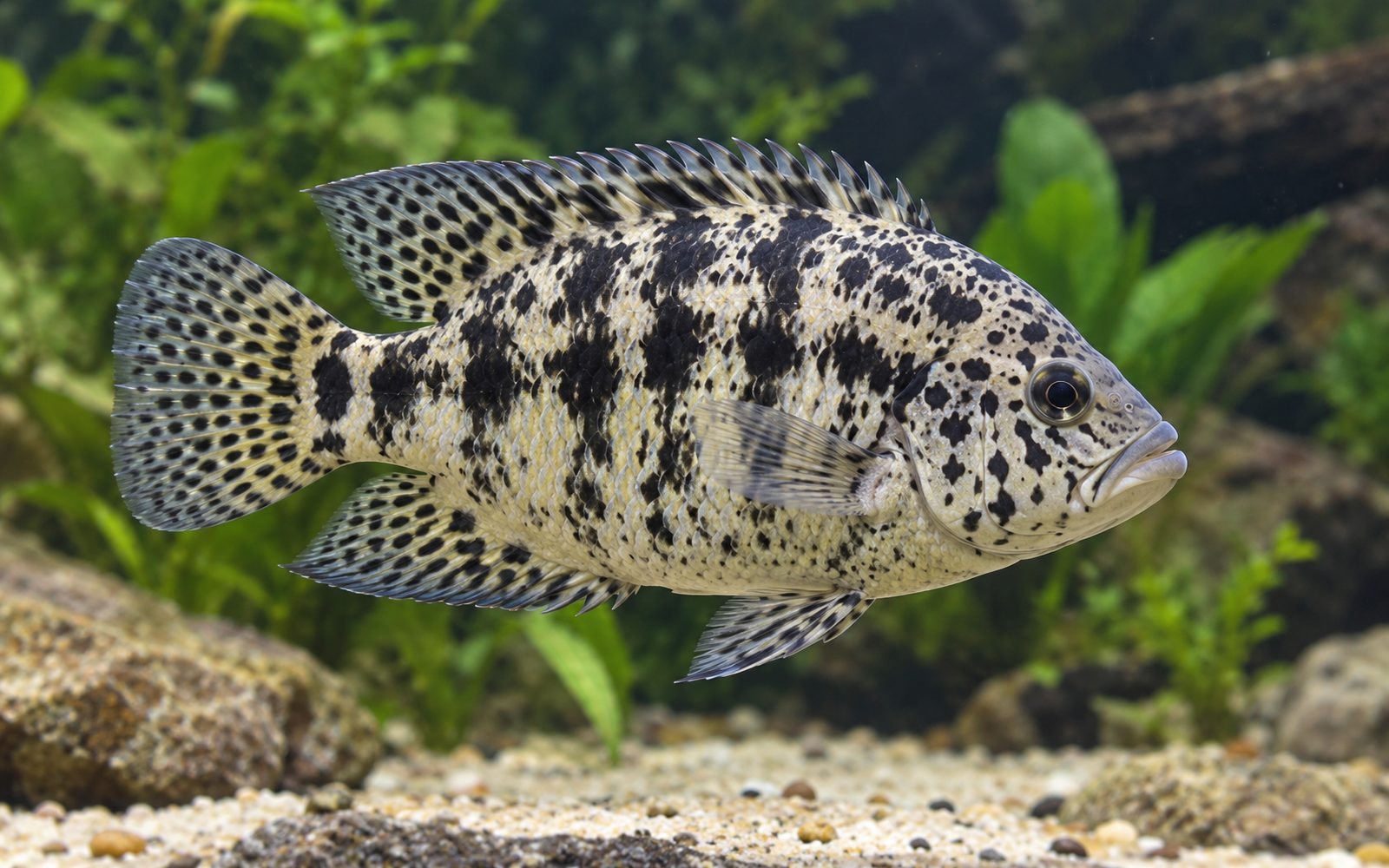
The Cuban cichlid is one of the few cichlids living on the Caribbean islands and is the only cichlid species native to Cuba. Its silvery white or pale yellow body is covered with irregular black spots and blotches; its fins are spotted too. During breeding the body darkens noticeably and the contrast increases. Males reach 25 cm; with its strong jaws it hunts fish, crustaceans and snails. It is rare in the trade and is mostly kept by Central American cichlid enthusiasts.
Tank Setup
- At least 350 liters and 150 cm of length for a single adult or a pair.
- Large rocks, caves and roots; it digs the substrate.
- Moderately hard, alkaline water; change 30% weekly.
- A powerful filter and a guarded heater.
Diet
Mainly carnivorous. Make large cichlid granules the staple; vary them with frozen shrimp, mysis, mussels and bloodworms, and add vegetables occasionally.
Behavior and Compatibility
Territorial and aggressive; during breeding it claims most of the aquarium. It eats fish that fit in its mouth.
Good companions: robust Central American cichlids of similar size, large plecos; in a large aquarium.
Avoid: small and peaceful fish, shrimp, snails, calm South American cichlids.
A short profile for this species
The Cuban Cichlid page has the basics, but the sections below have not been written yet. If you keep this species, write a section from your own experience; it will be published under your name after editor approval.
Tank mates
This list is calculated automatically from the species profile and grows as new species are added to the catalog. Try it in the planner for a definite answer.
Usually compatible
 Banded Jewel Cichlid
 Spotted Tilapia
 Flowerhorn
 Jack Dempsey
 Jaguar Cichlid
 Red Devil Cichlid
 Red Terror Cichlid
 Convict Cichlid
 Cryptocoryne Parva
 Wolf Cichlid
Should not be kept together








Hobbyist notes
Things you won't find in books, learned by trial and error. The most helpful ones are on top.
Change history and contributors
- Page created · October 16, 2026