
Water parameters
Overview
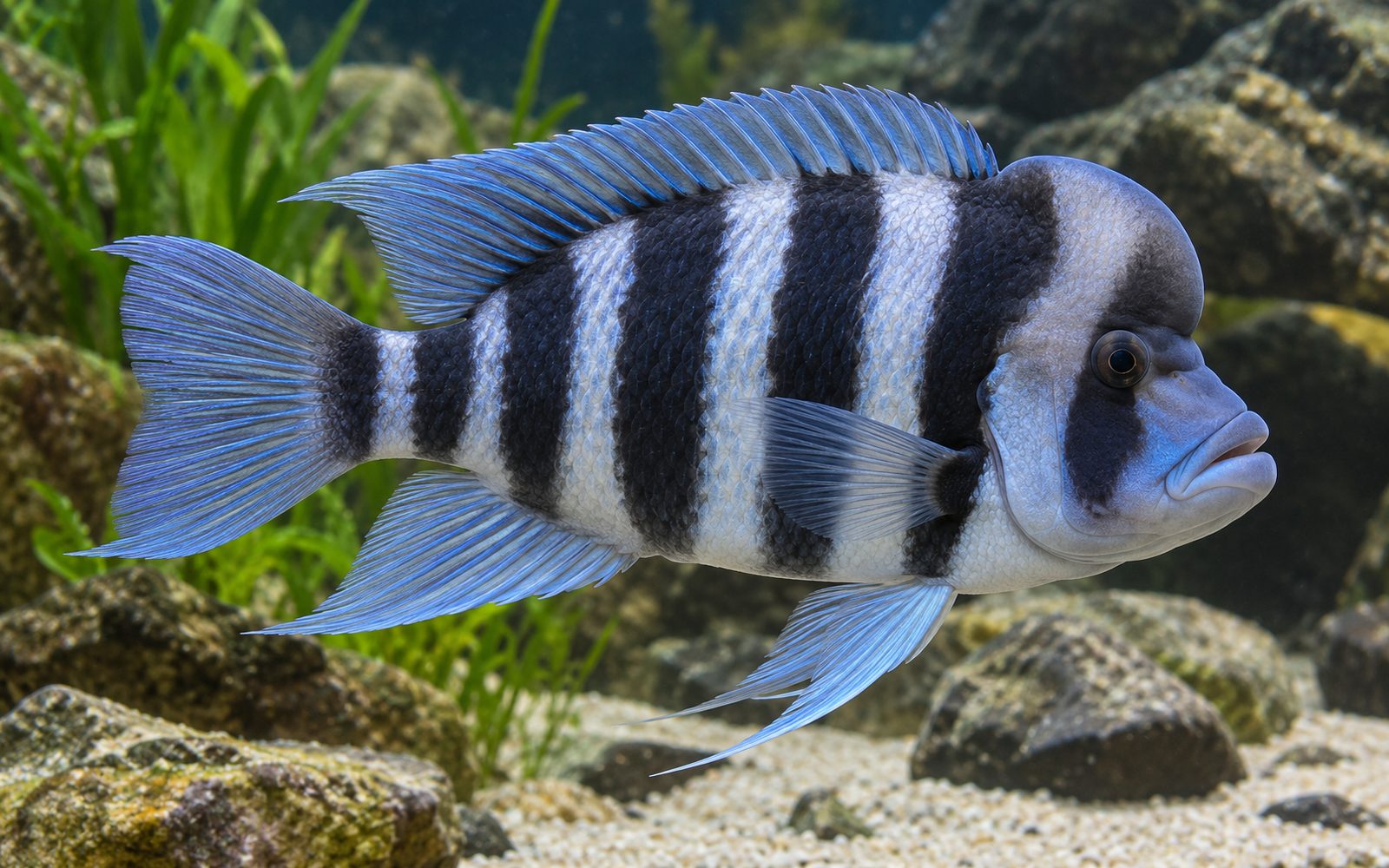
The frontosa is the best-known large cichlid of Lake Tanganyika, with a forehead hump that grows with age, thick black vertical bands on a white or pale bluish background, and long, blue-tinged fins. Males can exceed 30 cm, while females stay smaller. Because its movements are slow and calm, it is called the "gentle giant" in the hobby.
Its calm nature does not make it a community fish: it eats any fish that fits in its mouth. It grows very slowly and, with a lifespan that can exceed 20 years, it is a long-term commitment. Populations from the south of the lake were described as a separate species (Cyphotilapia gibberosa) in 2003; forms sold in the trade as "Moba" or "Mpimbwe" are generally attributed to that species.
Color and Fin Varieties
- Burundi and Kigoma: local forms from the north of the lake, the most common in the trade; they differ slightly from each other in background color and the intensity of the blue tones. Different forms should not be mixed in the same group.
Natural Habitat
It lives in the northern and central parts of the lake, in deep areas where rocky slopes meet sand. It is mostly seen in loose groups below 10 m, at depths down to 50 m. At this depth light is weak; temperature and water parameters hardly change throughout the year. It is known to hunt small fish around dawn, at hours when other fish are inactive.
Tank Setup
- Volume: at least 500 liters for a group of one male and 3–4 females; a length of 180 cm or more and a large footprint.
- Decor: a few large, sturdy rock caves are enough; leave a wide swimming area in the middle. Rocks should be placed on the glass bottom before the sand is added.
- Water: hard and alkaline (pH 8–9); a 25–30% water change every week. Keeping values stable matters more than hitting a specific target.
- Lighting: dim or moderate light; it may become shy under very bright light.
- Filter: a large body and carnivorous diet mean a heavy waste load; a powerful canister filter or a sump is recommended.
Diet
Carnivorous. The staple is a sinking granule made for large cichlids; vary it with frozen mysis shrimp, krill and pieces of shrimp. Live feeder fish are not given: they carry disease and are unnecessary. Mammalian meats such as beef heart are not recommended because they cause digestive problems. Adults are fed once a day, juveniles twice.
Behavior and Compatibility
Generally peaceful with its own species and large neighbors; within the group there is a quiet hierarchy set by the dominant male. Because it eats slowly and cautiously, it may not get enough food next to fast, greedy fish.
Good companions: calm, large Tanganyika species too big to fit in its mouth: adult Altolamprologus, large Synodontis catfish, large Julidochromis species (only adult, large individuals).
Avoid: Cyprichromis, shell-dwelling cichlids and all small fish (they become prey); fast, aggressive species such as Tropheus and Malawi mbuna (they stress the frontosa and snatch its food); shrimp.
Group and Colony Structure
- The most suitable setup is a harem: one male, 3–4 females.
- Since juveniles cannot be sexed, 8–10 juveniles are usually grown up together; within a few years the dominant male becomes apparent and the extra males are removed.
- In very large aquariums (800 liters or more), more than one male can live together with a clear hierarchy.
- Adding a new adult to an established group is risky; the newcomer may be targeted.
Breeding
The female is a mouthbrooder. Spawning usually takes place inside a cave or on a flat stone; the female lays a few dozen large eggs and immediately takes them into her mouth. Incubation lasts about 4–5 weeks. The fry leave the mouth at around 1.5 cm, ready to swim, and are fed newly hatched brine shrimp and finely crushed granules. Because they grow slowly, they reach breeding maturity at 3–4 years of age.
Health and Common Problems
- Bloat and digestive problems: caused by overfeeding and unsuitable food; loss of appetite and white, stringy feces are the first signs.
- Water quality: high nitrate and falling pH set the stage for fin rot and bacterial infections in a large fish.
- Transport stress: newly arrived individuals are prone to white spot disease; quarantine in a separate tank is recommended.
- To prevent eye and fin injuries, the rockwork should be stable and free of sharp edges.
Sexing
Almost impossible to tell apart in juveniles. Adult males are noticeably larger, with a bigger forehead hump and longer fin tips. However, since females also develop a hump, this alone is not reliable; a definite distinction is made by looking at the genital papilla.
Tank mates
This list is calculated automatically from the species profile and grows as new species are added to the catalog. Try it in the planner for a definite answer.
Usually compatible
 Yellow Tail Acei
 Fairy Cichlid
 Peacock Cichlid
 Bumblebee Cichlid
 Horned Nerite Snail
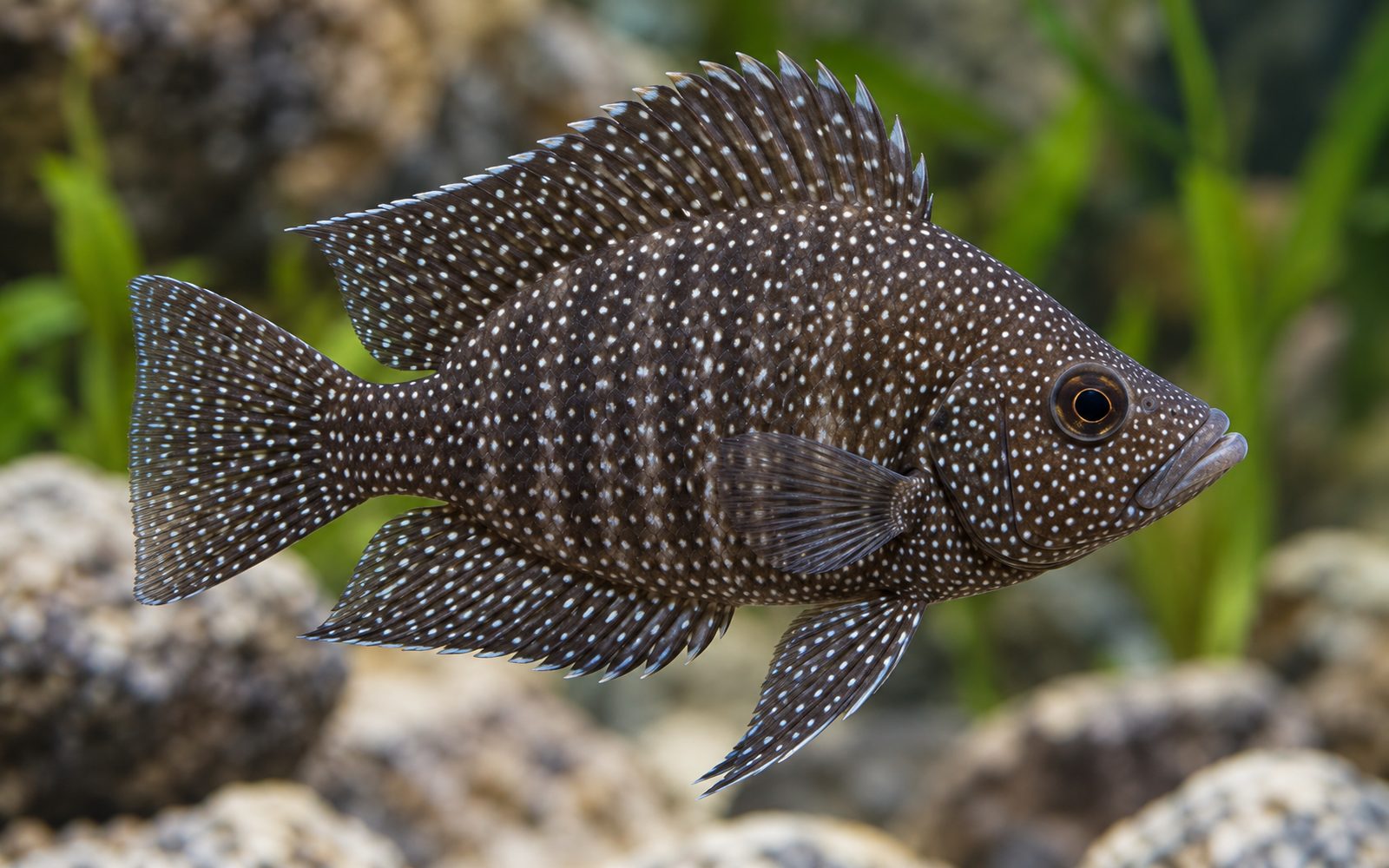 Altolamprologus calvus
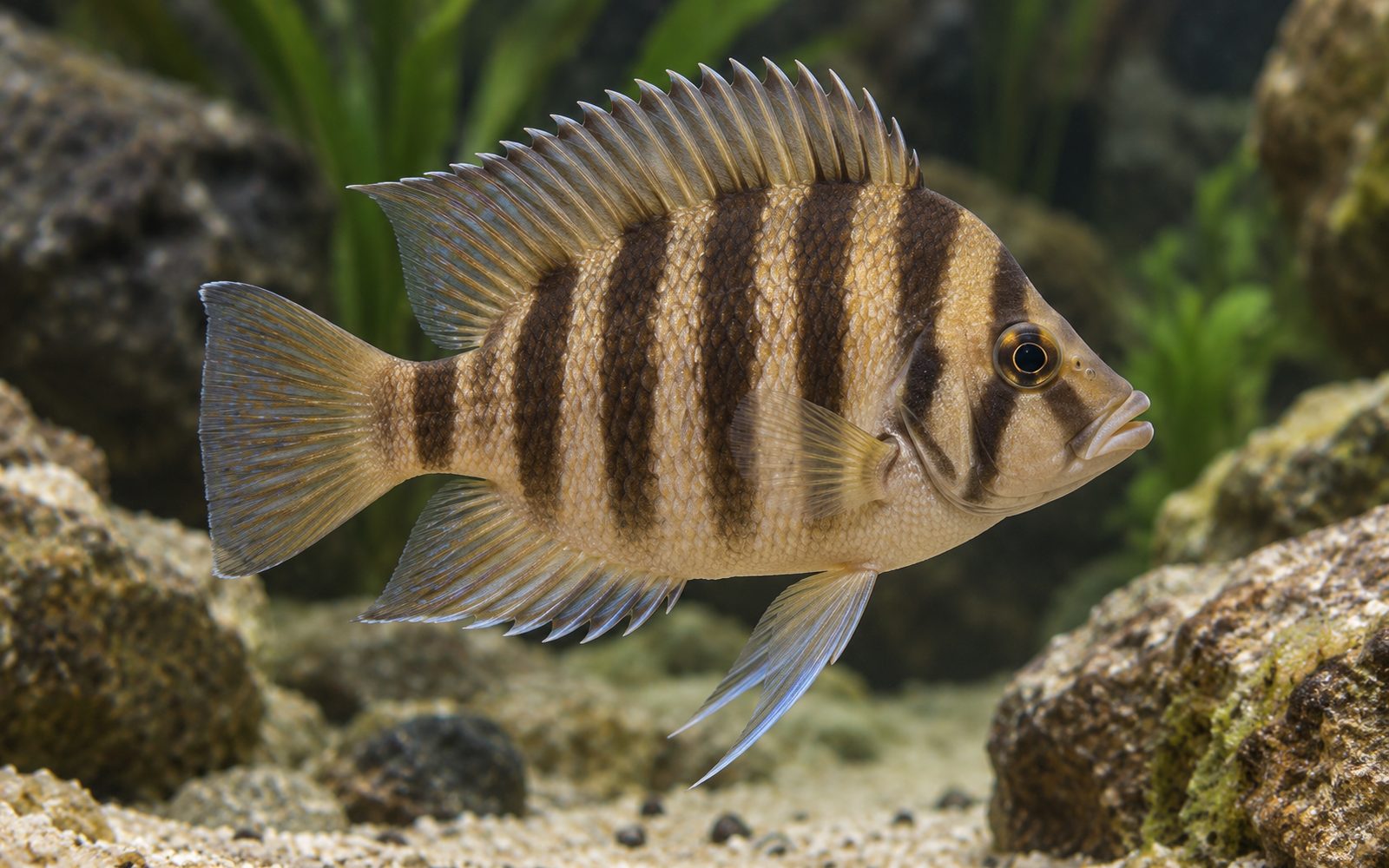 Altolamprologus compressiceps
Copadichromis azureus
Altolamprologus compressiceps
Copadichromis azureus
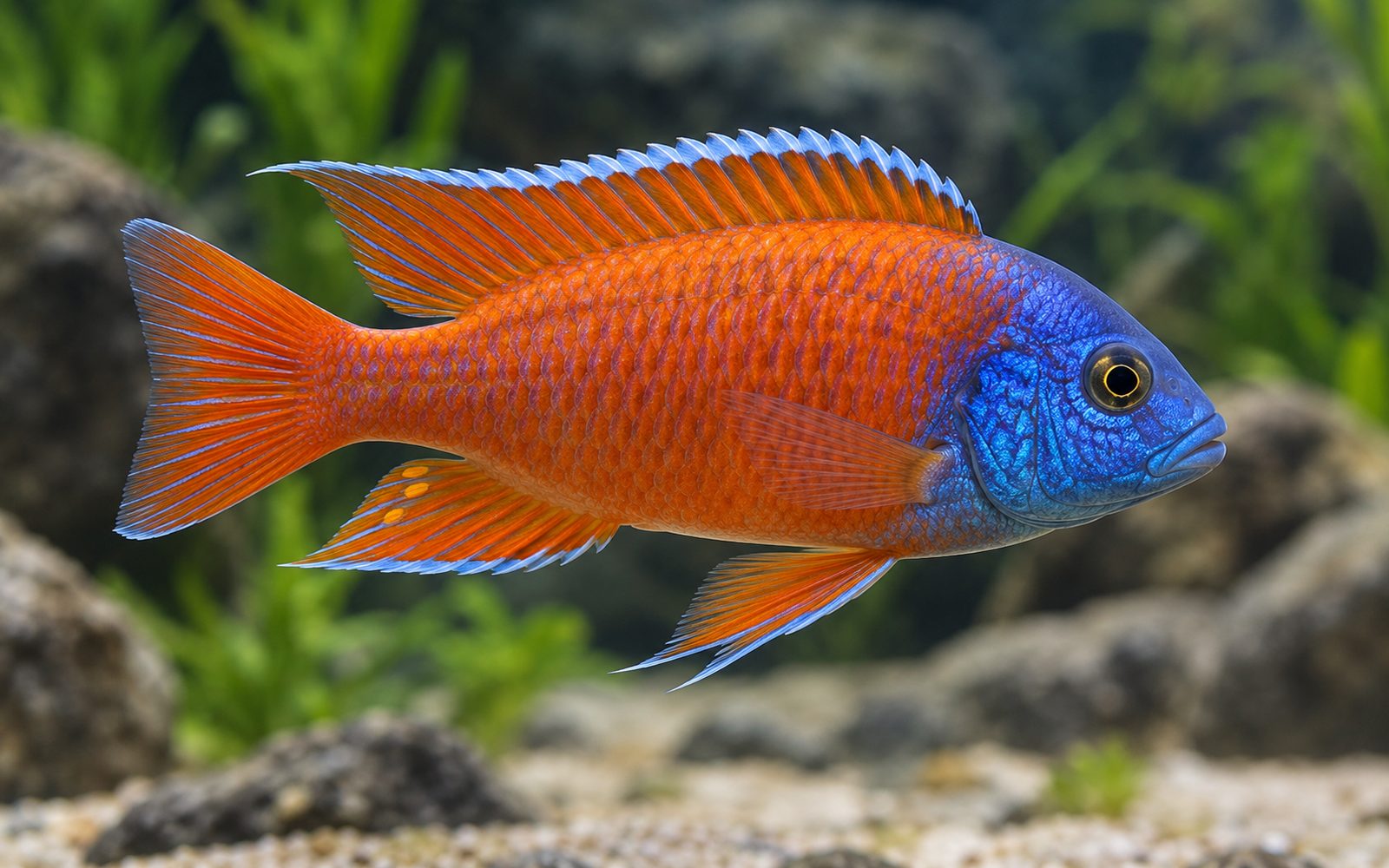 Copadichromis borleyi
Cyathopharynx furcifer
Copadichromis borleyi
Cyathopharynx furcifer
Should not be kept together








Hobbyist notes
Things you won't find in books, learned by trial and error. The most helpful ones are on top.
Change history and contributors
- Page created · October 16, 2026