
Water parameters
Overview
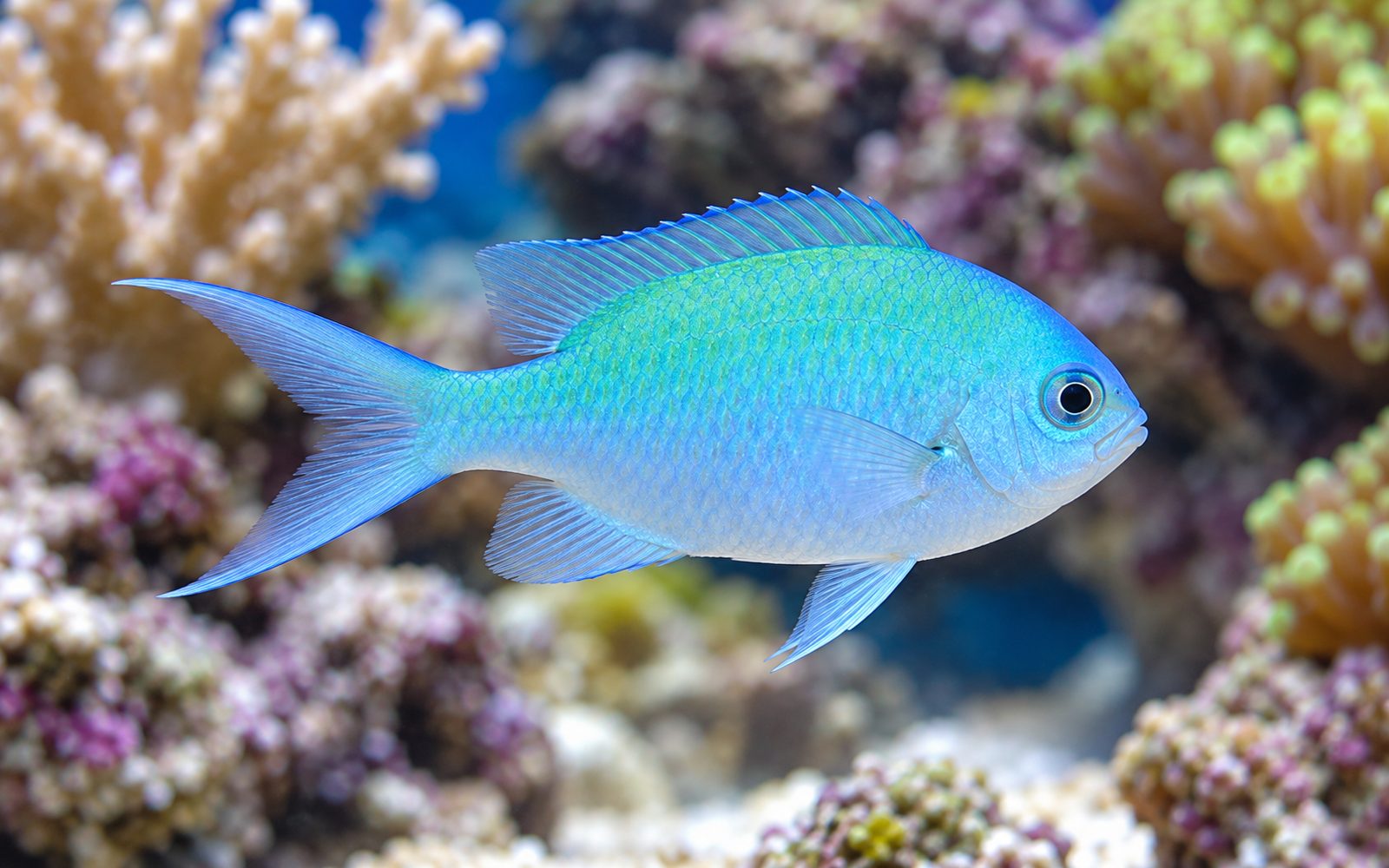
With its iridescent color that shifts from pale apple green to sky blue depending on the light, and its deeply forked tail, the green chromis is the best-known schooling fish of reef aquariums. It belongs to the damselfish family, but unlike most of its relatives it is peaceful. Swimming as a group in open water, they add a lot of movement to the aquarium.
Its drawback is that the school shrinks over time in the aquarium: dominant individuals chase the weaker ones, and some also succumb to shipping stress and disease. Chromis atripectoralis, which is often mixed up with it in the trade, is distinguished by a black spot at the base of the pectoral fin.
Natural Habitat
From the Red Sea to the central Pacific it lives in large schools above branching Acropora colonies in shallow lagoons and sheltered reefs. It picks plankton brought by the current; when in danger they all drop down together among the coral branches.
Tank Setup
- Volume: At least 200 liters and 100 cm in length for a group of 5–7.
- Water: Salinity specific gravity 1.023–1.026, pH 8.1–8.4, temperature 24–27°C. It needs stable, clean water.
- Reef compatibility: Reef-safe; it leaves corals and invertebrates alone.
- Layout: A wide open swimming area in the middle, with branching corals or rock holes at the back where they can retreat at night.
- Quarantine: It is prone to velvet and white spot; do not put new specimens directly into the main aquarium.
Diet
An omnivorous species that feeds on plankton. Offer small granules and flakes, frozen mysis, brine shrimp and copepods. Feeding small meals 2–3 times a day ensures that the weaker individuals in the school also get food.
Behavior and Compatibility
Peaceful towards other fish. Within its own group, however, it establishes a hierarchy; dominant individuals may drive the weaker ones away from food and shelter.
Good companions: Clownfish, gobies, blennies, cardinalfish, royal gramma, tangs, cleaner shrimp.
Avoid: Aggressive damselfish, large dottybacks, lionfish and predators that can fit it in their mouths, large hawkfish.
Group and Colony Structure
The chromis is a schooling fish: at least 5, ideally 7 or more individuals. An odd-numbered group, all added at the same time, is recommended. Small groups of 3 usually dwindle to one or two fish; a chromis left alone becomes timid and its color fades. As the school grows, pressure is spread out.
Breeding
During the breeding season the male prepares a nesting area in sand or rubble; several females lay eggs there and the male guards them. Spawning can be seen in the aquarium, but raising the planktonic fry is very difficult.
Health and Common Problems
- Velvet (Amyloodinium): It can progress quickly and fatally in this species; quarantine is essential.
- Marine white spot: Common after shipping stress.
- An individual that stays apart from the school, hides and does not eat is usually being bullied.
Sexing
There is no reliable external difference. During the breeding season the male's color changes and he becomes noticeably active around the nest.
Tank mates
This list is calculated automatically from the species profile and grows as new species are added to the catalog. Try it in the planner for a definite answer.
Should not be kept together



Hobbyist notes
Things you won't find in books, learned by trial and error. The most helpful ones are on top.
Change history and contributors
- Page created · October 16, 2026