
Water parameters
Overview
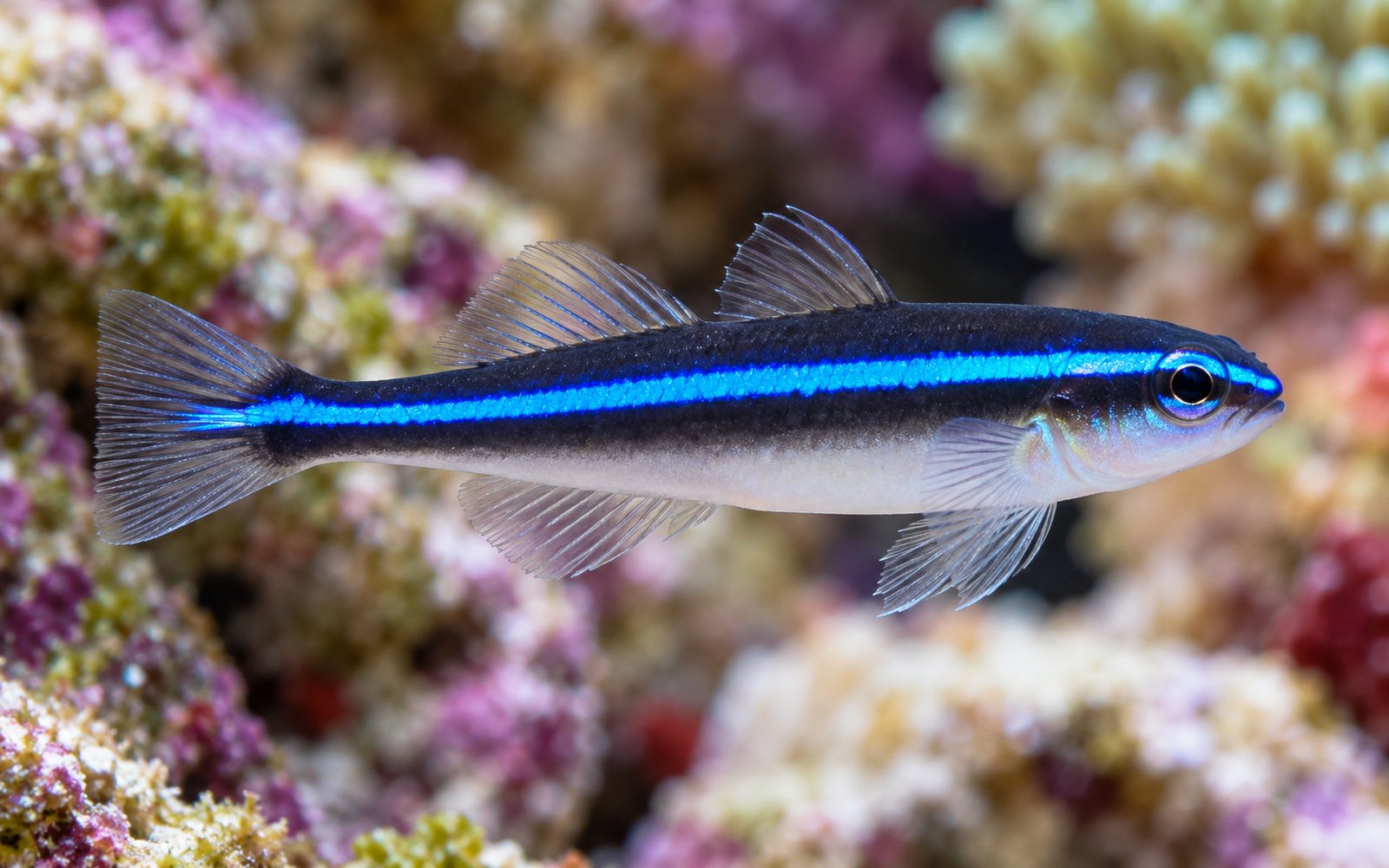
The neon goby is a small cleaner fish with an electric blue stripe running along its dark body from the eye to the tail. In the wild it sets up "cleaning stations"; large fish come there and let it pick the parasites from their skin and gills. In the aquarium it may also clean other fish, but it cannot live on parasites alone; it needs regular food.
Most of the fish sold are captive-bred. Captive-bred neon gobies are hardy, used to dry food and the right choice for this species. Its lifespan is short compared with other reef fish; it lives a few years.
Natural Habitat
It lives on shallow reefs in the western Atlantic, from Florida to the Gulf of Mexico and Belize. It usually perches in pairs or small groups on top of large coral heads such as brain corals, or on rocks, waiting for fish that come to be cleaned.
Tank Setup
- Volume: at least 40 liters for a pair; very well suited to small reef (nano) aquariums.
- Water: salinity 1.023–1.026 specific gravity, pH 8.1–8.4, temperature 24–27°C; zero ammonia and nitrite, low nitrate.
- Reef compatibility: reef safe; it leaves corals, shrimp and snails alone.
- Layout: rock surfaces and corals to perch on, small holes to hide in.
- Flow: moderate flow is enough; because of its small size, cover pump intakes with sponge.
Diet
Carnivorous. Use small frozen foods (mysis, brine shrimp, copepods) and fine granules as the staple. Captive-bred fish accept dry food immediately. Feed small amounts twice a day; cleaning behavior alone does not provide enough food.
Behavior and Compatibility
Peaceful and curious; it perches on rocks near the front glass of the aquarium. It can be territorial toward unfamiliar fish of its own species.
Good companions: clownfish, firefish, cardinalfish, royal gramma, blennies, cleaner and other ornamental shrimp.
Avoid: hawkfish, large dottybacks, lionfish and any predator whose mouth it fits into; aggressive damsels.
Group and Colony Structure
Kept singly or as a pair. A mated pair is the best option; two unfamiliar adults, especially two males, fight in a small aquarium. In a large aquarium, more than one pair can live together if there is enough perching space.
Breeding
It is one of the easiest marine fish to breed in the aquarium and one of the first marine fish to be bred commercially. The pair lays its eggs inside a shell, a pipe or a rock cavity; the male guards the eggs. The eggs hatch in about a week. The larvae are planktonic and are fed rotifers in the first days, then newly hatched brine shrimp.
Health and Common Problems
- Captive-bred fish are resistant to disease.
- Marine white spot and velvet: keep new fish in quarantine.
- Weight loss is usually caused by poor nutrition; do not neglect feeding just because it cleans other fish.
Sexing
There is no reliable external difference. A female carrying eggs has a fuller belly; the shape of the genital papilla may give a clue on close inspection.
Tank mates
This list is calculated automatically from the species profile and grows as new species are added to the catalog. Try it in the planner for a definite answer.
Should not be kept together



Hobbyist notes
Things you won't find in books, learned by trial and error. The most helpful ones are on top.
Change history and contributors
- Page created · October 16, 2026