
Water parameters
Overview
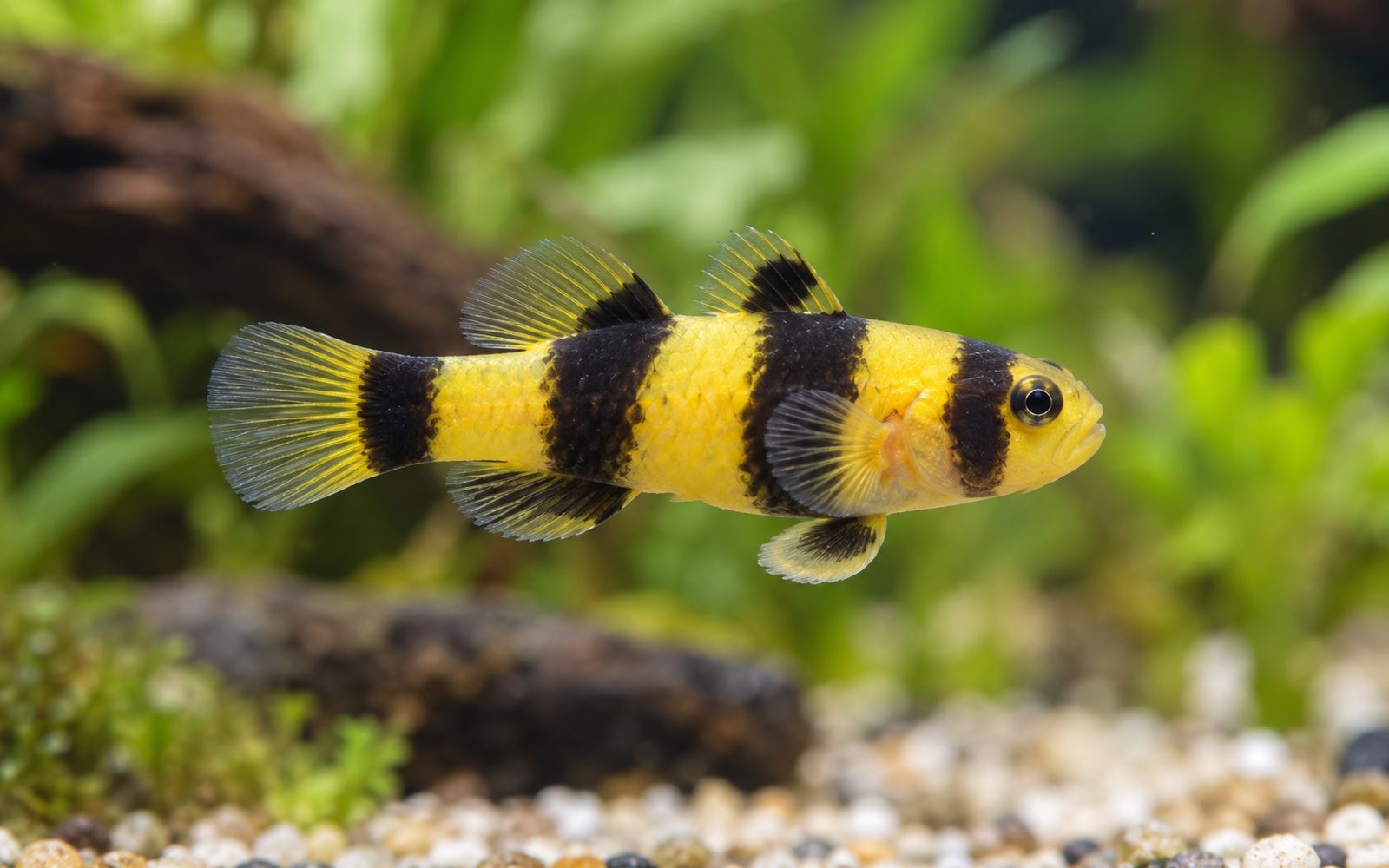
The bumblebee goby resembles a tiny honeybee with four thick black bands wrapping around its yellow body. It is a chubby bottom-dweller with plenty of personality that stays at 3–4 cm; it clings to stones and glass with its fused pelvic fins.
It is often sold in stores as a freshwater fish, but in the wild it lives in slightly brackish waters and is healthier in salty water in the long run. Several very similar Brachygobius species are sold in the trade under the name bumblebee goby; their care is the same.
Natural Habitat
It lives in the mangrove swamps, estuaries and tidal river mouths of Southeast Asia, among plants and leaf litter.
Tank Setup
- Volume: at least 60 liters for a group of 6–8; floor area is important.
- Salinity: a specific gravity of 1.003–1.008 with marine salt is recommended; it can live in hard, alkaline fresh water, but a little salt strengthens its immunity. Change salinity gradually.
- Caves: more small caves, shells and stone crevices than there are fish; each individual claims its own corner.
- Water: warm, hard and alkaline; gentle flow.
Diet
Carnivorous and picky. Live or frozen brine shrimp, bloodworms, daphnia, cyclops. Most individuals do not take flakes or granules. Its mouth is small; offer small foods.
Behavior and Compatibility
Territorial among its own kind; it has brief fights over caves. Because it is small it is harmless to other species, but it loses the competition for food against busy, fast fish.
Good companions: small, calm species that adapt to the same salinity: Indian glassfish, mollies (acclimated to brackish water), small brackish gobies.
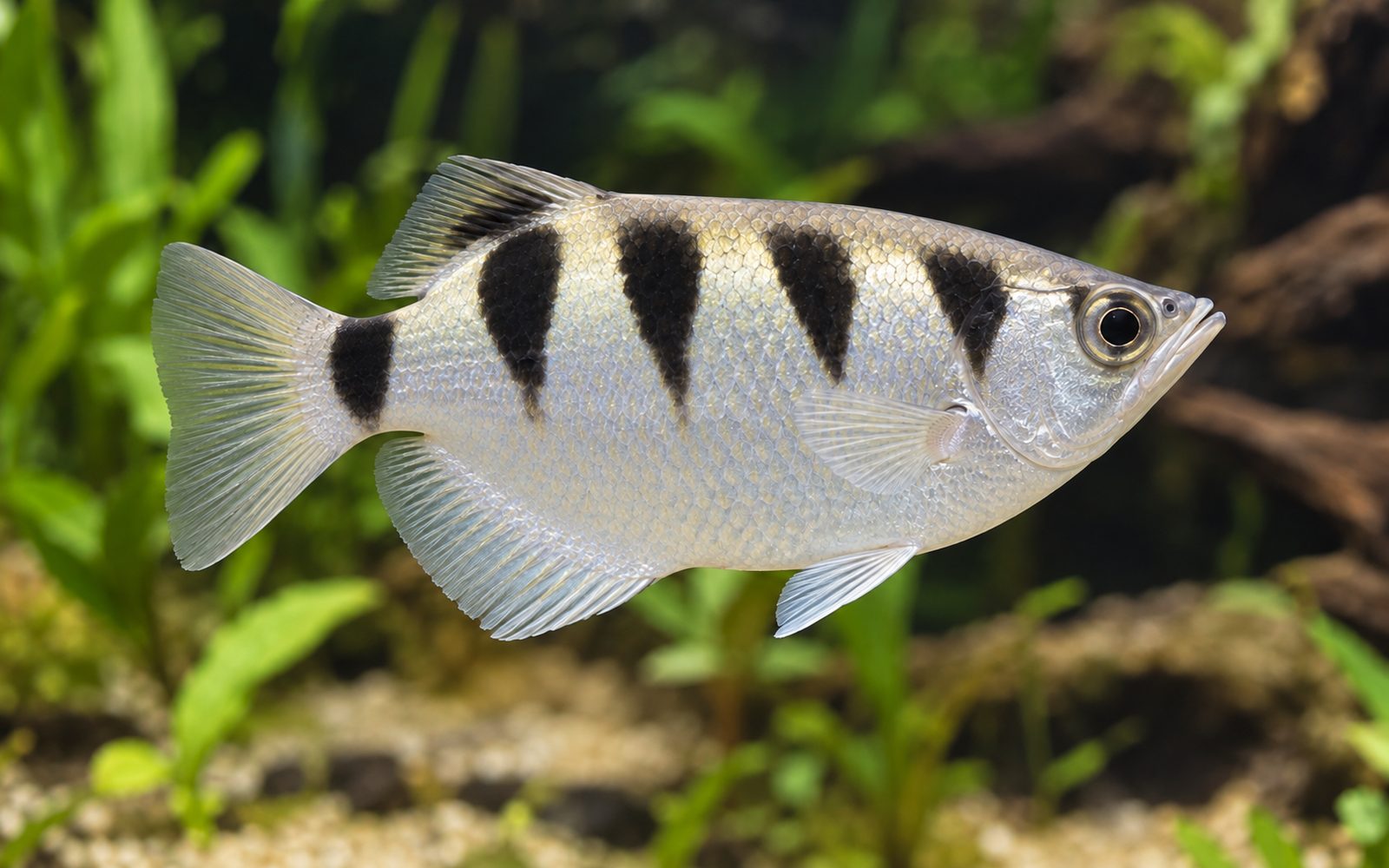
Avoid: puffers (it becomes food), archerfish and other predators, fast and large community fish, species that need fully fresh water.
Group and Colony Structure
It should be kept in a group of 6 or more; aggression is spread out within the group. If 2–3 are kept, the strongest constantly chases the others.
Breeding
A cave spawner: the female lays her eggs on the ceiling of a cave, and the male guards and fans them. The fry are very small and need tiny foods such as infusoria and marine rotifers; raising them is difficult.
Health and Common Problems
- Weakening in fresh water: resistance to disease drops in fish kept for long periods in unsalted water.
- Starvation: because of its picky eating it loses weight in a competitive aquarium; watch for fish with a sunken belly.
- Sudden salinity changes: can cause shock and death.
Sexing
Females are chubbier, and their bellies are noticeably swollen during the breeding season. Males are slimmer; their color tones may change during the breeding season.
Tank mates
This list is calculated automatically from the species profile and grows as new species are added to the catalog. Try it in the planner for a definite answer.
Usually compatible
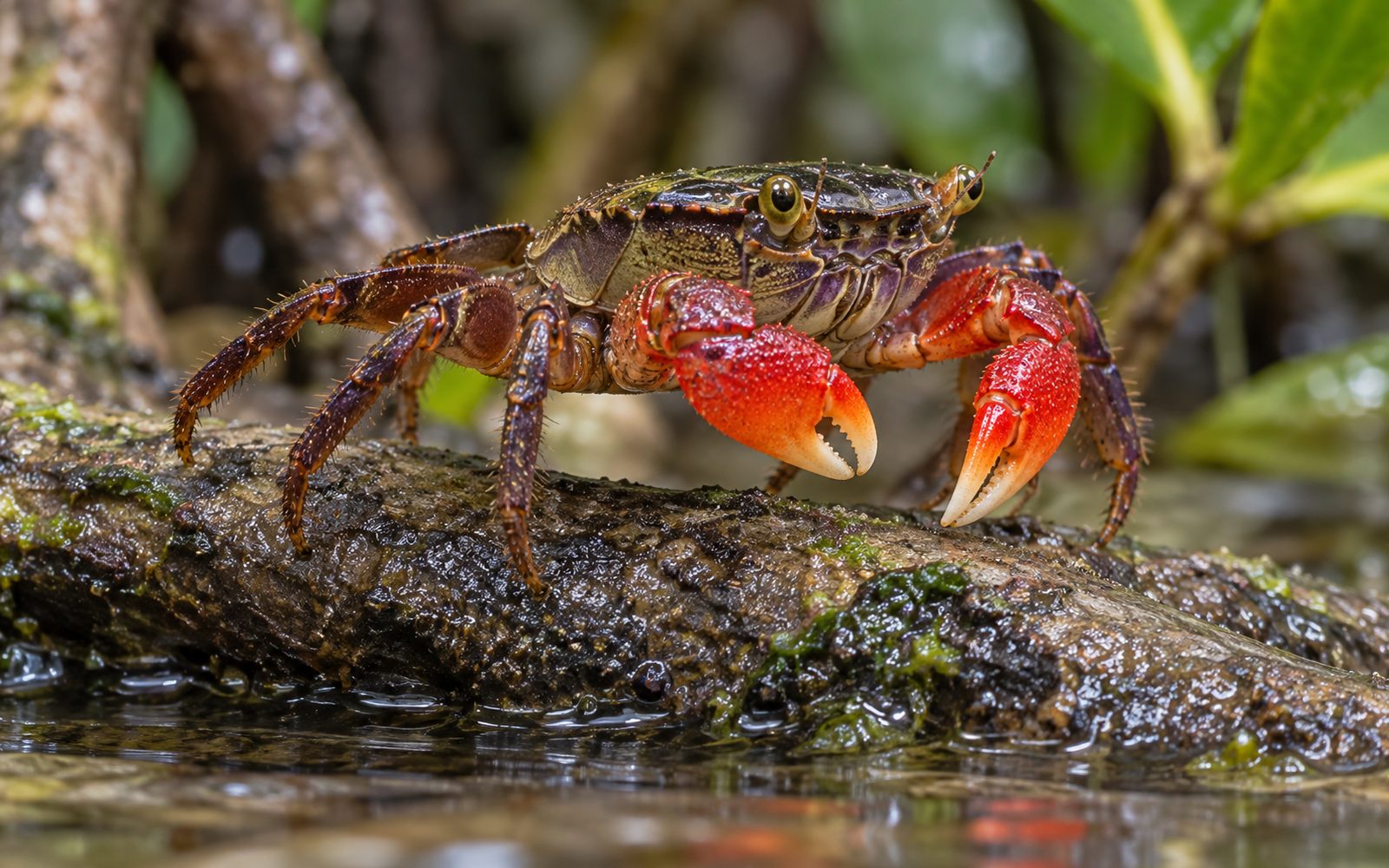 Red Claw Crab
Mangrove Rivulus
Knight Goby
Red Claw Crab
Mangrove Rivulus
Knight Goby
Should not be kept together
Hobbyist notes
Things you won't find in books, learned by trial and error. The most helpful ones are on top.
Change history and contributors
- Page created · October 16, 2026