
Water parameters
Overview
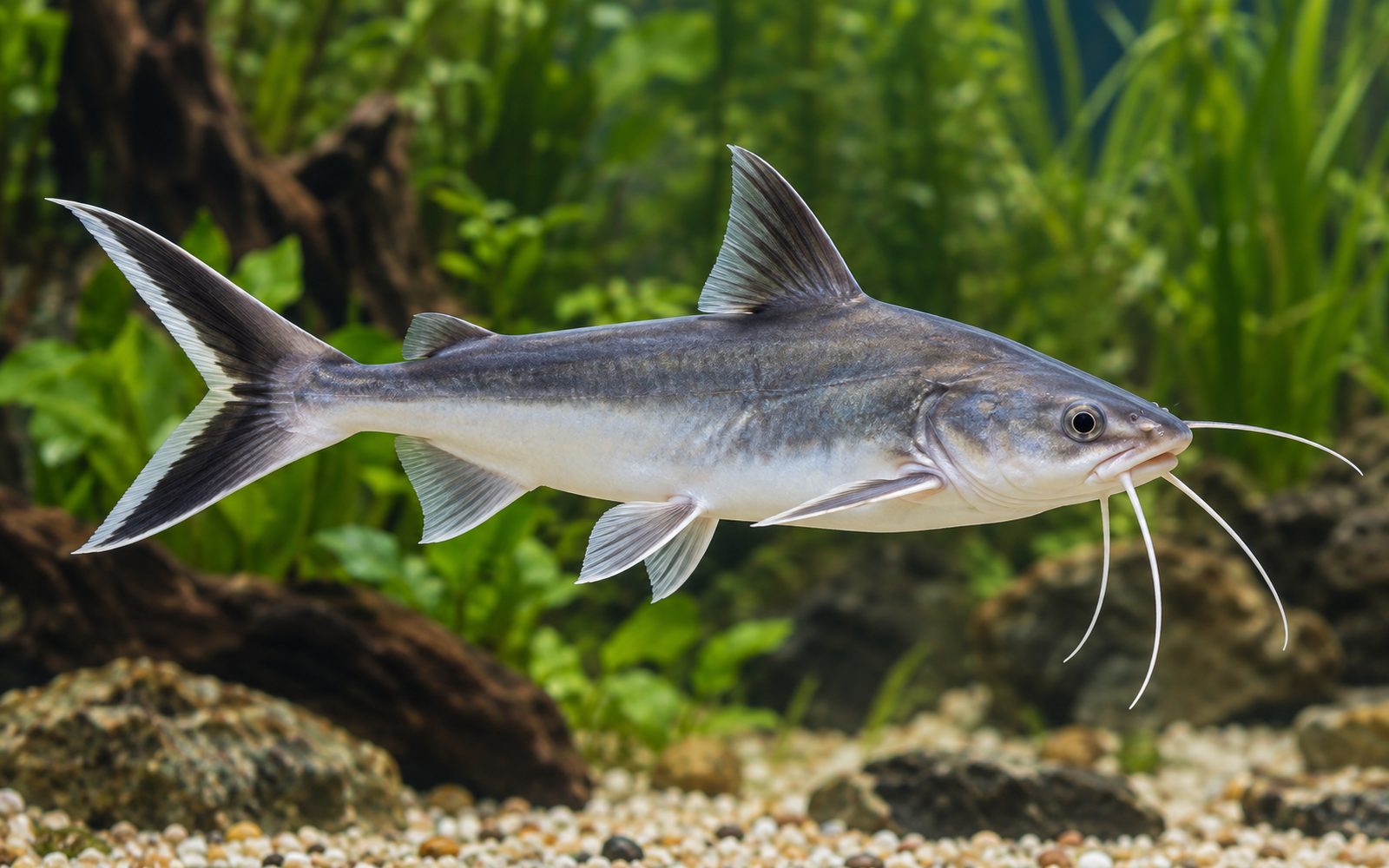
The Columbian shark is the member of the sea catfish family (Ariidae) sold most often for aquariums. With its silvery gray body, tall pointed dorsal fin and forked tail, it really does resemble a small shark. Juveniles have prominent black and white edges on their fins.
A common misconception: stores often sell it as a freshwater fish. Juveniles can live in fresh water for a while, but in the wild the species lives in estuaries and coastal lagoons; as it grows it needs brackish and then nearly full marine water. Individuals kept permanently in fresh water sicken over time and die early. Adults reach 30–35 cm.
Natural Habitat
It lives in estuaries, mangroves and coastal lagoons along the Pacific coast of the Americas, from Mexico to Peru. Juveniles move up into the lower reaches of rivers; adults move into saltier water and to the coast.
Tank Setup
- Volume: at least 600 liters and 180 cm of length for a school of 4–6.
- Salinity: lightly brackish water for juveniles (specific gravity about 1.005); as they grow, raise it gradually to 1.010 and above. Measure salinity with a refractometer or hydrometer and avoid sudden changes.
- Water: 24–28°C, pH 7.5–8.5, hard, well-buffered water.
- Decor: a large open swimming area; sand substrate and a few large rocks or roots. Very few plants tolerate salt water.
- Filter: strong filtration and high oxygen; it is a hearty, active eater and produces a lot of waste.
Diet
Omnivorous and greedy. Offer sinking granules, frozen bloodworms, mysis, shrimp, mussels and pieces of fish. It finds food quickly and eats large amounts; avoid overfeeding.
Behavior and Compatibility
Peaceful but active; as a school it constantly swims through every part of the aquarium. It eats small fish and shrimp that fit in its mouth. The spines in the dorsal and pectoral fins are venomous; a sting is very painful and causes swelling.
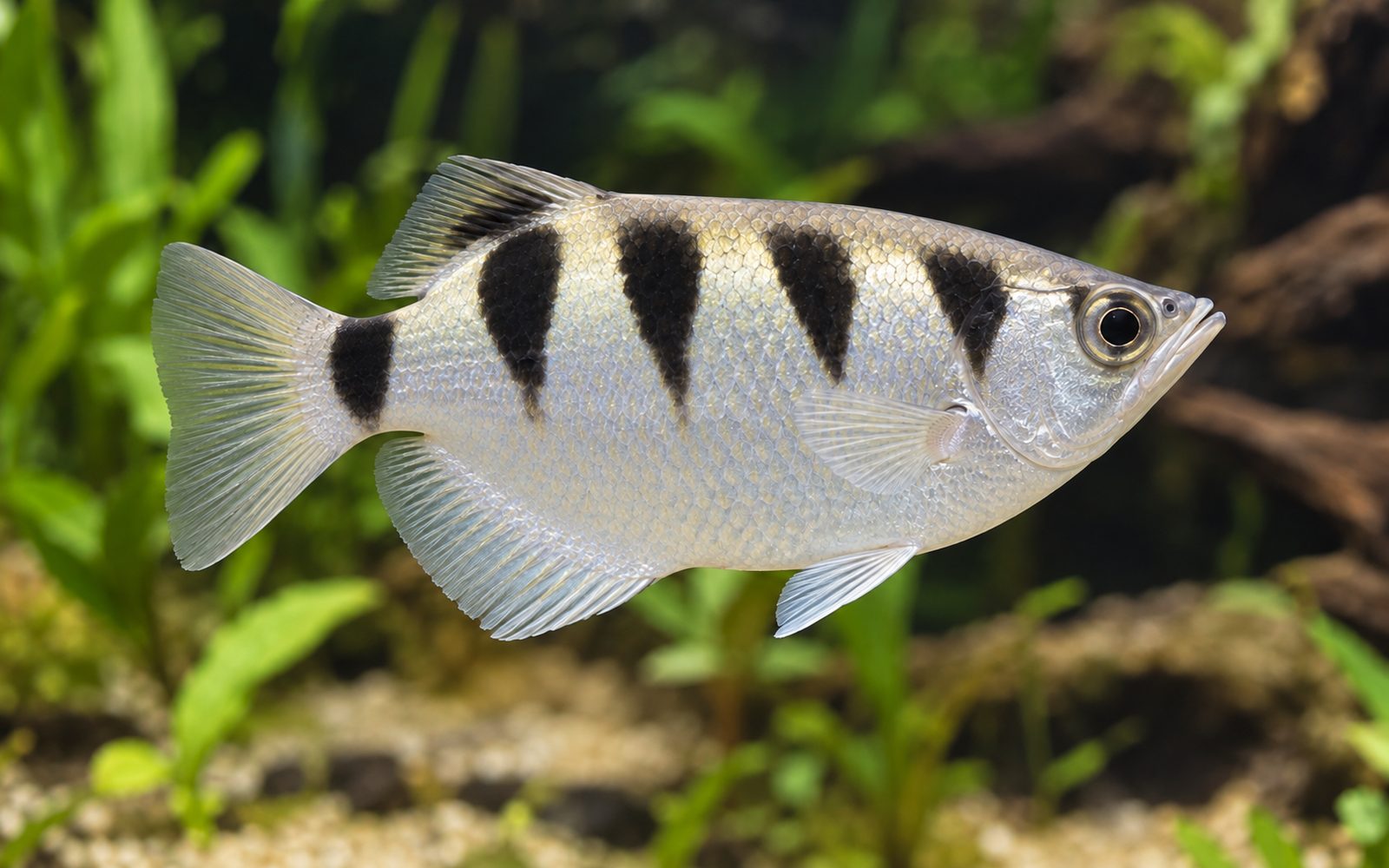
Good companions: medium to large fish that tolerate brackish water: scats (Scatophagus), monos (Monodactylus), archerfish and calm species of similar size.
Avoid: freshwater community aquariums, small fish, shrimp.
Group and Colony Structure
It is a schooling fish: at least 4, ideally 6 individuals. Kept as one or two fish, it becomes skittish and tense. The sex ratio does not matter.
Breeding
It does not breed in the aquarium. Like other members of its family, the male is known to incubate the large eggs by carrying them in his mouth. Individuals in the trade are wild-caught or come from farms.
Health and Common Problems
- Wrong salinity: in fish kept in fresh water for long periods, immunity weakens and skin and fin infections and ich become more frequent.
- Venomous spines: never handle the fish with bare hands; catch it with a container. If stung, rinsing the wound with hot water may ease the pain; seek medical help for a severe reaction.
- Its spines get caught in nets; use a container.
Sexing
Cannot be reliably sexed externally; mature females may look slightly plumper.
Tank mates
This list is calculated automatically from the species profile and grows as new species are added to the catalog. Try it in the planner for a definite answer.
Usually compatible
Should not be kept together
Hobbyist notes
Things you won't find in books, learned by trial and error. The most helpful ones are on top.
Change history and contributors
- Page created · October 16, 2026