
Water parameters
Overview
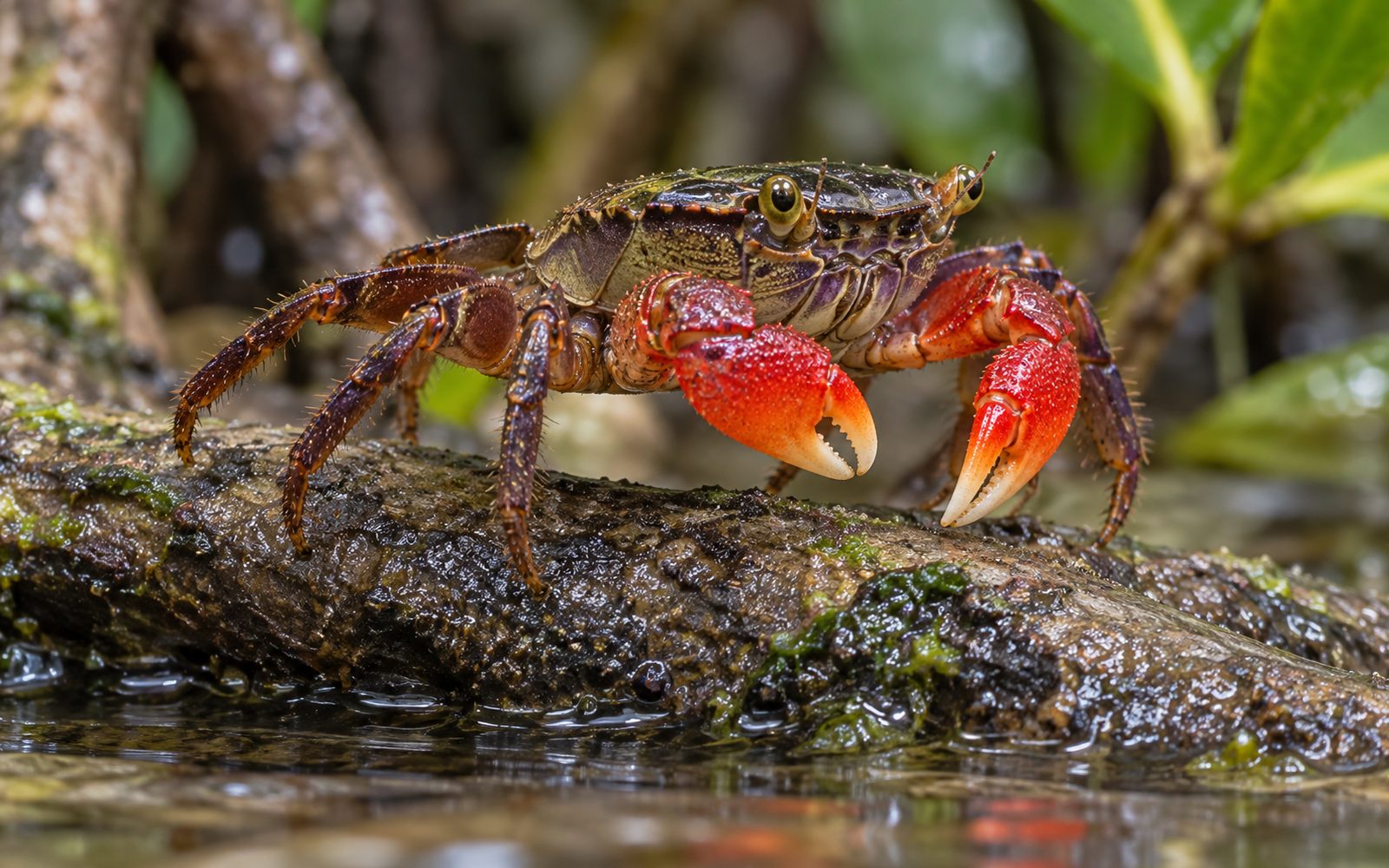
The red claw crab is one of the crabs most often seen in pet stores. Its shell is around 4 cm; it stands out with its dark olive-brown body and bright red claws. Its former names are Sesarma bidens and Perisesarma bidens.
It is often mistakenly sold as a freshwater aquarium animal. In fact this species is semi-terrestrial: it spends much of its time out of the water and lives in brackish water in the wild. If kept in a fully aquatic aquarium it either escapes or dies within a short time. The right setup is a paludarium with a land area.
Natural Habitat
It lives in the mangrove forests, river mouths and tidal zones of East and Southeast Asia. It hides on muddy shores, among roots and in burrows it digs; it moves back and forth constantly between water and land.
Tank Setup
- Setup: A paludarium. About half of the floor should be land (sand, rocks, roots) and half water 10–15 cm deep. The crab must be able to climb out of the water easily.
- Water: Slightly salty (brackish) water; a specific gravity of about 1.005 using marine salt. Adjust salinity slowly; do not change it abruptly.
- Humidity and temperature: The land area should stay humid; 24–27°C.
- Lid: A tight lid is a must. It climbs out through cable and hose holes; an escaped crab dries out and dies somewhere in the house.
- Hiding places: Caves on both the water and the land side.
Diet
Omnivorous. It eats sinking tablets, granules, frozen bloodworms and brine shrimp, blanched vegetables, pieces of fruit and dried leaves. It is good to leave food both in the water and on the land side; leftovers spoil quickly, so remove them the next day.
Behavior and Compatibility
Territorial; males in particular fight among themselves. At night it may catch small fish and shrimp sleeping on the bottom. It tears up and cuts plants.
Good companions: It is best kept with its own species. Fast, medium-sized fish that tolerate brackish water (such as mollies) are sometimes kept with it in the water section, but there is a risk.
Avoid: Freshwater community fish, small and slow fish, dwarf shrimp, other crab species.
Group and Colony Structure
One male and two females is the most trouble-free arrangement. More than one male can only be housed in large paludariums with plenty of hiding places; otherwise fights and lost claws occur. Lost legs and claws grow back over the following molts.
Breeding
The female carries her eggs under her abdominal flap. The larvae develop in the sea; raising them at home is very difficult and in practice is not done. Individuals for sale are collected from the wild.
Health and Common Problems
- Being kept in fresh water: Crabs that stay in fresh water for long periods weaken; this is the most common cause of death.
- Molting: During this period it hides and is defenseless; do not disturb it, and leave the shed shell in place.
- Escapes: Gaps in the lid are the most common cause of loss.
Sexing
Males have a narrow, roughly triangular abdominal flap; females have a wide, rounded one. Males' claws are usually larger and a brighter red.
Tank mates
This list is calculated automatically from the species profile and grows as new species are added to the catalog. Try it in the planner for a definite answer.
Usually compatible
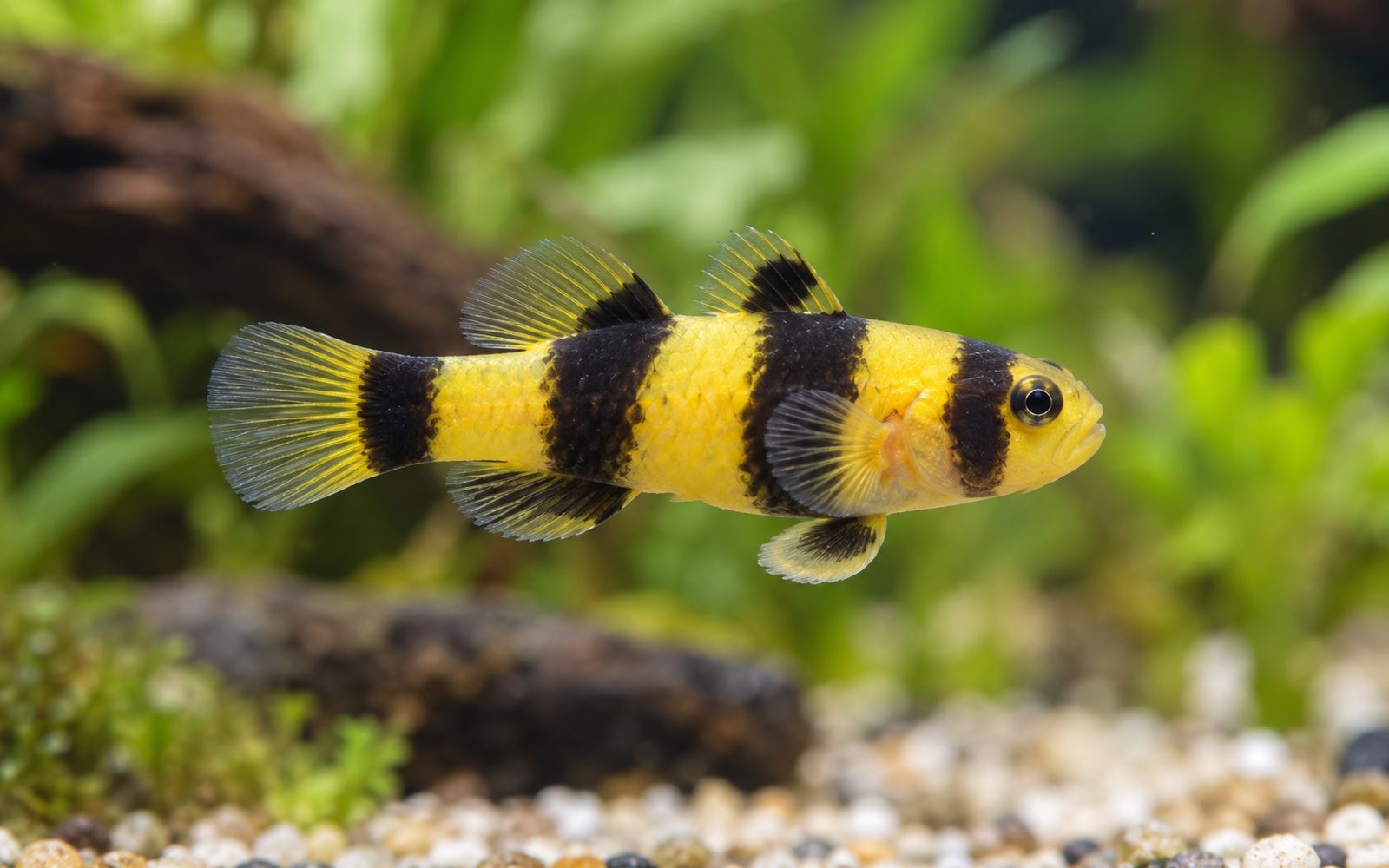 Bumblebee Goby
Banded Puffer
Atlantic Mudskipper
Black Devil Snail
Sheepshead Minnow
Dragon Goby
Green Puffer
Bumblebee Goby
Banded Puffer
Atlantic Mudskipper
Black Devil Snail
Sheepshead Minnow
Dragon Goby
Green Puffer
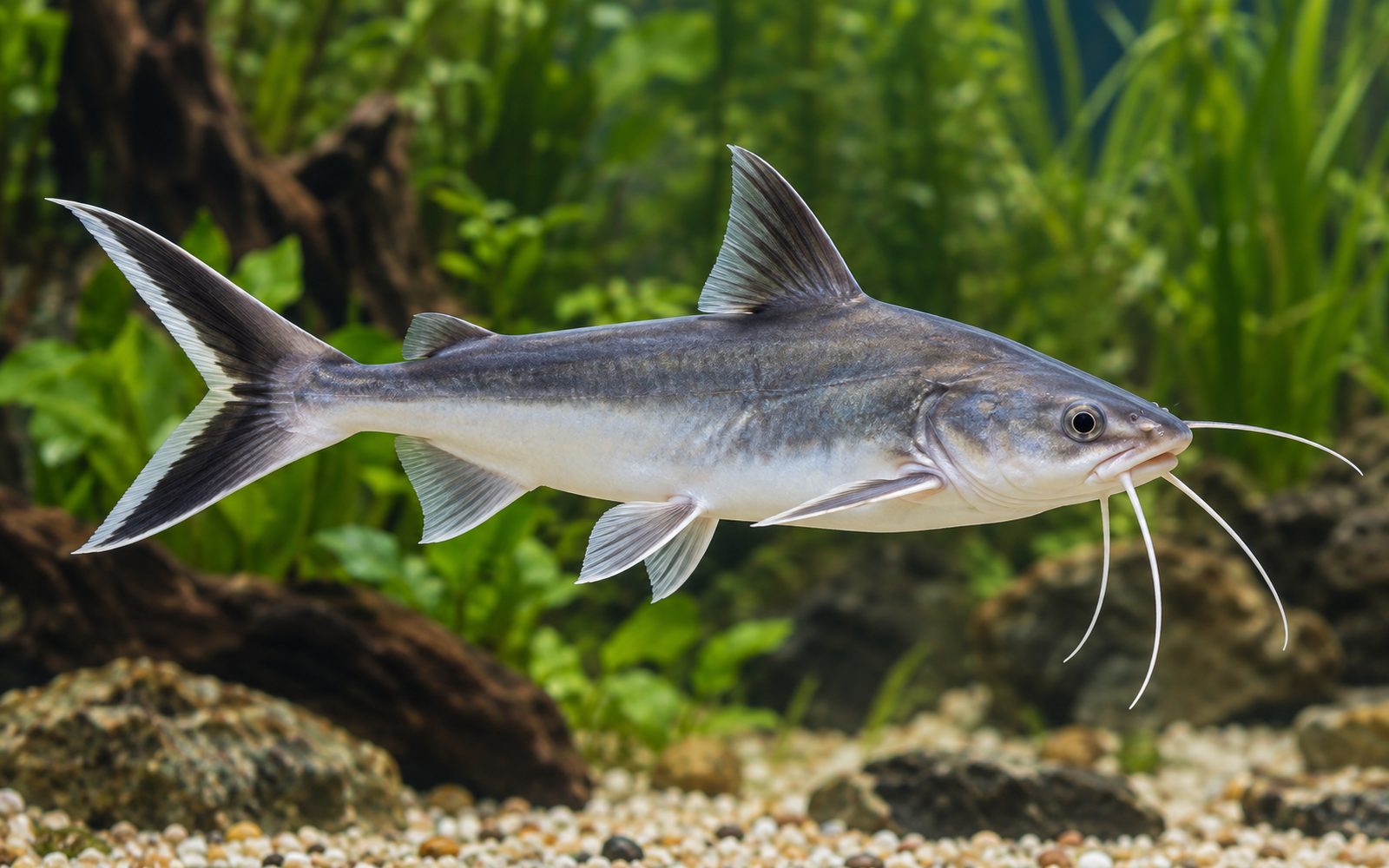 Columbian Shark
Mangrove Rivulus
Columbian Shark
Mangrove Rivulus
Should not be kept together
Hobbyist notes
Things you won't find in books, learned by trial and error. The most helpful ones are on top.
Change history and contributors
- Page created · October 16, 2026