
Water parameters
Overview
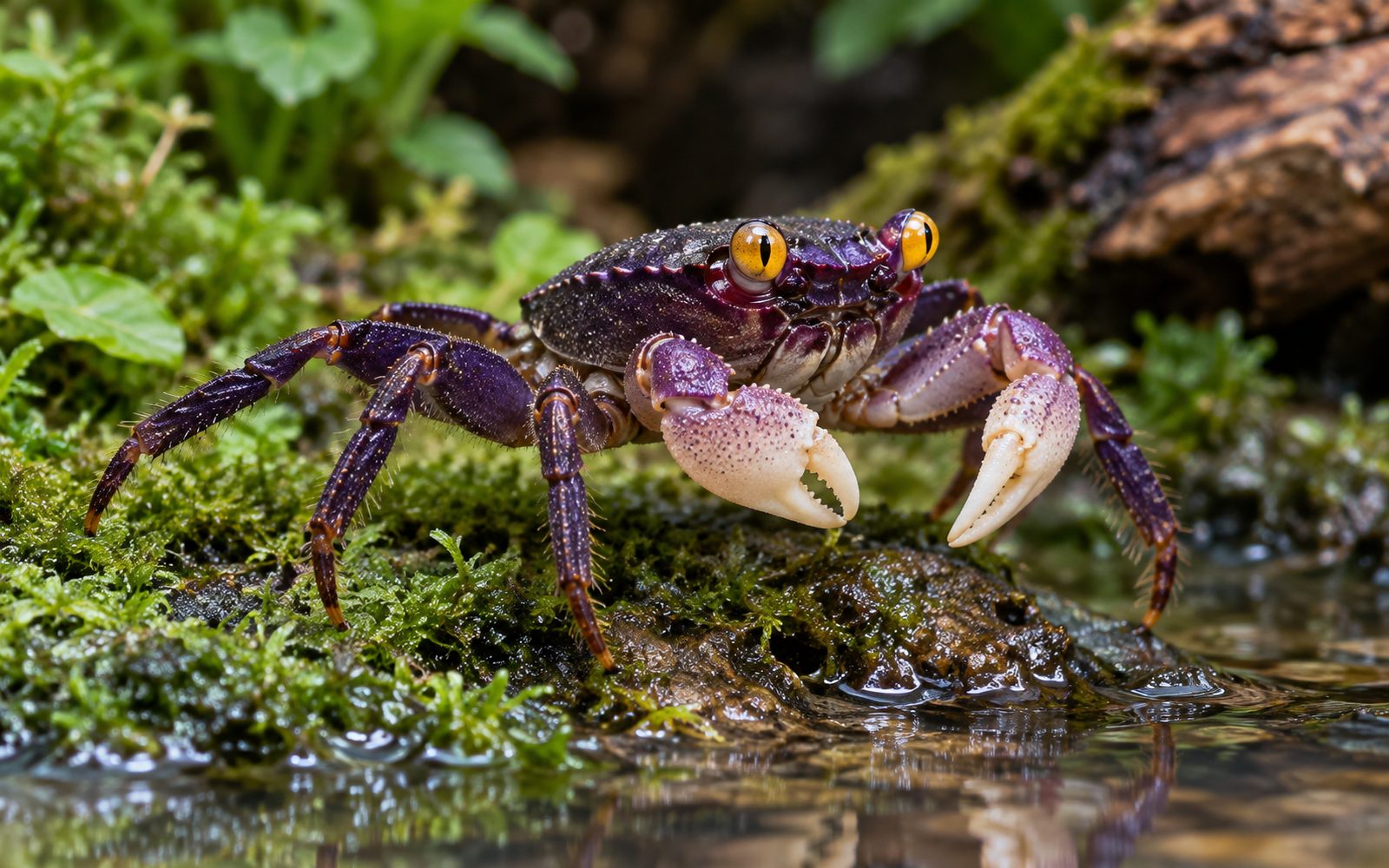
The vampire crab is a small crab much loved in the hobby for its bright yellow eyes and dark purple body. Its shell is about 2 cm and its leg span around 5 cm. For many years it was sold as "Geosesarma sp. Vampire"; in 2015 it was scientifically described as Geosesarma dennerle.
This species is semi-terrestrial: it spends most of its time on land among damp moss and leaves, and enters the water only to wet itself, drink and feed. In a normal aquarium it can drown or escape; the right setup is a humid paludarium. Its relative, the red devil crab (Geosesarma hagen), needs similar care.
Natural Habitat
It lives in the rainforests of Java, on the damp forest floor near streams and springs. It hides under roots, rocks and accumulations of leaves.
Tank Setup
- Setup: A paludarium: about three quarters of the floor land and one quarter fresh water 3–5 cm deep. An easy exit ramp from the water section is essential.
- Humidity: High humidity; the land side is covered with damp moss, roots and dried leaves. Mist regularly.
- Temperature: 22–26°C; above 28°C for long periods is harmful.
- Lid: A tight lid is essential; it climbs glass and cables.
- Hiding places: A cave for each individual; it hides while molting.
Diet
Omnivorous. It eats sinking tablets, shrimp food, frozen bloodworms, small insects (fruit flies, baby crickets), blanched vegetables and pieces of fruit. Remove leftover food the next day; it molds quickly in a humid environment.
Behavior and Compatibility
Nocturnal; it hides during the day. It is territorial toward its own kind, especially between males. Given the chance it catches small shrimp and very small fish; that is why dwarf shrimp are not put in the water section.
Good companions: It is best kept with its own species. Snails in the water section usually have no problems.
Avoid: Fish, dwarf shrimp, other crab species, frogs.
Group and Colony Structure
One male and two or more females is the most harmonious arrangement. More than one male can only be housed in a large paludarium with plenty of hiding places. The colony reproduces on its own; when space becomes tight, individuals need to be separated.
Breeding
There is no larval stage. The female carries the eggs under her abdominal flap; fully formed tiny crabs hatch from the eggs and stay under the mother's abdomen for a while. For this reason it can be bred at home in fresh water. Because adults may eat the young, dense hiding places are needed.
Health and Common Problems
- Drying out: Low humidity and escapes are the most common causes of death.
- Molting: It is defenseless during this period; do not disturb it.
- Overheating: Plan for cooling in summer.
Sexing
Males have a narrow, roughly triangular abdominal flap; females have a wide, rounded one. Males' claws are usually slightly larger.
Tank mates
This list is calculated automatically from the species profile and grows as new species are added to the catalog. Try it in the planner for a definite answer.
Usually compatible
 Flame Tetra
Glass Tetra
Flame Tetra
Glass Tetra
 Blackfin Corydoras
 Polystictus Corydoras
 Emerald Betta
 Emerald Cory
 Emerald Dwarf Rasbora
 Porthole Catfish
 Keyhole Cichlid
 Firemouth Cichlid
Should not be kept together


Hobbyist notes
Things you won't find in books, learned by trial and error. The most helpful ones are on top.
Change history and contributors
- Page created · October 16, 2026