
Water parameters
Overview
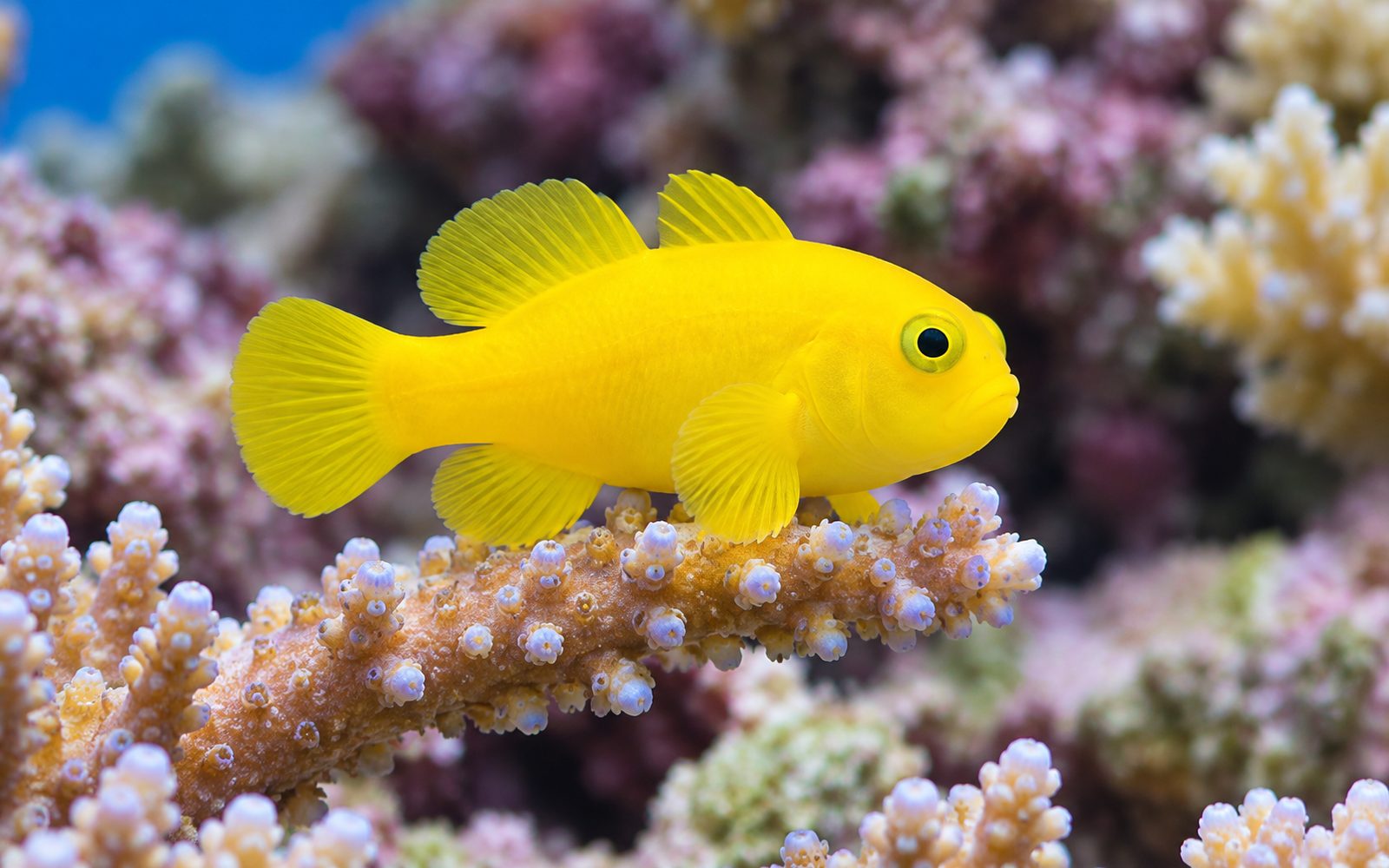
The yellow clown goby is a small goby only 3.5 cm long, lemon yellow from head to tail. In the wild it spends its life among branching corals and prefers perching on the branches to swimming. The bitter-tasting, toxic mucus secreted from its skin makes it unpalatable to predators; this trait is the shared defense of the genus Gobiodon.
A significant share of the specimens sold are wild-caught; captive-bred specimens should be preferred when available. The similar-looking Gobiodon citrinus is distinguished by the thin blue lines on its head and at the bases of its fins.
Natural Habitat
It lives in small groups on the sheltered reefs and lagoons of the Western Pacific, especially among branching Acropora colonies. When in danger it retreats deep among the branches and rarely strays far from inside the coral.
Tank Setup
- Volume: At least 40 liters for a pair; suitable for small reef aquariums.
- Water: Salinity specific gravity 1.023–1.026, pH 8.1–8.4, temperature 24–27°C; low nitrate and stable values.
- Reef compatibility: Reef-safe with caution. It does not eat corals, but it may bite and clear the tissue of SPS corals such as Acropora to make room for laying eggs. In an aquarium with only a few colonies, this can cause permanent damage to the coral.
- Layout: Branching corals or rock overhangs where it can perch; moderate flow.
Diet
Carnivorous, feeding on small plankton. Offer frozen mysis, brine shrimp, copepods and fine granules. Wild specimens may accept only frozen food at first. Small meals twice a day are enough.
Behavior and Compatibility
Peaceful and shy; it spends most of the day perched on the same coral branch. It is territorial towards unfamiliar members of its own species and other Gobiodon species.
Good companions: Clownfish, neon goby, firefish, cardinalfish, blennies, cleaner shrimp.
Avoid: Hawkfish, dottybacks, aggressive damselfish, lionfish and large predators; other Gobiodon species in a small aquarium.
Group and Colony Structure
Kept singly or as a pair. When two juveniles are bought together, they usually form a pair. In a large aquarium with plenty of coral, several individuals can live together if they are added at the same time; otherwise they fight over the same coral.
Breeding
The pair lays its eggs in an area it has cleaned at the base of a coral branch; the parents, especially the male, guard the eggs. Spawning can be seen in the aquarium, but raising the planktonic fry is difficult.
Health and Common Problems
- In wild specimens, refusing food during the first weeks is the biggest risk; start with small live or frozen foods.
- Marine white spot and velvet: Use quarantine.
- Because of its small size it can be sucked into pump intakes; cover the intakes with sponge.
Sexing
There is no reliable external difference. The belly of a female carrying eggs becomes noticeably fuller.
Tank mates
This list is calculated automatically from the species profile and grows as new species are added to the catalog. Try it in the planner for a definite answer.
Should not be kept together



Hobbyist notes
Things you won't find in books, learned by trial and error. The most helpful ones are on top.
Change history and contributors
- Page created · October 16, 2026