
Water parameters
Overview
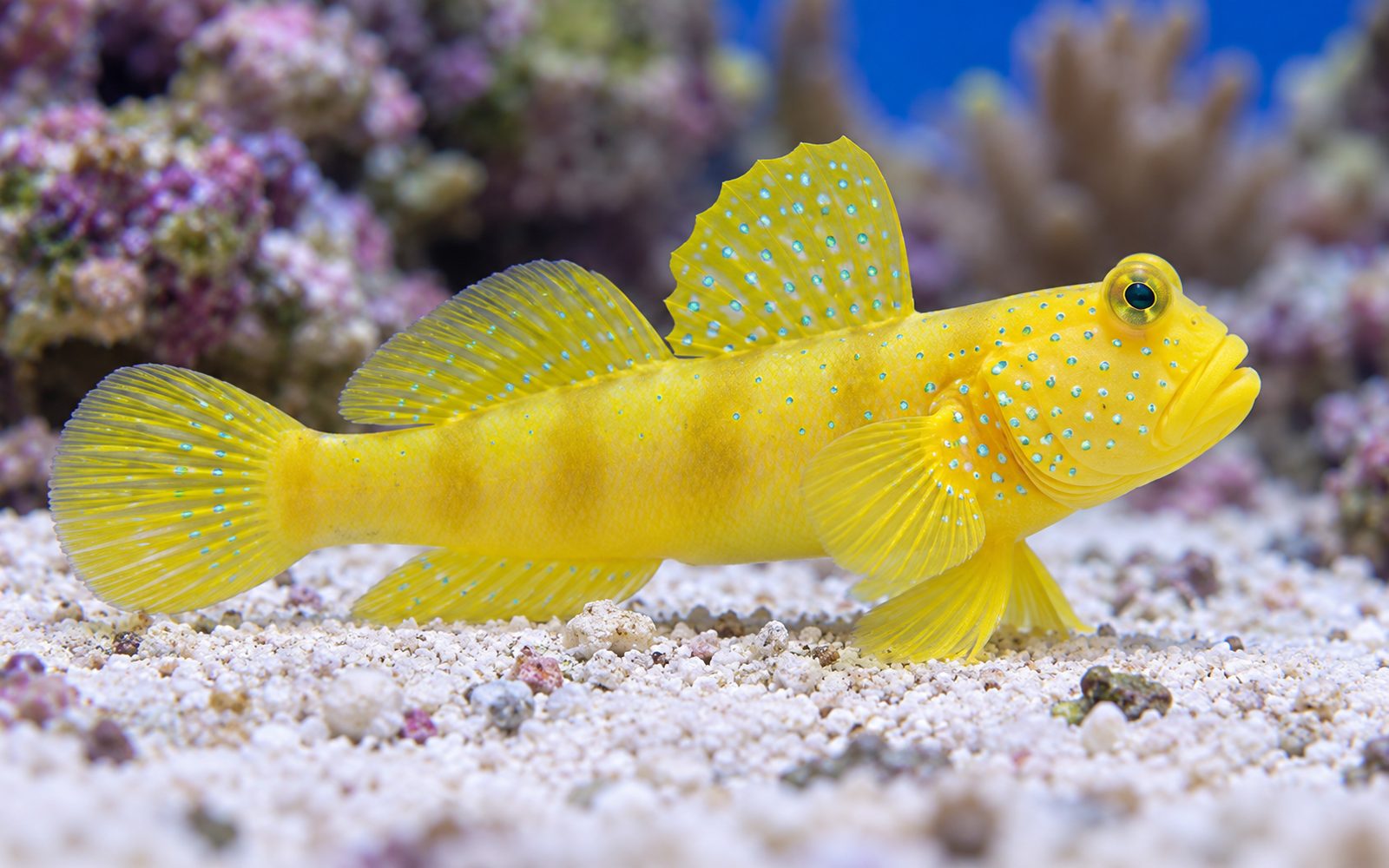
The yellow watchman goby is a bottom-dwelling goby recognized by its bright yellow body, the small blue spots on its head and its large mouth. Its real fame comes from the partnership it forms with pistol shrimp (Alpheus): the shrimp digs the burrow and the goby keeps watch at the entrance. The same species also has a color phase with a gray-white background and dark bands.
It is hardy and easily takes to dry food; it is a good goby for new marine aquarists. Its biggest risk is jumping: in an aquarium without a lid it may leap out at the first fright.
Natural Habitat
It lives on sand and coral rubble bottoms in the shallow lagoons of the Western Pacific. While the nearly blind pistol shrimp digs and cleans the burrow, it keeps its antenna touching the goby's body; when the goby sees danger it warns the shrimp by flicking its tail, and the two dive into the burrow together.
Tank Setup
- Volume: At least 75 liters for a single specimen or a pair.
- Water: Salinity specific gravity 1.023–1.026, pH 8.1–8.4, temperature 24–27°C.
- Reef compatibility: Reef-safe; it leaves corals alone. It may eat very small shrimp (juveniles or dwarf species), but it usually leaves medium-sized shrimp such as cleaner shrimp alone.
- Substrate: A 5–7 cm deep mix of sand and small rubble. Place rocks directly on the glass, not on top of the sand; the goby and shrimp may dig underneath them.
- Lid: A tight-fitting lid or mesh lid is essential.
Diet
Carnivorous. Offer frozen mysis, brine shrimp, krill and sinking granules. It catches food on the bottom, near its burrow; feeding twice a day is enough.
Behavior and Compatibility
Usually calm towards other fish, but it defends its burrow and the surrounding area against its own kind and similar bottom-dwelling gobies. It spends the day sitting at the mouth of the burrow, watching its surroundings.
Good companions: Pistol shrimp (Alpheus species), clownfish, cardinalfish, firefish, blennies, chromis.
Avoid: Other shrimp gobies (in a small aquarium), large hawkfish, lionfish and large predators.
Group and Colony Structure
A single specimen, a mated pair, or one goby with one pistol shrimp is the most common setup. Two unpaired adults together will fight. A pistol shrimp is not essential; the goby also picks a burrow and lives on its own.
Breeding
The pair lays its eggs inside the burrow and the male guards them; during this period he guards the burrow entrance more closely. Spawning can be seen in the aquarium, but raising the planktonic fry is difficult.
Health and Common Problems
- A hardy species; the most common cause of loss is jumping.
- Marine white spot and velvet: Use quarantine.
- A newly arrived specimen may hide for a few days; leave food near its burrow.
Sexing
There is no reliable external difference.
Tank mates
This list is calculated automatically from the species profile and grows as new species are added to the catalog. Try it in the planner for a definite answer.
Should not be kept together



Hobbyist notes
Things you won't find in books, learned by trial and error. The most helpful ones are on top.
Change history and contributors
- Page created · October 16, 2026