
Water parameters
Overview
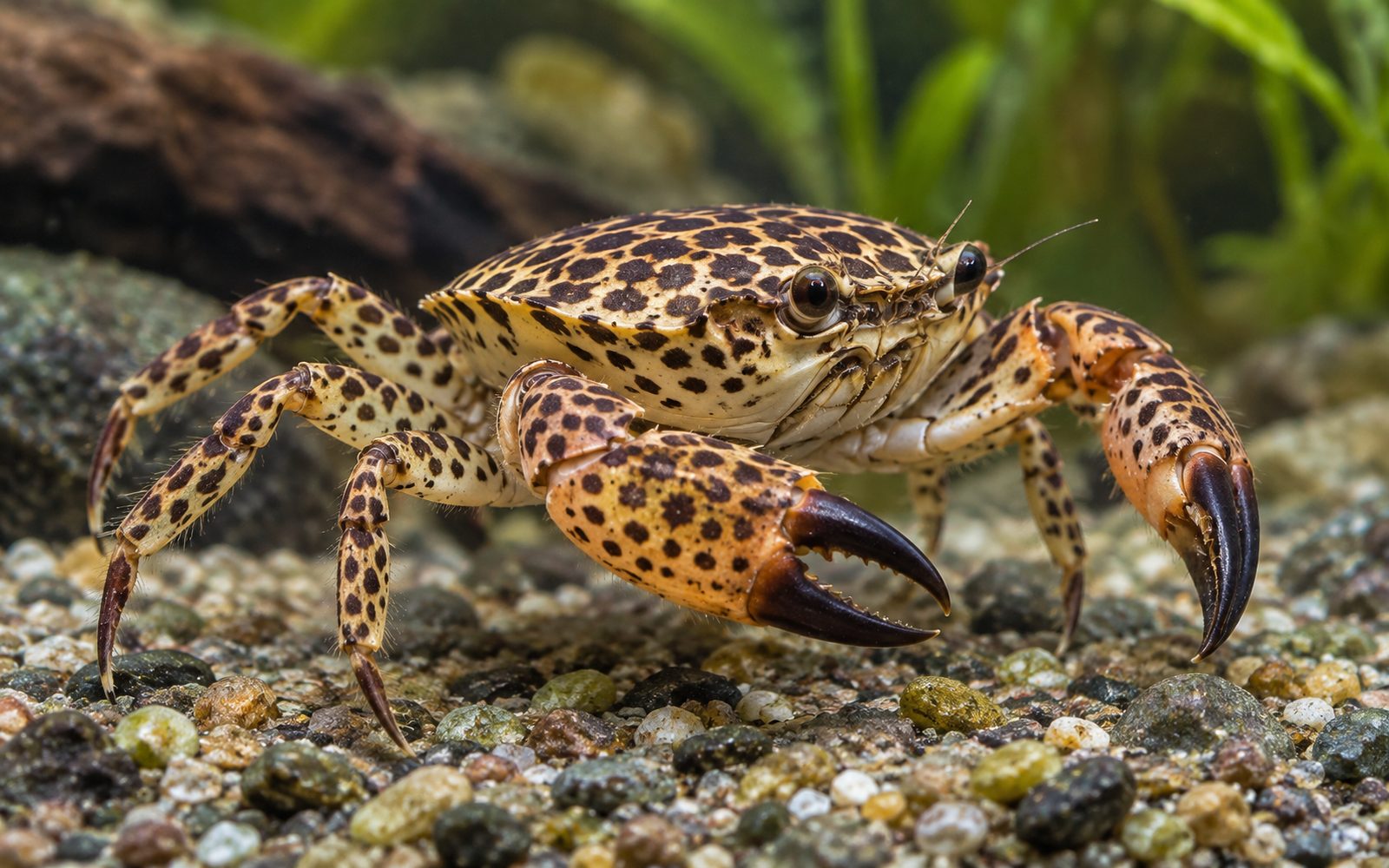
The panther crab is a freshwater crab endemic to the Malili lakes of Sulawesi. The dark brown spots on its cream or yellowish background give it its name. Its shell reaches 4–5 cm; it has powerful claws.
Unlike most aquarium crabs, it lives almost entirely in water and can be kept in a normal aquarium; still, a rock or root it can climb up to the water surface is a good idea. However, it is a skilled hunter: it eats the fish, shrimp and snails it can catch. For this reason it is suited not to a community aquarium but to a species aquarium.
Natural Habitat
It lives along the rocky shores of Lakes Matano and Towuti. The water of these lakes is warm, very clear, soft but alkaline, and poor in nutrients. The crab hides among the rocks and feeds on the snails that are plentiful in the lakes.
Tank Setup
- Volume: 60 liters or more for a single individual, with a large floor area.
- Decor: Plenty of rocks and caves; a rock or root reaching up to the water surface.
- Water: 26–29°C, pH 7.5–8.5, soft to moderately hard. RO water prepared with a Sulawesi mineral or suitable tap water can be used.
- Lid: A tight lid is essential; it can climb out and escape.
- Filter: A strong filter and good oxygenation.
Diet
Omnivorous but fond of animal food. It eats sinking tablets, frozen bloodworms, shrimp, mussel meat and small snails; it also accepts blanched vegetables. Remove leftovers within a day.
Behavior and Compatibility
Aggressive and territorial. It catches fish and shrimp from ambush and cracks snail shells with its claws. It may attack members of its own species, especially those that are molting.
Good companions: The safest option is to keep it alone. In very large aquariums, fast fish that live in the upper levels and are too big for the crab to catch can be tried.
Avoid: Dwarf shrimp, snails (including rabbit snails), bottom-dwelling fish, small and slow fish.
Group and Colony Structure
It is kept alone. A pair can live together in very large aquariums with plenty of hiding places, but there is always a risk that a molting individual will be attacked.
Breeding
Because it is a true freshwater crab, there is no larval stage: the female carries the eggs, and the tiny crabs that hatch from them, under her abdominal flap. Breeding in the aquarium has been reported but is rare; most individuals for sale are collected from the wild.
Health and Common Problems
- Molting: It hides during this period; do not disturb it, and leave the shed shell in place.
- Parameter swings: Like other Sulawesi animals it needs stable water; avoid sudden changes in pH and temperature.
- Escapes: Gaps in the lid cause losses.
Sexing
Males have a narrow, roughly triangular abdominal flap; females have a wide, rounded one. Males' claws are usually larger.
Tank mates
This list is calculated automatically from the species profile and grows as new species are added to the catalog. Try it in the planner for a definite answer.
Usually compatible
 Yellow Regal Peacock
 Firemouth Cichlid
 Banded Jewel Cichlid
 Spotted Tilapia
 Demasoni Cichlid
 Flowerhorn
 Rainbow Cichlid
 Pearl Cichlid
 Jack Dempsey
 Jaguar Cichlid
Should not be kept together








Hobbyist notes
Things you won't find in books, learned by trial and error. The most helpful ones are on top.
Change history and contributors
- Page created · October 16, 2026