
Water parameters
Overview
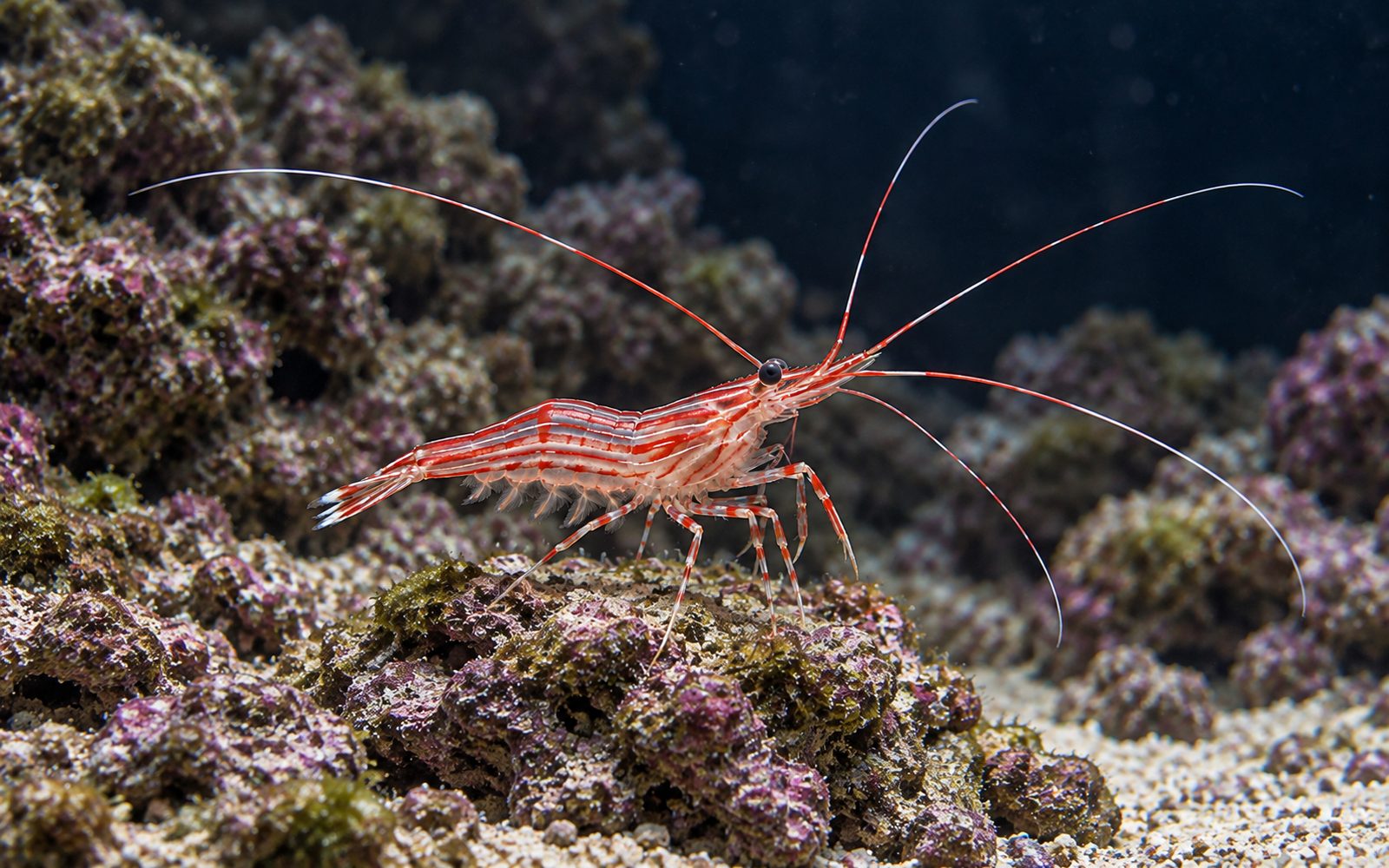
With thin red stripes running the full length of its semi-transparent body, the peppermint shrimp resembles a peppermint candy. The main reason it is bought for reef aquariums is that it eats Aiptasia anemones, which sting corals and multiply quickly. Its success at this is very variable: some shrimp clear small Aiptasia within a few weeks, others show no interest at all. Large, established Aiptasia are usually not eaten.
The shrimp sold as "peppermint" in the trade are actually several very similar Lysmata species (the one most often confused is L. boggessi); the species differ in their appetite for Aiptasia and are hard to tell apart externally. It is a species whose larvae have been raised successfully in research, but most of those sold still come from the wild.
Natural Habitat
It lives in the shallow coastal waters of the Western Atlantic, from the Caribbean to the Gulf of Mexico and the east coast of the United States, in rocky areas among sponges and rock rubble. It hides in holes during the day and comes out to feed at night. Because it comes from shallow and variable environments, it tolerates a somewhat wider temperature range than tropical reef shrimp.
Tank Setup
- Volume: 60 liters or more; live rock with plenty of caves.
- Water: salinity 1.023–1.026 specific gravity, pH 8.1–8.4, temperature 22–27°C.
- Reef compatibility: Reef-safe with caution. Most individuals leave corals alone, but some hungry individuals are reported to pick at zoanthid and soft coral polyps.
- For Aiptasia: a shrimp fed sparingly in the first weeks turns to Aiptasia more readily; leaving it completely hungry, however, is not right.
- Acclimation and medication: Acclimate by the drip method for at least 1 hour. Copper-based medications and hyposalinity treatment are lethal.
Diet
An omnivorous scavenger: Aiptasia, leftover food, detritus, frozen mysis and brine shrimp, sinking marine granules. While it is hunting Aiptasia, 2–3 small meals a week are enough; if it is not fed regularly after the Aiptasia are gone, it weakens and may turn to corals.
Behavior and Compatibility
Shy during the day, active at night. It gets along well with its own kind and becomes bolder in a group. It leaves fish alone, but because it is small it becomes prey for many predatory fish.
Good companions: clownfish, gobies, blennies, cardinalfish; cleaner and fire shrimp, snails, hermit crabs.
Avoid: hawkfish, large wrasses, triggerfish, lionfish, pufferfish; boxer shrimp. If Berghia nudibranchs are to be used for Aiptasia, do not add peppermint shrimp; it may eat these small sea slugs as well.
Group and Colony Structure
A social species; it can be kept in groups of 3–5. If the aim is Aiptasia control, 1–2 individuals per 100 liters are usually enough. More shrimp go hungry once the Aiptasia are gone and increase competition for food in the aquarium.
Breeding
It is a simultaneous hermaphrodite: young individuals first function as males, and once mature they can both carry eggs and fertilize other individuals. The eggs are carried under the abdomen and the larvae are released into the water at night. The larvae must feed on plankton for weeks; they cannot be raised in home aquariums.
Health and Common Problems
- Molting: every few weeks; a discarded empty shell you find is not a sign of death.
- Mass death: copper, hyposalinity, rapid acclimation or a sudden salinity change.
- Failed molts: fluctuating water parameters; stable salinity and regular partial water changes are important.
Sexing
As it is a hermaphrodite, there are no separate males and females; every adult in a group can carry eggs. An individual with a cluster of eggs visible under its abdomen is functioning as a female at that time.
Tank mates
This list is calculated automatically from the species profile and grows as new species are added to the catalog. Try it in the planner for a definite answer.
Should not be kept together



Hobbyist notes
Things you won't find in books, learned by trial and error. The most helpful ones are on top.
Change history and contributors
- Page created · October 16, 2026