
Water parameters
Overview
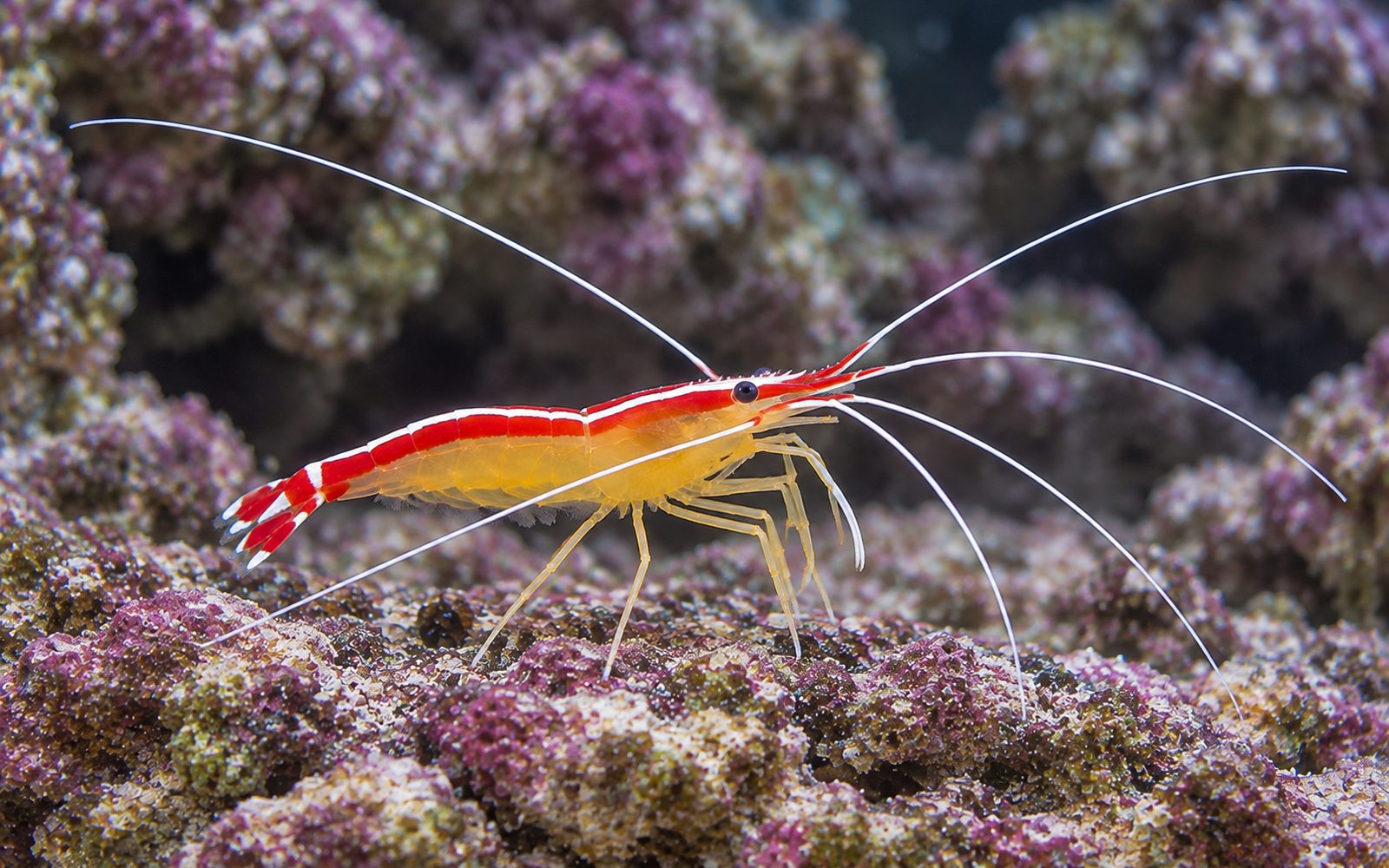
The skunk cleaner shrimp is one of the most commonly kept shrimp in marine aquariums. It is easily recognized by its yellowish-orange sides, the broad red band running along its back and the thin white line dividing this band in two. In the wild it sets up a "cleaning station": fish come up to it and open their mouths and gill covers, and the shrimp picks off parasites, dead tissue and bits of mucus from their skin. It continues this behavior in the aquarium; sometimes it even tries to clean the keeper's hand.
Its Atlantic relative Lysmata grabhami is very similar; in that species the white back line extends all the way to the tail fan. Almost all individuals in the trade are wild-collected. Cleaning behavior is no substitute for quarantine; it should not be expected to cure a sick fish.
Natural Habitat
It lives on the tropical reefs of the Indian and Pacific oceans in rock holes, cave mouths and under ledges. It usually shares the same hole in pairs or small groups and signals that it is offering its services to nearby fish by waving its long antennae.
Tank Setup
- Volume: at least 75 liters of mature reef or fish-only aquarium with live rock for a pair.
- Water: salinity 1.023–1.026 specific gravity (about 35 ppt), pH 8.1–8.4, temperature 24–27°C. Ammonia and nitrite should be zero and nitrate low.
- Reef compatibility: Reef-safe; it does not harm corals. When hungry it may snatch food from coral mouths.
- Acclimation: It is very sensitive to salinity differences. The water in the bag should be slowly matched to the aquarium water by the drip method over at least 1 hour.
- Medication: copper-based medications and low-salinity (hyposalinity) treatment kill the shrimp; fish treatment should be done in a separate quarantine aquarium.
Diet
An omnivorous scavenger. In the aquarium it feeds on leftover food, frozen mysis and brine shrimp, chopped mussel and sinking marine granules; it snatches morsels in mid-water when the fish are fed. In aquariums with few fish, giving a small piece of frozen food with tweezers 3–4 times a week keeps it from stealing food from corals.
Behavior and Compatibility
A peaceful shrimp that roams in the open during the day as well. It usually gets along with its own kind, but in a cramped aquarium a large group may attack a molting individual.
Good companions: clownfish, gobies, blennies, tangs, cardinalfish and other reef-safe fish; fire and peppermint shrimp, snails, hermit crabs.
Avoid: hawkfish, large wrasses, triggerfish, lionfish, moray eels and pufferfish; boxer shrimp.
Group and Colony Structure
The most common arrangement is singly or in a pair. Because individuals can function as both male and female, two shrimp bought at random usually become a pair. In aquariums over 200 liters, groups of 3–5 individuals can also live without problems; plenty of caves reduces fighting.
When planning, a separate hiding place should be provided for each shrimp: a molting individual is vulnerable for the few hours it takes for its shell to harden.
Breeding
It is a simultaneous hermaphrodite: young individuals first function only as males, and once mature they both produce eggs and can fertilize the other individual. The individual in the female role carries its eggs under its swimming legs for about two weeks and releases the larvae into the water at night. The larvae go through a planktonic stage lasting weeks; in the home aquarium they become food for filters and fish and do not survive.
Health and Common Problems
- Molting: it sheds its shell every few weeks. A complete, transparent shell found in the aquarium is usually not a dead shrimp but a discarded molt.
- Failed molts: fluctuating salinity and water parameters. Stable water and regular partial water changes are the best protection.
- Sudden deaths: copper, hyposalinity, rapid acclimation and lack of oxygen.
- Lost antennae are not dangerous; they grow back over the following molts.
Sexing
As it is a hermaphrodite, there is no distinction between male and female; any two adults can form a pair. An individual carrying eggs under its abdomen is functioning as a female at that time.
Tank mates
This list is calculated automatically from the species profile and grows as new species are added to the catalog. Try it in the planner for a definite answer.
Should not be kept together



Hobbyist notes
Things you won't find in books, learned by trial and error. The most helpful ones are on top.
Change history and contributors
- Page created · October 16, 2026