
Water parameters
Overview
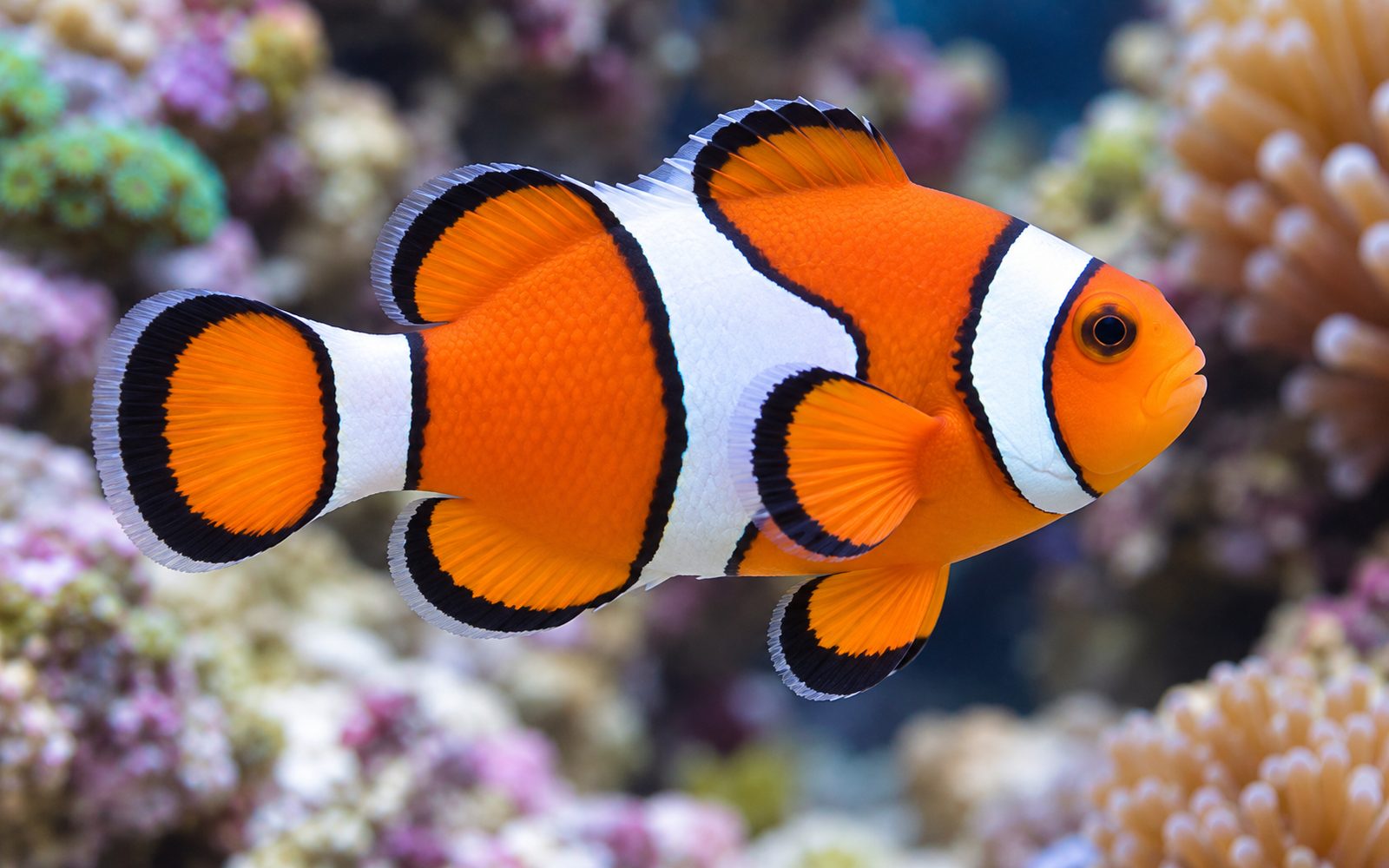
The percula clownfish is the closest relative of the ocellaris clownfish (Amphiprion ocellaris), which has its own page on this site, and the two are often confused. The easiest difference is in the white bands: in the percula, the black lines around the bands are distinctly thicker and the orange looks brighter. The number of spines in the dorsal fin also differs; the percula usually has 10 and the ocellaris 11.
Most of the fish in stores are captive-bred (farm-raised). Captive-bred perculas switch easily to dry food and are much more resistant to disease than wild ones; choose these over wild-caught fish. It is a saltwater fish and cannot live in freshwater.
Color and Fin Varieties
- Picasso: a captive-bred form in which the white bands merge irregularly, so that every fish has a different pattern.
- Onyx: a form in which the black areas are greatly expanded, covering most of the orange.
- Platinum: a form whose body is almost entirely white, with orange remaining only on the head and fins.
Natural Habitat
It lives on shallow reefs and in lagoons stretching from northeastern Australia to the islands of Melanesia. In the wild it is always found with a sea anemone; it is seen most often in large anemones such as Heteractis magnifica, Stichodactyla gigantea and Stichodactyla mertensii. The mucus covering its skin does not trigger the anemone's stinging cells. The anemone protects the fish from predators; the fish in turn cleans the anemone, chases away fish that try to eat it and feeds it with leftover food.
Tank Setup
- Volume: at least 75 liters for a pair; a reef aquarium of 100 liters or more keeps water values more stable.
- Water: salinity 1.023–1.026 specific gravity, pH 8.1–8.4, temperature 24–27°C. Ammonia and nitrite must be zero and nitrate low.
- Cycling: it goes into an aquarium that has completed its 4–6 week cycle with live rock and bacterial culture.
- Reef compatibility: reef safe. It leaves corals, cleaner shrimp and snails alone.
- Anemone not required: captive-bred fish live healthily without an anemone; they often choose a coral or rock corner as their "home." Natural host anemones need strong light and experience and are not recommended for beginners.
Diet
Omnivorous. Offer marine fish granules or flakes as the staple; add frozen mysis, brine shrimp and copepods a few times a week. Foods containing algae keep the colors vivid. Twice a day, as much as is eaten within a few minutes, is enough.
Behavior and Compatibility
The pair defends its chosen anemone or corner; the female may even attack the keeper's hand. Apart from that, it is generally calm toward other fish and suits a community reef aquarium.
Good companions: reef-safe, peaceful species: gobies, firefish, blennies, royal gramma, Banggai cardinalfish, cleaner shrimp.
Avoid: other clownfish (including the ocellaris), lionfish and predators whose mouths it fits into, aggressive damsels and large dottybacks.
Group and Colony Structure
Clownfish are kept as a single pair in the aquarium. In the wild, a few small, non-breeding males may live alongside the breeding pair in an anemone; but in the limited space of an aquarium a third fish is usually chased constantly and dies. Different clownfish species are not put in the same aquarium either.
The easiest way to form a pair is to buy two juveniles or two fish of different sizes: the larger becomes the female and the smaller stays male. Buying an already mated pair is also a safe option.
Breeding
Like all clownfish, it is born male (a protandrous hermaphrodite); the larger, dominant fish of the pair turns into a female, and this change is irreversible. The pair cleans a flat surface at the base of the anemone or rock and lays hundreds of orange eggs. The male fans and guards the eggs; they hatch in about 7–10 days, usually after the lights go off. In the first days the fry are fed rotifers, then newly hatched brine shrimp; a separate rearing tank is needed for this.
Health and Common Problems
- Brooklynella: common in wild fish; heavy mucus, peeling skin and rapid breathing. It progresses quickly.
- Velvet (Amyloodinium) and marine white spot (Cryptocaryon): keep every newly arrived fish in quarantine for 3–4 weeks.
- Captive-bred fish are markedly more resistant to these diseases.
Sexing
The larger fish of the pair is the female. There is no other reliable external difference; all juveniles are male.
Tank mates
This list is calculated automatically from the species profile and grows as new species are added to the catalog. Try it in the planner for a definite answer.
Should not be kept together



Hobbyist notes
Things you won't find in books, learned by trial and error. The most helpful ones are on top.
Change history and contributors
- Page created · October 16, 2026