
Water parameters
Overview
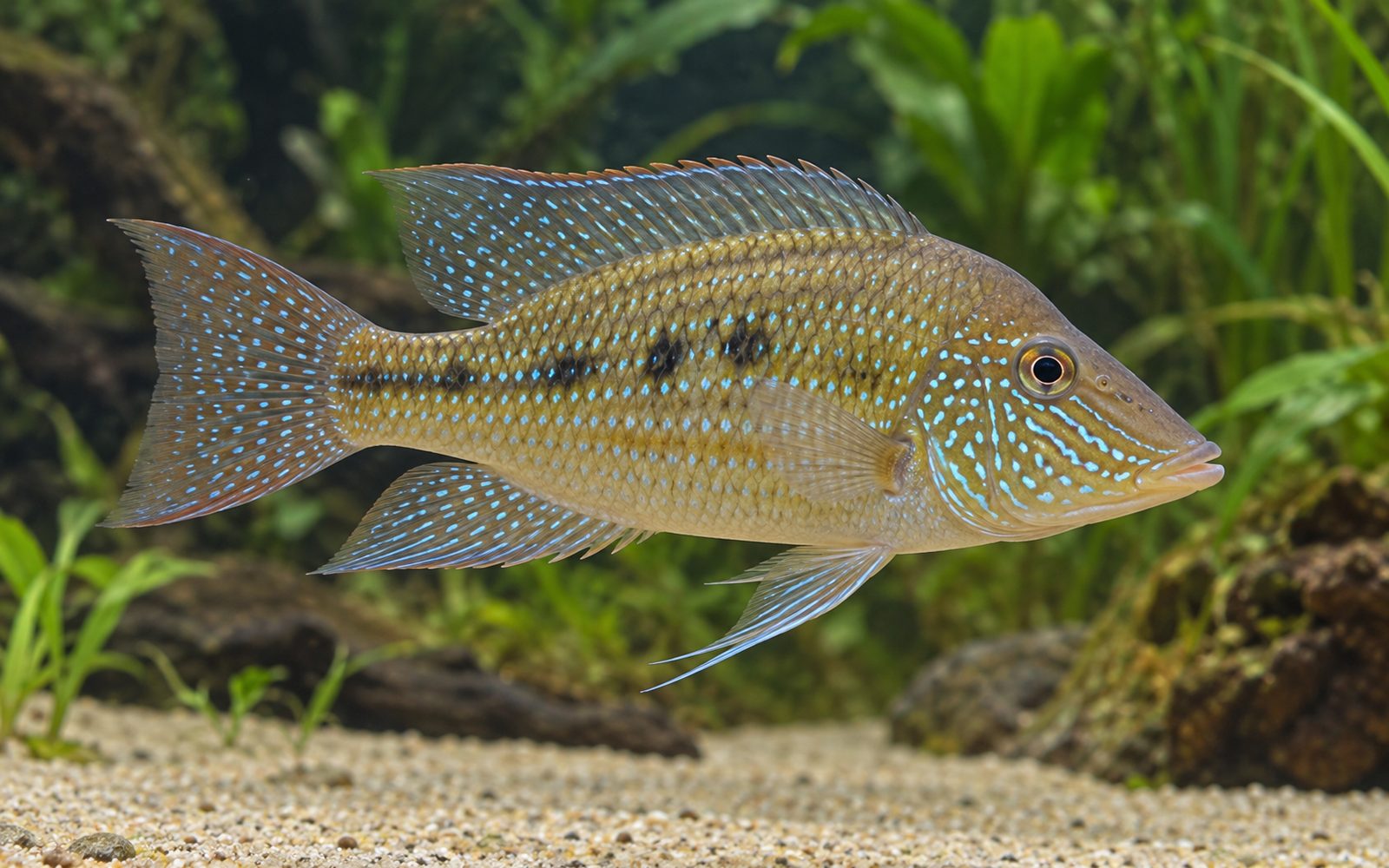
Satanoperca leucosticta takes its name ("white-spotted") from the shiny blue–white spots and wavy lines on its head and cheeks. With its long snout, high-set eyes and golden-brown body it closely resembles S. jurupari; a significant share of the fish sold under that name in the trade are actually leucosticta. Like its relative, it feeds by taking sand into its mouth and sifting it, and it is a delayed mouthbrooder.
Tank Setup
- At least 300 liters and 150 cm of length for a group of 4–6.
- Fine, round sand is a must; a large open sand area.
- Roots and rocks along the edges; tough plants attached to roots.
- A 30–40% water change weekly; it is sensitive to nitrate.
Diet
Omnivorous. Make small sinking granules and tablets the staple; vary them with frozen bloodworms, brine shrimp and mysis. Give 2–3 small meals a day.
Behavior and Compatibility
Peaceful and social; there is no serious fighting within the group. It becomes timid next to aggressive tankmates; when kept alone it also hides and loses its color.
Good companions: angelfish, severum, festivum, Geophagus species, large tetras, corydoras, plecos.
Avoid: aggressive Central American cichlids, gravel substrate, small shrimp.
A short profile for this species
The Satanoperca leucosticta page has the basics, but the sections below have not been written yet. If you keep this species, write a section from your own experience; it will be published under your name after editor approval.
Tank mates
This list is calculated automatically from the species profile and grows as new species are added to the catalog. Try it in the planner for a definite answer.
Usually compatible
 Polystictus Corydoras
 Emerald Betta
 Emerald Cory
 Porthole Catfish
 Altum Angelfish
 Keyhole Cichlid
 Firemouth Cichlid
 Cupid Cichlid
 Buffalohead Cichlid
Should not be kept together






Hobbyist notes
Things you won't find in books, learned by trial and error. The most helpful ones are on top.
Change history and contributors
- Page created · October 16, 2026