
Water parameters
Overview
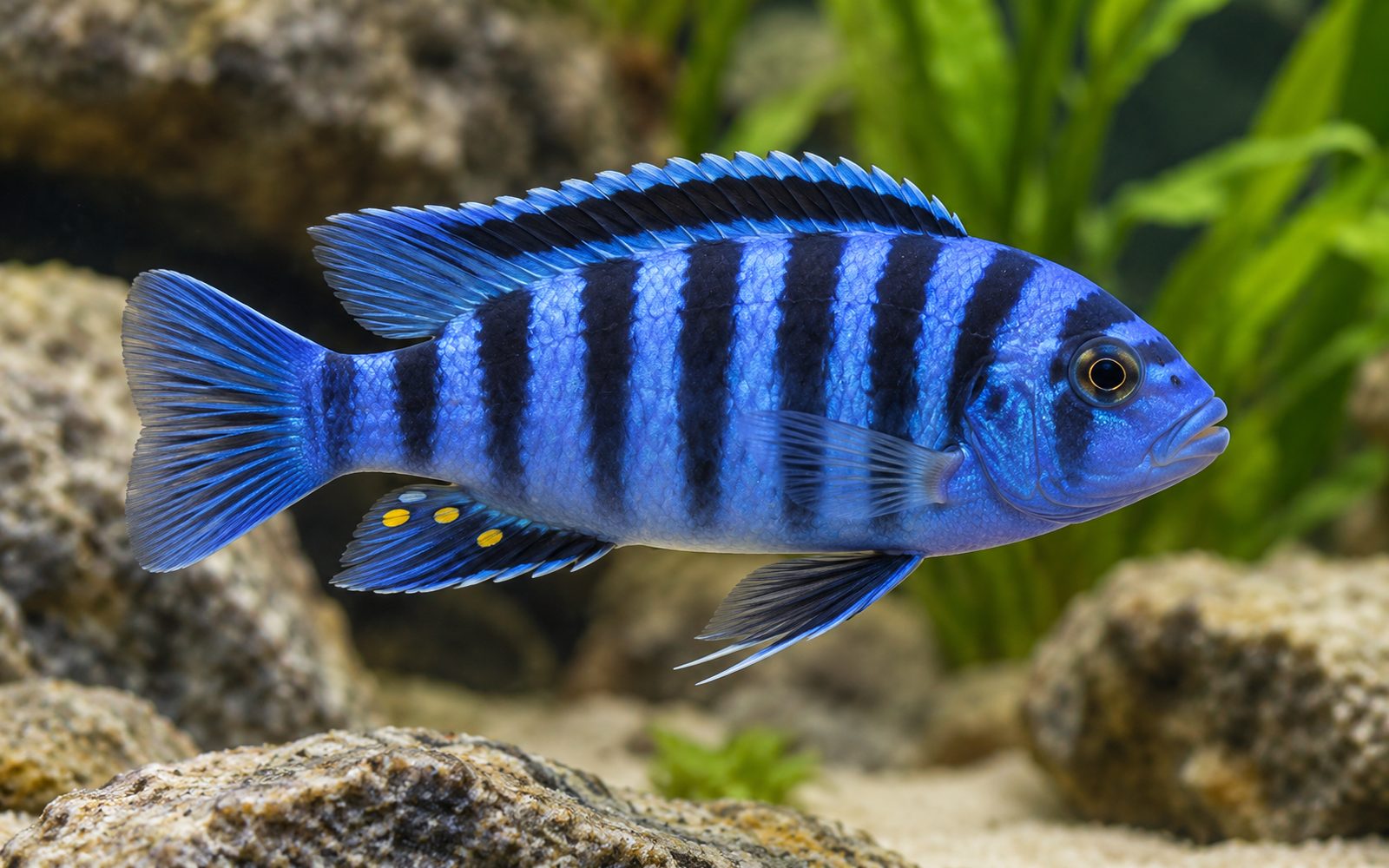
The saulosi is a small mbuna known for the sharp color difference between the sexes. All fry are born yellow; females stay yellow for life, while dominant males gradually turn blue with black vertical bars. A group of blue males and yellow females gives the impression that there are two separate species in the aquarium.
It used to be placed in the genus Pseudotropheus; today it is placed in the same group of relatives (Chindongo) as the demasoni. It is more docile than the demasoni but still an mbuna: males are intolerant of each other and of blue-barred fish.
Natural Habitat
It lives only in a small rocky area of Lake Malawi called Taiwan Reef. It feeds by scraping the algae layer on the rocks. Because its habitat is so small, wild collection is limited; most of those in aquariums are captive-bred.
Tank Setup
- Volume: at least 200 liters and 100–120 cm in length for a large harem.
- Rockwork: Many small caves and crevices; places where the yellow females can escape the male's sight are important.
- Water: Hard and alkaline (pH 7.8–8.5); aragonite substrate or Malawi salt.
- Maintenance: Strong filtration, weekly 30–50% water changes.
Diet
Herbivorous. A small-grained, spirulina-rich mbuna food should be the staple; vegetables can be offered occasionally. Bloodworms and high-protein foods should be avoided; otherwise the risk of Malawi bloat increases. Feed sparingly, twice a day.
Behavior and Compatibility
The dominant male may treat the whole aquarium as its territory and keep other males from changing color; as a result, a second male often stays a pale color somewhere between yellow and blue. Females are peaceful among themselves.
Good companions: peaceful mbuna that are neither yellow nor blue-barred (rusty cichlid, yellow-tail acei, red zebra), Synodontis catfish suited to hard water.
Avoid: blue-black barred species such as demasoni and zebra mbuna (fights with the males), yellow species such as the yellow lab (they resemble the females), very aggressive large mbuna, haps, community fish, shrimp.
Group and Colony Structure
- Harem: 4–5 females per male; at least 5, preferably around 10 fish.
- Two males: Can only be tried in an aquarium of 300 liters or more, with a large group of females.
- Starting with juveniles: When yellow juveniles are bought, the males turn blue within a few months; surplus males should be removed at this stage.
- The group should be added to the aquarium together; even a yellow female added later can become a target.
Breeding
A mouthbrooder. The blue male courts in front of a cave; the female picks up 10–20 eggs in her mouth and carries them for about 3 weeks. During this time she does not eat and visibly loses condition. The fry are yellow; by hiding in rock crevices, some of them can survive even in a community aquarium.
Health and Common Problems
- Malawi bloat: wrong food and stress are the most common cause.
- A male under pressure: a second male that stays pale in color and hides constantly weakens over time; if necessary, it should be removed.
- Injury: in groups with few females, torn fins and scale loss are seen in the females.
Sexing
Sexing is easy in mature fish: males are blue with black bars, females are yellow. However, males under pressure can stay yellowish for a long time; therefore, in small groups reliable sexing is done by examining the genital papilla. Males also have prominent egg spots on the anal fin.
Tank mates
This list is calculated automatically from the species profile and grows as new species are added to the catalog. Try it in the planner for a definite answer.
Usually compatible
 Yellow Regal Peacock
 Firemouth Cichlid
 Rainbow Cichlid
 Pearl Cichlid
 Red Hump Eartheater
 Egyptian Mouthbrooder
 Yellow Tail Acei
 Butterfly Goodeid
American Flagfish
Anatolian Killifish
Butterfly Goodeid
American Flagfish
Anatolian Killifish
Should not be kept together





Hobbyist notes
Things you won't find in books, learned by trial and error. The most helpful ones are on top.
Change history and contributors
- Page created · October 16, 2026