
Water parameters
Overview
The splash tetra is a slender species from the family Lebiasinidae and a relative of the pencilfish. Its real fame comes from its extraordinary breeding behavior: the pair leaps out of the water together and sticks its eggs to a leaf or to the glass a few centimeters above the surface. Until the eggs hatch, the male regularly splashes water on them with his tail to keep them moist.
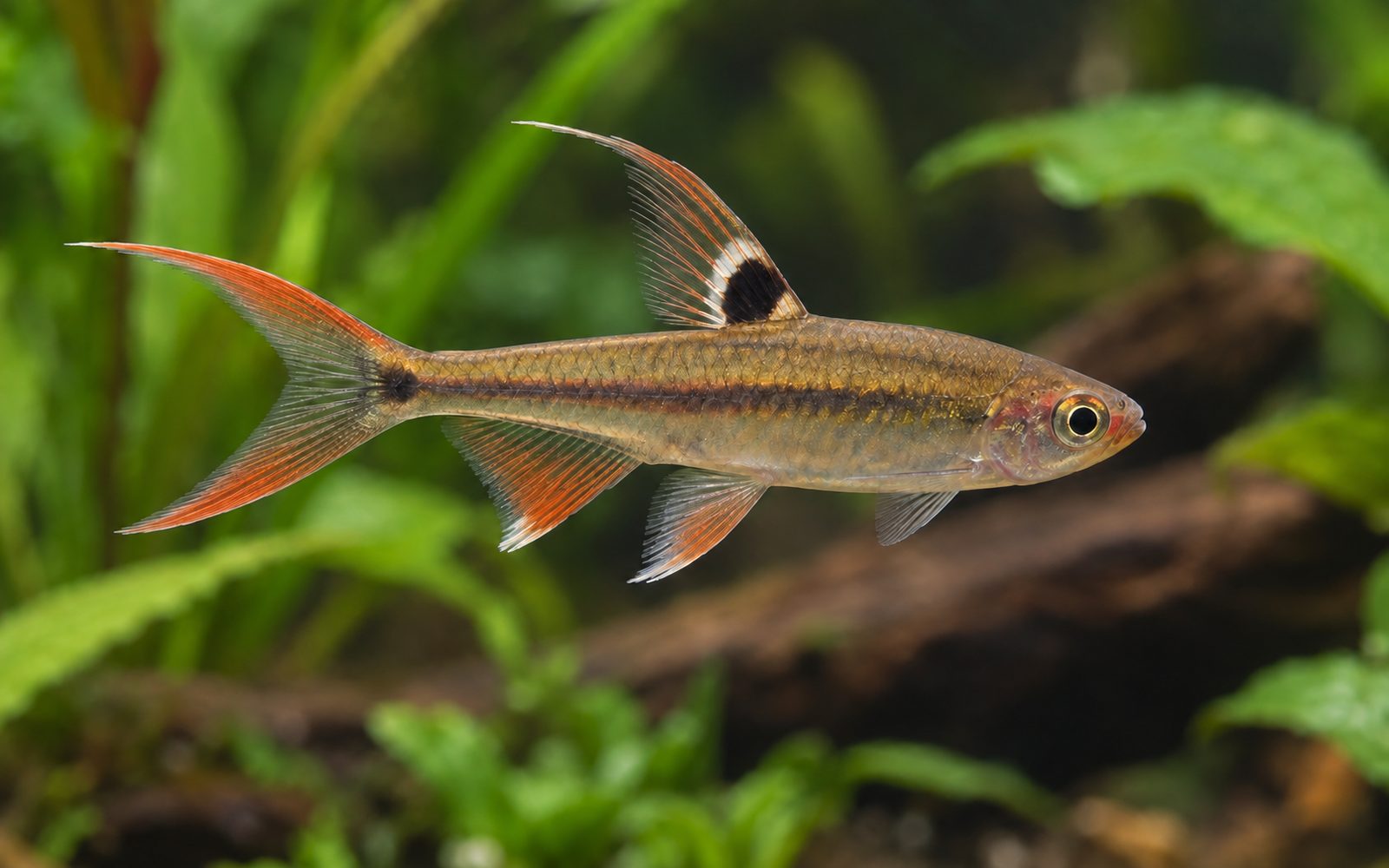
Males are larger and longer-finned and carry a dark spot surrounded by a light color on the dorsal fin. It is a peaceful, hardy species that lives near the surface.
Natural Habitat
It lives in slow-flowing streams and ponds shaded by overhanging plants in the coastal rivers of the lower Amazon and the Guyana region. These settings, where leaves hang over the water, suit the species' way of breeding.
Tank Setup
- Volume: at least 60 liters for a group of 6–8.
- Water: 24–27°C, pH 6–7.5, soft to moderately hard water.
- Lid: it is an excellent jumper; a tight-fitting lid is essential. Keeping the water level a few centimeters below the lid also supports breeding behavior.
- Decor: floating plants, stem plants reaching the surface and leaves emerging from the water are suitable.
Diet
Omnivorous, and it mostly takes its food from the surface. Floating flakes and granules, frozen mosquito larvae, daphnia, brine shrimp and fruit flies are suitable.
Behavior and Compatibility
Peaceful, but during breeding males guard the area where the eggs are against other fish. It does not harm other species and leaves adult shrimp alone.
Good companions: small tetras, pencilfish, rasboras, corydoras, otocinclus, dwarf cichlids.
Avoid: active, greedy species at the surface, fin nippers, large predators.
Group and Colony Structure
It lives in a loose group: at least 6, ideally 8 individuals. If there is more than one male, each picks its own spot for breeding. A female-heavy ratio reduces competition between males.
Breeding
Breeding is the most fascinating aspect of this species. The male chooses a suitable leaf or glass surface; the pair leaps out of the water side by side, clings above the surface for a brief moment and sticks a few eggs with each leap. Afterward, the male splashes water onto the eggs with his tail every few minutes. The eggs hatch within 2–3 days and the fry drop into the water. The fry are fed first infusoria, then newly hatched brine shrimp.
Health and Common Problems
- Jumping: the most common cause of losses in a tank without a lid.
- White spot (ich): may appear after transport.
- General: it is hardy; it rarely falls ill in mature, clean water.
Sexing
Males are larger, more colorful and longer-finned; the upper lobe of the tail fin is longer and the spot on the dorsal fin is distinct. Females are smaller and plainer, with short fins.
Tank mates
This list is calculated automatically from the species profile and grows as new species are added to the catalog. Try it in the planner for a definite answer.
Usually compatible
 Flame Tetra
 Blackfin Corydoras
 Polystictus Corydoras
 Emerald Cory
 Porthole Catfish
 Keyhole Cichlid
 Cupid Cichlid
 Geophagus altifrons
 Geophagus surinamensis
 Cryptocoryne Parva
Should not be kept together






Hobbyist notes
Things you won't find in books, learned by trial and error. The most helpful ones are on top.
Change history and contributors
- Page created · October 16, 2026