
Water parameters
Overview
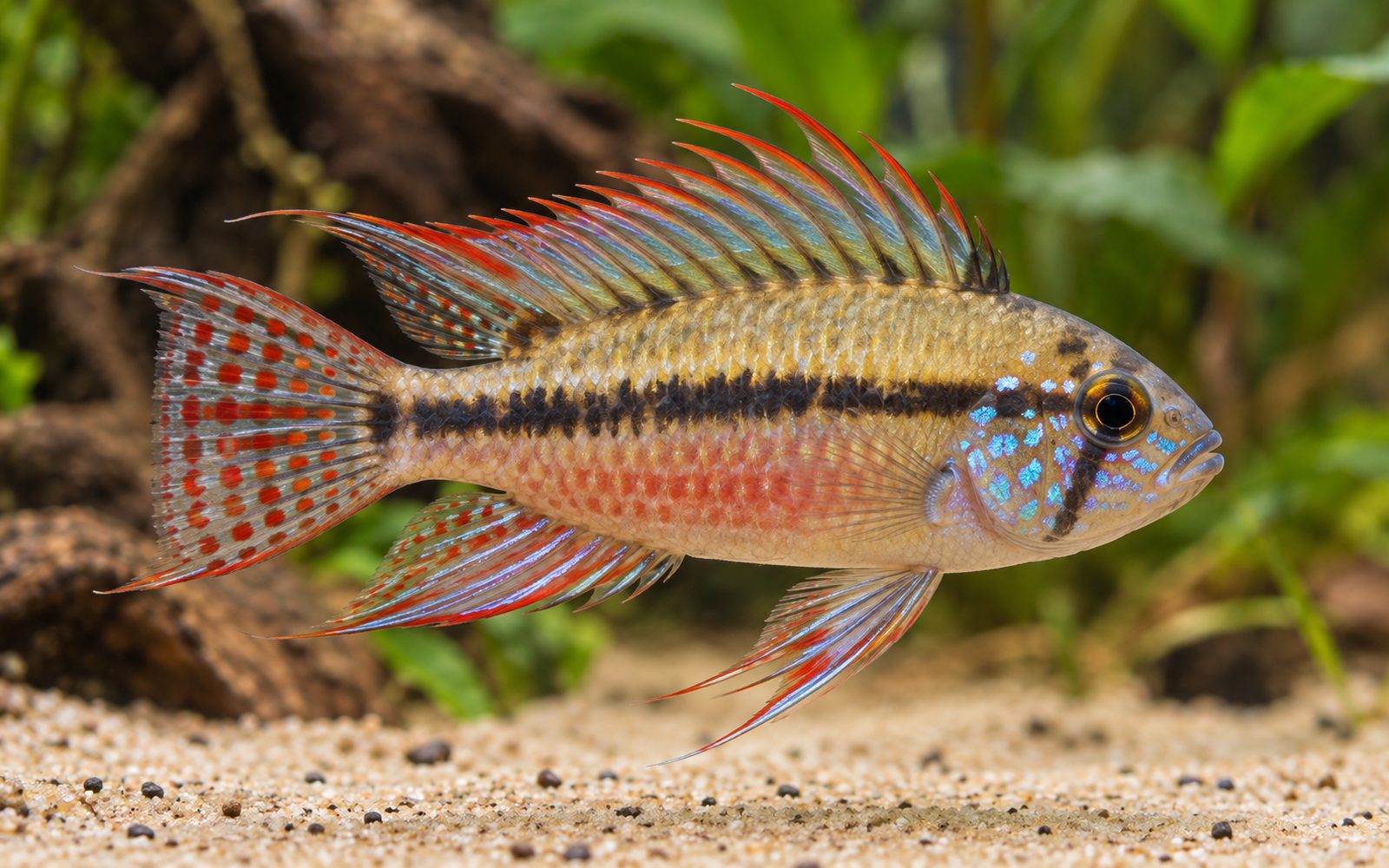
Apistogramma hongsloi is a species endemic to the Orinoco basin, belonging to the same group of relatives as macmasteri. The male's pale cream–gold body is decorated with salmon and red–orange tones, especially on its lower half; there is a blue sheen on the cheeks, a red edge on the dorsal fin and red spots or bands on the tail.
Color intensity depends heavily on diet, light and the fish's condition. Males that look pale in the store become noticeably more colorful within a few weeks in a good aquarium. A large share of the fish sold are farm-bred.
Natural Habitat
It lives in small tributaries and still waters in the middle reaches of the Meta and Vichada rivers in Colombia and in the middle Orinoco system in Venezuela. These are soft waters that expand in the rainy season and are full of leaves and plants.
Tank Setup
- Volume: at least 60 liters for one male and two females.
- Decor: a cave for each female, fine sand, roots, dried leaves and plenty of plants.
- Water: 25–27°C; soft and slightly acidic is ideal, farm-bred fish adapt to moderate hardness.
- Maintenance: a 25% water change every week, low nitrate, gentle flow.
Diet
Carnivorous. Protein-rich frozen foods such as brine shrimp, mysis, bloodworms, cyclops and daphnia bring out its color best. It also accepts small sinking granules.
Behavior and Compatibility
Males are territorial and harsh toward males of their own species. Females can become very aggressive during the fry period. It usually leaves calm midwater fish alone; it hunts shrimplets.
Good companions: small tetras (cardinal, ember, rummy-nose), pencilfish, hatchetfish, otocinclus.
Avoid: other Apistogramma males (in a small aquarium), large cichlids, shrimp breeding, fast barbs that dominate at feeding time.
Group and Colony Structure
A harem: 1 male and 2 females. The females' caves should be placed far apart. If a single pair is kept, leave hiding places for the male; a female guarding fry keeps him away.
Breeding
The female lays her eggs on the ceiling or wall of the cave and takes on their care; during this period she turns yellow. The eggs hatch in 2–3 days, and the fry become free-swimming a few days later. In a small aquarium the male may have to be removed because of the female's aggression. The fry are fed newly hatched brine shrimp.
Health and Common Problems
It is sensitive to poor water quality. Pale color is often a sign of stress, the wrong diet or high nitrate. New fish should be observed in quarantine.
Sexing
Males reach 6–7 cm; their bodies are longer, their dorsal and anal fins pointed and their colors reddish. Females are 4–5 cm, light brown–yellow with a distinct black lateral stripe; they turn bright yellow during the fry period. Sexing juveniles is difficult.
Tank mates
This list is calculated automatically from the species profile and grows as new species are added to the catalog. Try it in the planner for a definite answer.
Usually compatible
 Emerald Betta
 Emerald Cory
 Porthole Catfish
 Keyhole Cichlid
 Firemouth Cichlid
 Cupid Cichlid
 Buffalohead Cichlid
 Festivum
 Geophagus altifrons
Should not be kept together





Hobbyist notes
Things you won't find in books, learned by trial and error. The most helpful ones are on top.
Change history and contributors
- Page created · October 16, 2026