
Water parameters
Overview
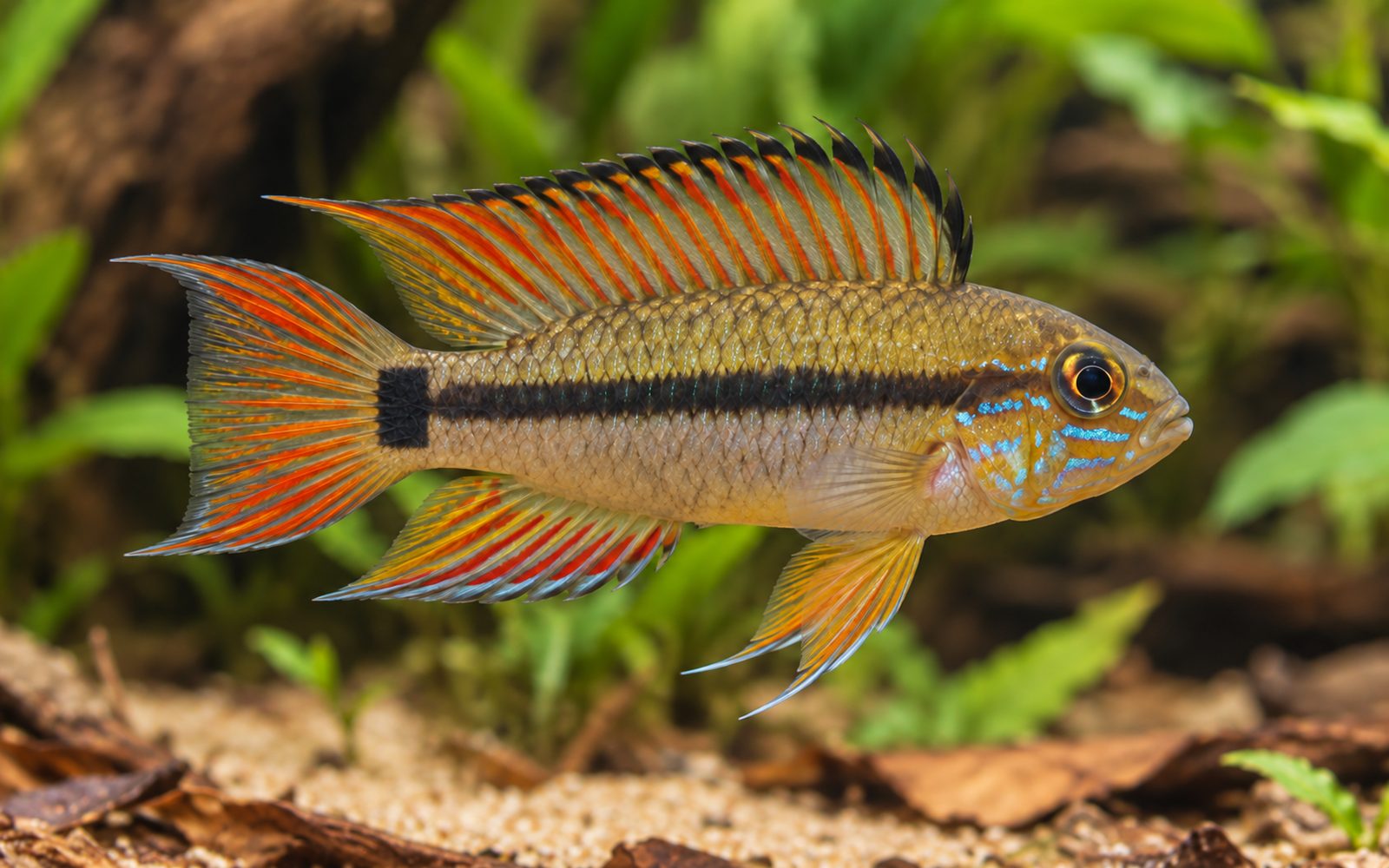
Apistogramma viejita is a species that forms color forms in different parts of the Meta River basin in Colombia. The male is distinguished from its close relative A. macmasteri by the dark upper edge of its dorsal fin and the rectangular, trapezoidal or crescent-shaped spot at the tail base; macmasteri has a deeper body and a "D"-shaped spot. A large share of the fish sold in stores as "viejita" are actually macmasteri. Genuine viejita is rarely bred commercially and is usually of wild origin.
Tank Setup
- At least 60 liters for one male and two females; a cave for each female.
- 25–27°C, very soft water (GH 1–4) and pH 5–6.5; with most tap water, RO is needed.
- Fine sand, dried leaves, roots and dim light; values should be kept stable.
Diet
Carnivorous. Small live or frozen foods such as brine shrimp, cyclops, daphnia and fine bloodworms should be the staple; it accepts granules once accustomed to them.
Behavior and Compatibility
Males are territorial; the female fiercely defends her cave while guarding fry, and in a single-pair setup the male may also help protect the fry. It leaves calm midwater fish alone and hunts shrimplets.
Good companions: cardinal tetras, pencilfish, hatchetfish, small rasboras, otocinclus.
Avoid: species that need hard water, large cichlids, shrimp breeding, a second male in a small aquarium.
A short profile for this species
The Apistogramma viejita page has the basics, but the sections below have not been written yet. If you keep this species, write a section from your own experience; it will be published under your name after editor approval.
Tank mates
This list is calculated automatically from the species profile and grows as new species are added to the catalog. Try it in the planner for a definite answer.
Usually compatible
 Emerald Betta
 Emerald Cory
 Porthole Catfish
 Keyhole Cichlid
 Cupid Cichlid
 Festivum
 Geophagus altifrons
 Geophagus surinamensis
 Threadfin Acara
Should not be kept together





Hobbyist notes
Things you won't find in books, learned by trial and error. The most helpful ones are on top.
Change history and contributors
- Page created · October 16, 2026