
Water parameters
Overview
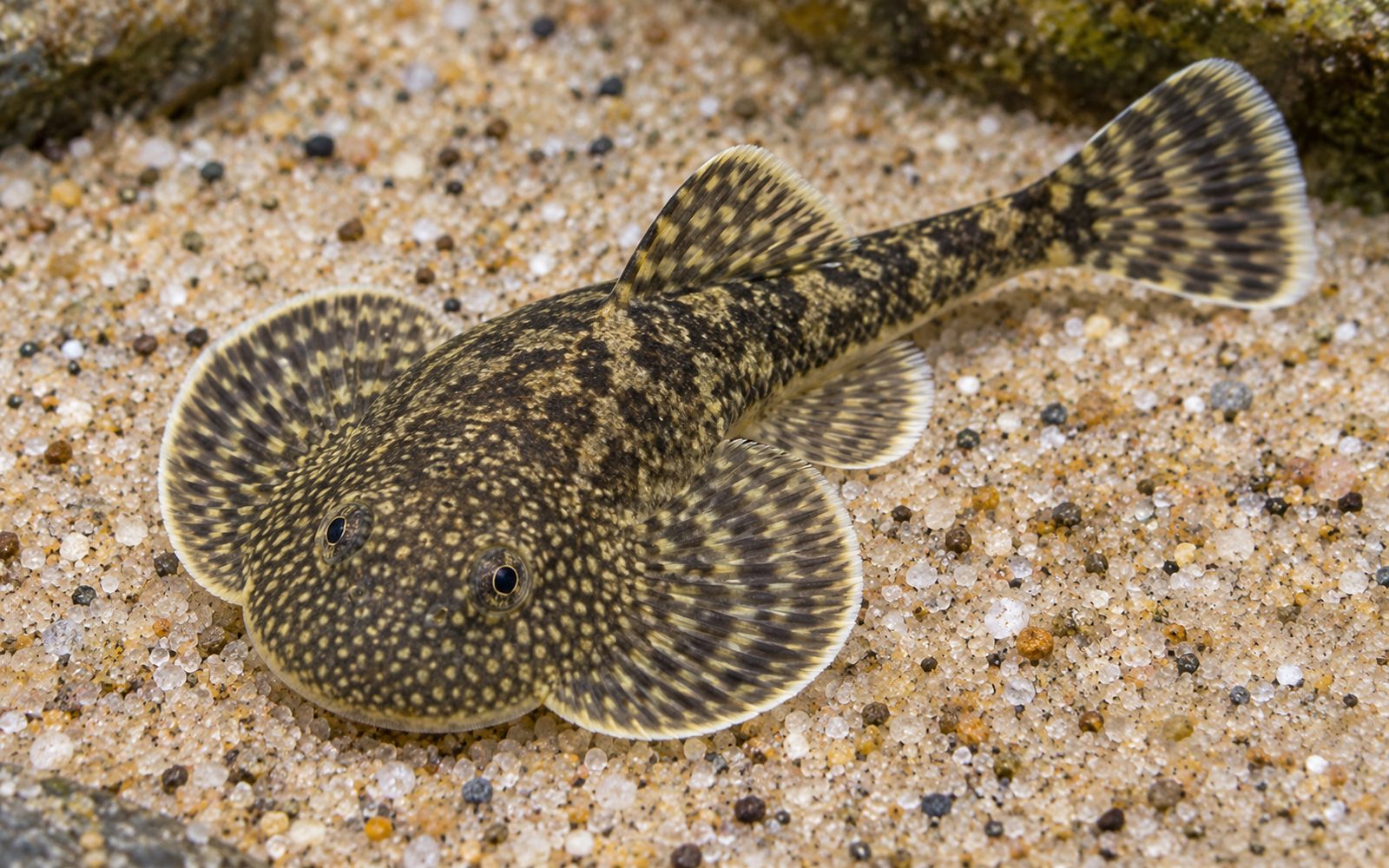
All species of the genus Gastromyzon are endemic to the island of Borneo, and most of them live in only a single river basin. Gastromyzon scitulus is one of the species most often seen in the trade. Adults grow to about 4–5 cm; with its round, flat body and fins that work like suction cups, it clings to glass and stone.
The species name is rarely written in stores; several species are sold mixed under names such as "Borneo sucker," "Hong Kong pleco" or "butterfly loach." Their care is very similar, but exact species identification takes an expert eye. This profile also reflects the general needs of the genus.
Natural Habitat
It lives in the tributaries of the Sadong River basin in southern Sarawak, in shallow, fast-flowing, rocky streams. The water is clear, cool and saturated with oxygen; the surfaces of the stones are covered with biofilm and algae.
Tank Setup
- Volume: at least 60 liters and 60–75 cm in length for a group of 4–6.
- Flow and oxygen: strong flow and plenty of oxygen are essential; a high-flow filter, an additional circulation pump and an air stone.
- Water: 20–24°C, pH 6.5–7.5, soft to moderately hard. 30–50% water change weekly.
- Decor: rounded stones, gravel and rock; hardy plants attached to stones.
- Mature aquarium: an aquarium at least a few months old, with a layer of algae on the stones, is needed.
- Lid: it climbs the glass; the lid must be tight.
Diet
It feeds by scraping algae and biofilm off stones. Algae wafers and spirulina and vegetable gel foods should be the staple. It accepts quality dry food and small amounts of bloodworms; too much protein can lead to health problems.
Behavior and Compatibility
Peaceful, but it jostles with its own kind and similarly shaped fish over the best grazing spots. It cannot compete with large, greedy or aggressive fish.
Good companions: small, calm species that like cool, flowing water: small rasboras, white cloud mountain minnow, small danios, other hillstream loaches.
Avoid: large, greedy bottom dwellers, large grazing competitors such as bristlenose plecos, goldfish, warm-water species.
Group and Colony Structure
At least 4, ideally 6 or more individuals. When kept in a group, territorial scuffles are spread out and the fish come out into the open more. Having several grazing areas among the stones reduces fighting.
Breeding
Breeding in the aquarium is not known. There are only a few hobbyist observations on the breeding of the genus; all fish sold are collected from the wild.
Health and Common Problems
- Wasting: fish with a sunken belly are very common in the trade and are hard to bring back. Choose fish with a full belly when buying.
- Oxygen: summer heat and an interruption of flow can be fatal.
- Medication: it is a small, sensitive fish; medication is given at half dose.
Sexing
Females are slightly larger and heavier-bodied, with a rounder head and a wider body. The difference is easiest to see from above or below.
Tank mates
This list is calculated automatically from the species profile and grows as new species are added to the catalog. Try it in the planner for a definite answer.
Usually compatible
 Flame Tetra
 Blackfin Corydoras
 Polystictus Corydoras
 Emerald Cory
 Emerald Dwarf Rasbora
 Porthole Catfish
 Keyhole Cichlid
 Cryptocoryne Parva
 European Bitterling
 Adolfo's Cory
Should not be kept together






Hobbyist notes
Things you won't find in books, learned by trial and error. The most helpful ones are on top.
Change history and contributors
- Page created · October 16, 2026