
Water parameters
Overview
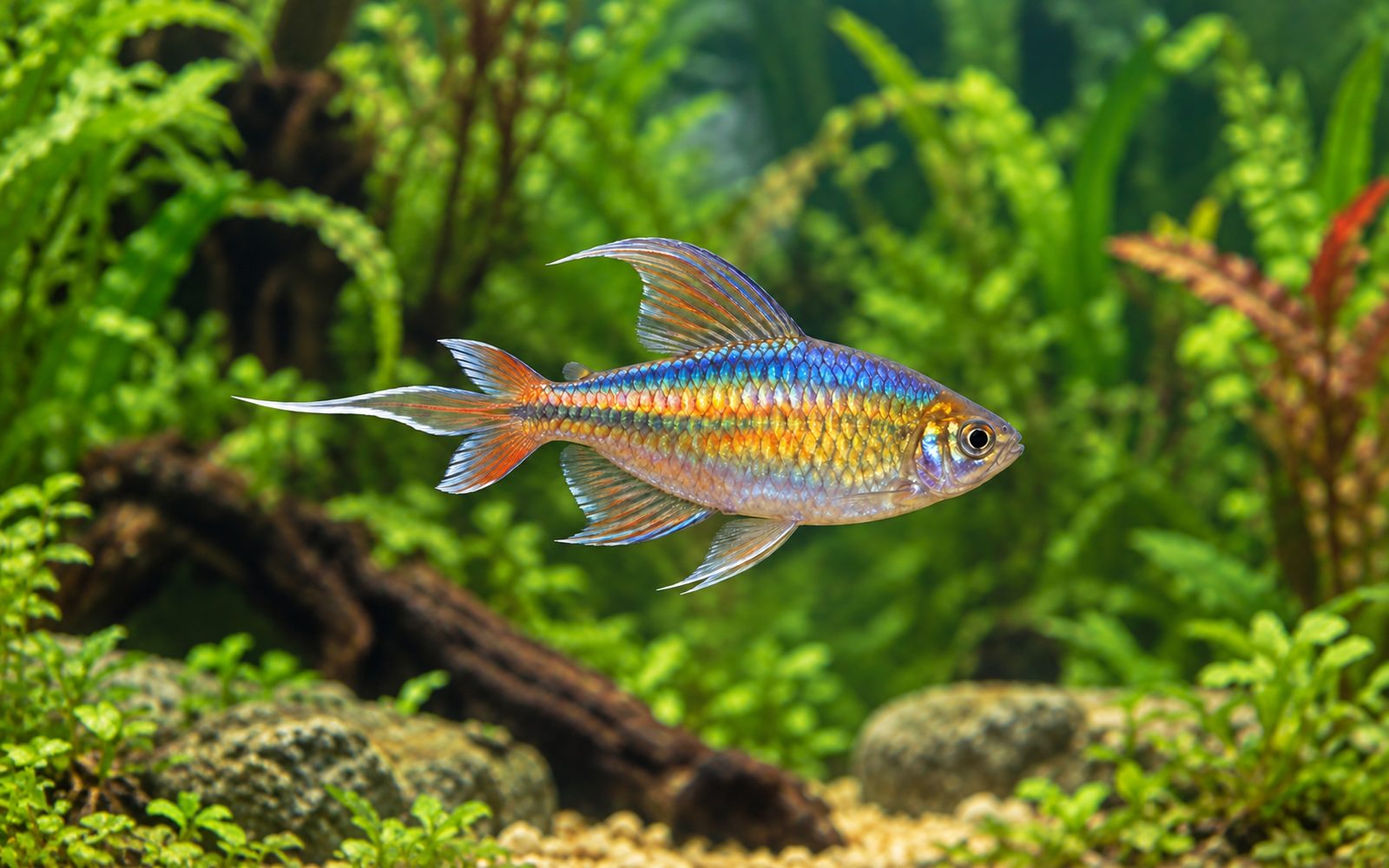
With iridescent scales that shift from blue to gold and from orange to purple depending on the angle of the light, the Congo tetra is one of the most eye-catching schooling fish in the hobby. The middle of the males' tail fin extends like a veil with white edges; the dorsal fin is long as well. Because it reaches 8–9 cm, it is larger than the classic tetras and needs a spacious aquarium.
Natural Habitat
It lives in slow-flowing river branches of the Congo Basin with murky, soft water. In the wild the light filters down through the forest canopy above.
Tank Setup
- Volume: at least 150 liters and 100 cm of length for a school of 6–8; it is an active, large-bodied school.
- Water: 24–26°C, soft to moderately hard, slightly acidic to neutral. Regular water changes bring out the colors.
- Light: dim light and floating plants increase both color and confidence; a dark substrate is preferred.
- Lid: it may jump when startled.
Diet
Omnivorous. Quality flakes and granules, frozen brine shrimp, mysis and bloodworms; plant-based food from time to time. It may nibble soft-leaved plants.
Behavior and Compatibility
Peaceful but skittish; it opens up in a crowded, safe environment. Males show off to each other but do not fight seriously.
Good companions: corydoras, Synodontis catfish, large rasboras, angelfish (in a large tank), calm gouramis.
Avoid: fin nippers (the males' long fins become a target), very small fish (adult Congos may eat fry and very small fish), aggressive cichlids.
Group and Colony Structure
At least 6, ideally 8 or more individuals; a female-heavy group (2 females per male) is the most balanced arrangement. Males show off by spreading their fins in front of each other; this is the Congo tetra's most beautiful behavior and is seen only in a large group.
Breeding
It breeds in the aquarium as an egg scatterer: pairs spawn among the plants with the morning light, and the eggs fall to the bottom. Because the parents eat the eggs, a separate tank with mesh or marbles on the bottom is needed. The eggs hatch in about 6 days, which is a long time for tetras.
Health and Common Problems
It is hardy, but it may react to sudden water changes and poor water with fin rot. The males' long fins are prone to injury.
Sexing
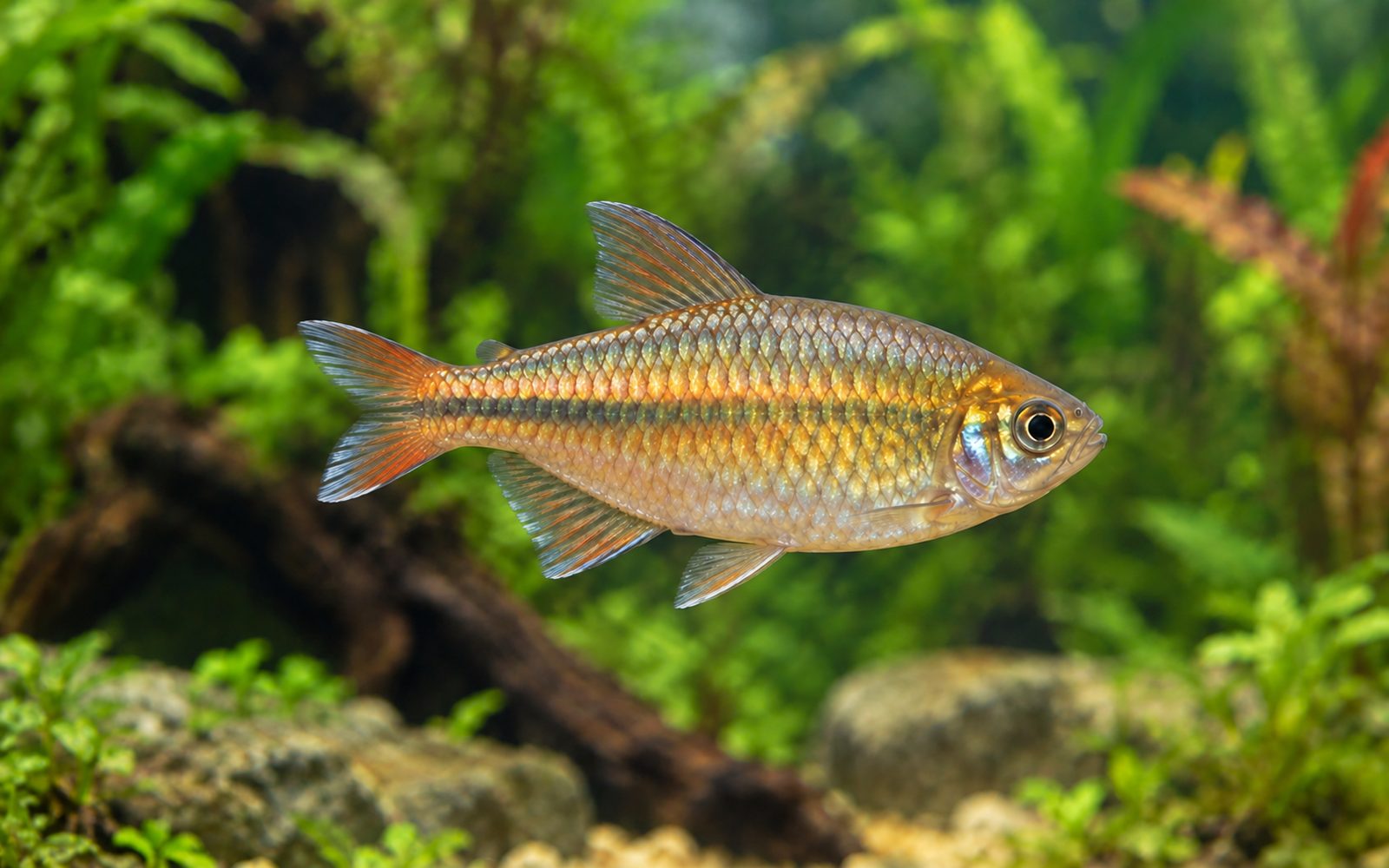
Males are larger and more colorful; the middle of the tail fin extends like a veil, and the dorsal fin is long and pointed. Females are smaller, paler (gold-silver) and short-finned.
Tank mates
This list is calculated automatically from the species profile and grows as new species are added to the catalog. Try it in the planner for a definite answer.
Usually compatible
 Flame Tetra
 Blackfin Corydoras
 Polystictus Corydoras
 Emerald Betta
 Emerald Cory
 Porthole Catfish
 Keyhole Cichlid
 Cupid Cichlid
 Geophagus surinamensis
 Cryptocoryne Parva
Should not be kept together






Hobbyist notes
Things you won't find in books, learned by trial and error. The most helpful ones are on top.
Change history and contributors
- Page created · October 16, 2026