
Water parameters
Overview
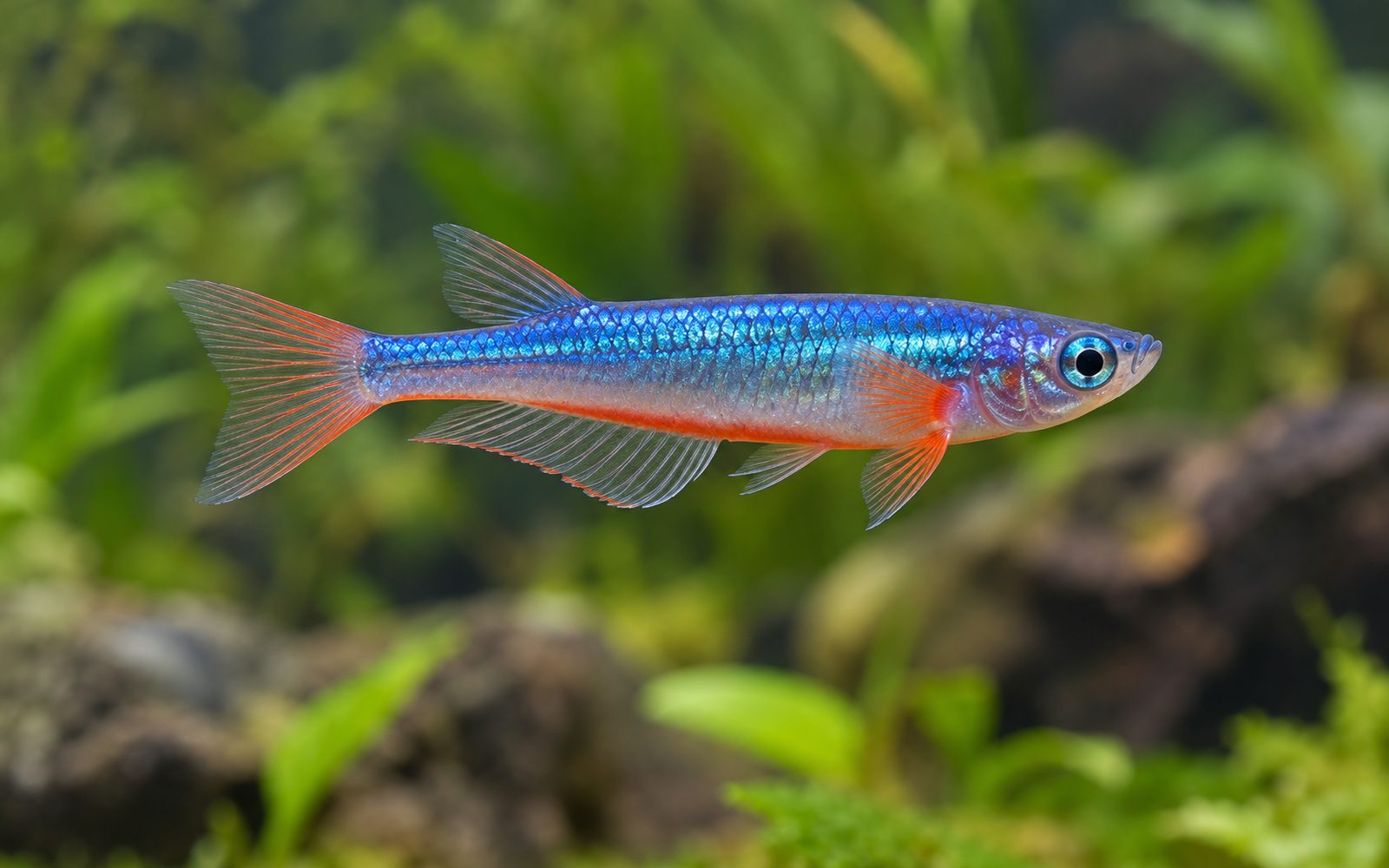
Oryzias woworae is a small ricefish introduced to science in 2010 that quickly found a place in the hobby. The males' upper body shines metallic blue; the pectoral fins and belly line are scarlet-orange. The combination of these two colors makes it one of the favorite fish for planted nano aquariums.
It is not a true killifish; it belongs to the ricefish family, relatives of the medaka. Its care is also similar to the medaka's, but as a tropical species it needs warmer water. Because it is peaceful and small, it goes very well with shrimp tanks.
Natural Habitat
It is known only from small forest streams and pools on Muna Island in Indonesia. These waters are shaded, slow-flowing, clear and covered with vegetation. Because of its narrow range, the wild population is vulnerable to habitat loss; most individuals sold in the hobby are captive-bred.
Tank Setup
- Volume: 30 liters or more for a group of 6–10.
- Layout: Dense plants, moss and floating plants; part of the surface should stay open.
- Water: 24–27°C, soft to moderately hard, slightly acidic to neutral. Weak flow is enough.
- Lid: It may jump when startled; a lid is recommended.
- Maintenance: 20–25% water change weekly.
Diet
Omnivorous; its mouth is small and upturned. It readily accepts fine flakes and floating micro granules. The diet should be varied with newly hatched and frozen brine shrimp, cyclops and daphnia. It usually takes food from the surface and midwater.
Behavior and Compatibility
Peaceful and social; it roams the upper and middle levels in a loose group. Males display to each other with flared fins and have brief chases, but they do no harm.
Good companions: red cherry and other dwarf shrimp, galaxy rasboras, harlequin rasboras, dwarf corydoras, otocinclus, nerite snails.
Avoid: large and active fish, fin nippers, and any fish whose mouth it can fit into.
Group and Colony Structure
At least 6, ideally 10 or more individuals; a female-heavy group spreads out the males' attention. When kept in small numbers it becomes timid and its colors fade.
Breeding
It breeds easily. The female carries the egg cluster under her belly for a while, then brushes it off onto moss or fine-leaved plants. At 25–26°C the eggs hatch in about 10–14 days. Adults may eat eggs and fry; the moss with eggs or the wool spawning mop should be moved to a separate container. In a mature aquarium with dense moss, some of the fry grow up on their own. The fry start on infusoria and powdered food and move on to newly hatched brine shrimp after a few days.
Health and Common Problems
- It is generally hardy; problems mostly come from sudden water changes and cool water.
- White spot (ich): can appear after transport and when the temperature drops.
- Newly arrived individuals should be observed in quarantine for a few days.
Sexing
Males are a brighter blue, with more intensely red pectoral fins and belly line; their dorsal and anal fins are longer. Females are paler, have a fuller belly and often carry egg clusters.
Tank mates
This list is calculated automatically from the species profile and grows as new species are added to the catalog. Try it in the planner for a definite answer.
Usually compatible
 Flame Tetra
 Blackfin Corydoras
 Polystictus Corydoras
 Emerald Cory
 Porthole Catfish
 Keyhole Cichlid
 Cupid Cichlid
 Geophagus altifrons
 Geophagus surinamensis
 Cryptocoryne Parva
Should not be kept together






Hobbyist notes
Things you won't find in books, learned by trial and error. The most helpful ones are on top.
Change history and contributors
- Page created · October 16, 2026