
Water parameters
Overview
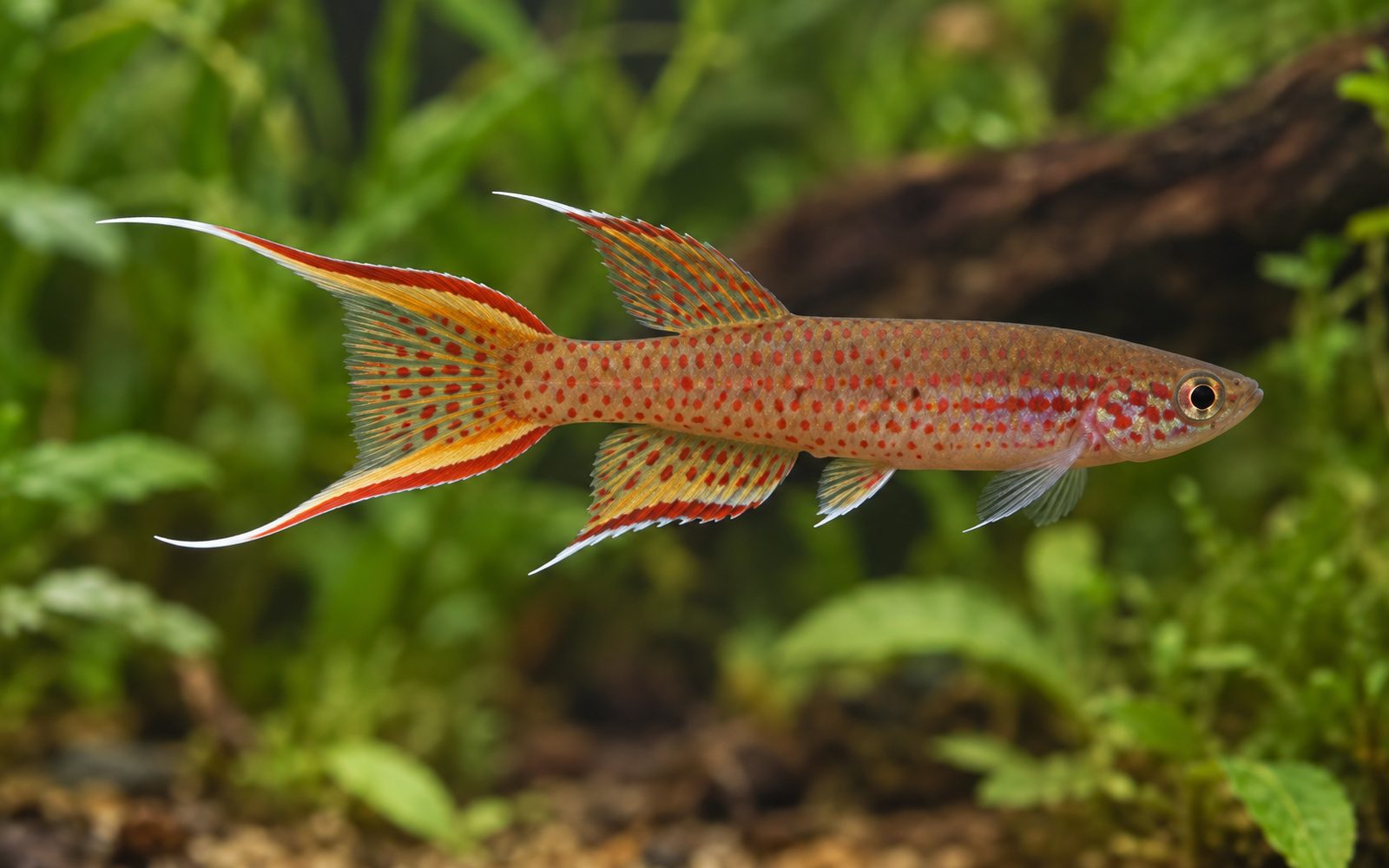
Aphyosemion australe is a classic species that could be called the emblem of the killifish hobby. The male's orange-brown or chocolate-colored body is covered with small red spots. The upper and lower tips of the tail fin lengthen to form a lyre shape; these tips and the pointed tips of the dorsal and anal fins are white, with red-orange edges.
Alongside the wild-colored form, an orange-gold form produced through breeding is also very common. With its small size, peaceful temperament and easy breeding, it is one of the species most often recommended for starting out with killifish.
Color and Fin Varieties
- Chocolate (wild form): dark orange-brown body, red spots, white-tipped lyre tail.
- Gold / orange (Gold, Orange): light orange-gold body; the spot and fin pattern is retained.
Natural Habitat
It lives in the low plains along Gabon's Atlantic coast, in the shallow margins of forest swamps and small, slow-flowing streams. The water is very soft, acidic, tea-colored and shaded; the bottom is covered with leaf litter.
Tank Setup
- Volume: 30 liters or more for one male and two to three females.
- Layout: dense plants, moss, floating plants and leaf litter; dim light brings out the colors.
- Water: 22–24°C, soft and slightly acidic. Peat or dried leaves give the water a natural tea color.
- Filter: an air-driven sponge filter with weak flow is ideal.
- Lid: a tight lid is essential.
- Maintenance: a 20–25% water change every week.
Diet
Mainly carnivorous. Frozen and live small foods should be the staple: brine shrimp, daphnia, cyclops, small bloodworms, microworms. Fish that are used to it will also take fine flakes and micro granules.
Behavior and Compatibility
A peaceful, calm species. Males display to each other with spread fins, and there are brief chases; serious fights are rare. It becomes timid next to large, fast fish.
Good companions: small, calm fish: harlequin rasboras, dwarf corydoras (C. pygmaeus, C. habrosus), otocinclus, clown killifish; adult dwarf shrimp.
Avoid: fin-nipping barbs and tetras, large and active fish, species that might attack its long fins.
Group and Colony Structure
Two to three females per male is ideal. In a large, planted aquarium several males can be kept together with enough females; in that case the males' displays make a very attractive sight.
Breeding
It lays a few eggs every day in a yarn mop, moss or among fine-leaved plants; spawning continues for weeks.
- The eggs are kept in water in a separate, shallow container; at 22–24°C they hatch in about 12–16 days.
- Eggs that turn white with fungus must be removed every day.
- Alternatively, the eggs can be stored in damp peat for 2–3 weeks and then placed in water.
The fry are very small; in the first days they are fed infusoria or microworms, and after a few days newly hatched brine shrimp. In an aquarium with dense moss, some fry can survive alongside the parents as well.
Health and Common Problems
- Velvet disease (Oodinium): common in killifish; it increases in soft water and in stressed fish.
- Temperature: staying above 26°C for long periods shortens its lifespan.
- It is a hardy species in clean, mature water.
Sexing
Males are colorful, red-spotted and lyre-tailed; their dorsal and anal fins are pointed with white tips. Females are plain light brown; their fins are short, rounded and colorless.
Tank mates
This list is calculated automatically from the species profile and grows as new species are added to the catalog. Try it in the planner for a definite answer.
Usually compatible
 Flame Tetra
 Blackfin Corydoras
 Polystictus Corydoras
 Emerald Cory
 Porthole Catfish
 Keyhole Cichlid
 Cryptocoryne Parva
 Adolfo's Cory
 African Glass Catfish
 African Butterfly Cichlid
Should not be kept together






Hobbyist notes
Things you won't find in books, learned by trial and error. The most helpful ones are on top.
Change history and contributors
- Page created · October 16, 2026