
Water parameters
Overview
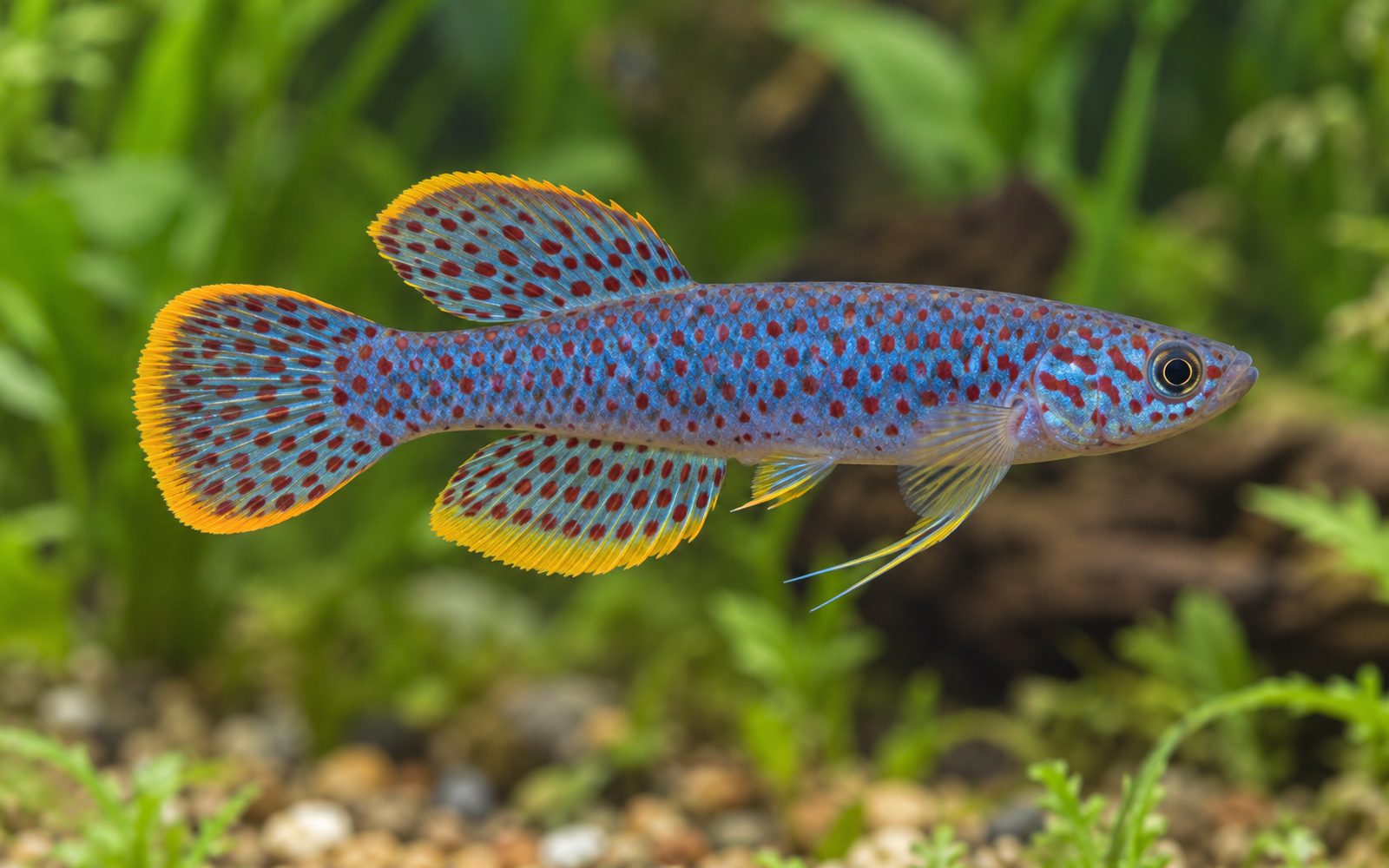
Fundulopanchax gardneri is one of the best-known and most readily available species in the killifish hobby. The male's steel-blue to green body is covered with dense red spots; the edges of the dorsal, anal and tail fins are yellow or orange, depending on the population.
In the hobby, place names such as Nsukka, Akure, Lafia, Makurdi appear alongside gardneri. These are not separate species but natural populations named after the place where the fish were collected. Their colors differ slightly; to keep pure lines, different populations are not crossed with each other. Some of the fish sold in stores are mixed lines of uncertain population.
With eggs that can develop both in water and in damp peat, it is a "semi-annual" species; however, its lifespan is much longer than that of annual species.
Color and Fin Varieties
- Gold gardneri (Gold): a cultivated form with red spots on a golden-yellow background instead of blue.
- Natural populations: lines named after places such as Nsukka, Akure, Lafia and Makurdi; they differ in fin-edge color and spot density.
Natural Habitat
It lives in Nigeria and Cameroon, in small streams, swamps and spring-fed pools at the edges of savanna and forest. Some habitats shrink greatly or dry out temporarily in the dry season; the ability of the species' eggs to withstand drying is an adaptation to this.
Tank Setup
- Volume: 40 liters or more for one male and two to three females.
- Layout: dense plants, floating plants and dim light; hiding places where females can escape.
- Water: 22–25°C, soft to moderately hard, slightly acidic to neutral. A sponge filter with weak flow is ideal.
- Lid: a tight lid is essential; it jumps.
- Maintenance: a 25–30% water change every week.
Diet
Mainly carnivorous. Frozen bloodworms, brine shrimp, daphnia and mosquito larvae should be the staple; fish that are used to it will also take granules and flakes. Live food noticeably boosts color and breeding.
Behavior and Compatibility
Active and curious. Males are quite quarrelsome with each other; they may also chase females hard. It is generally calm toward other species but eats fry and baby shrimp that fit in its mouth.
Good companions: calm, small to medium-sized community fish: harlequin rasboras, small corydoras, otocinclus; fish with similar water needs and a different color pattern.
Avoid: other Fundulopanchax species (the females look alike and they hybridize), fin-nipping barbs, large and aggressive fish.
Group and Colony Structure
Two to three females per male are recommended. If two males are kept side by side in a small aquarium, they fight constantly; a large, divided aquarium is needed.
Breeding
It breeds very easily. The pair lays a few eggs every day in a yarn mop, in fine-leaved plants or in peat on the bottom.
- Development in water: collected eggs hatch in 14–21 days in clean water in a shallow container. Eggs that turn white (fungused) must be removed every day.
- Development in peat: the eggs are stored in damp peat for 3–4 weeks and then placed in water; this method reduces fungus problems.
The fry take newly hatched brine shrimp from the first day. Because they grow at different rates, larger fry may eat smaller ones; they should be sorted by size.
Health and Common Problems
- Velvet disease (Oodinium): the most common problem in killifish; a gold-dust appearance on the body, clamped fins.
- Injury: torn fins occur in male fights; they heal quickly in clean water.
- It is a hardy species in clean, mature water.
Sexing
Males have a blue body, red spots and broad fins with yellow-orange edges. Females are smaller and plain light brown; their fins are short, rounded and colorless.
Tank mates
This list is calculated automatically from the species profile and grows as new species are added to the catalog. Try it in the planner for a definite answer.
Usually compatible
 Emerald Betta
 Emerald Cory
 Porthole Catfish
 Keyhole Cichlid
 Buffalohead Cichlid
 Geophagus surinamensis
 Rainbow Cichlid
 Gymnogeophagus balzanii
 Blood Parrot
Should not be kept together






Hobbyist notes
Things you won't find in books, learned by trial and error. The most helpful ones are on top.
Change history and contributors
- Page created · October 16, 2026