
Water parameters
Overview
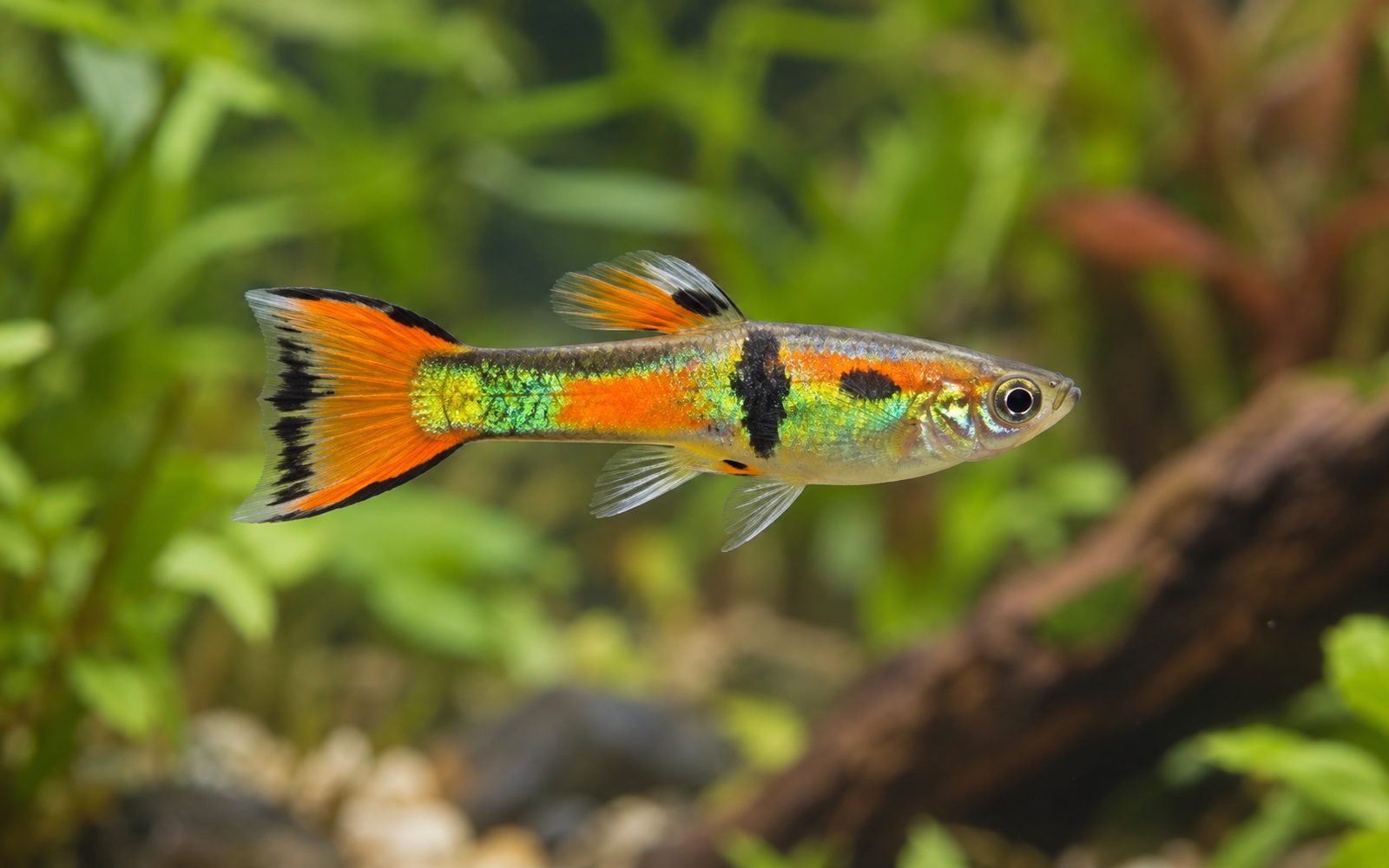
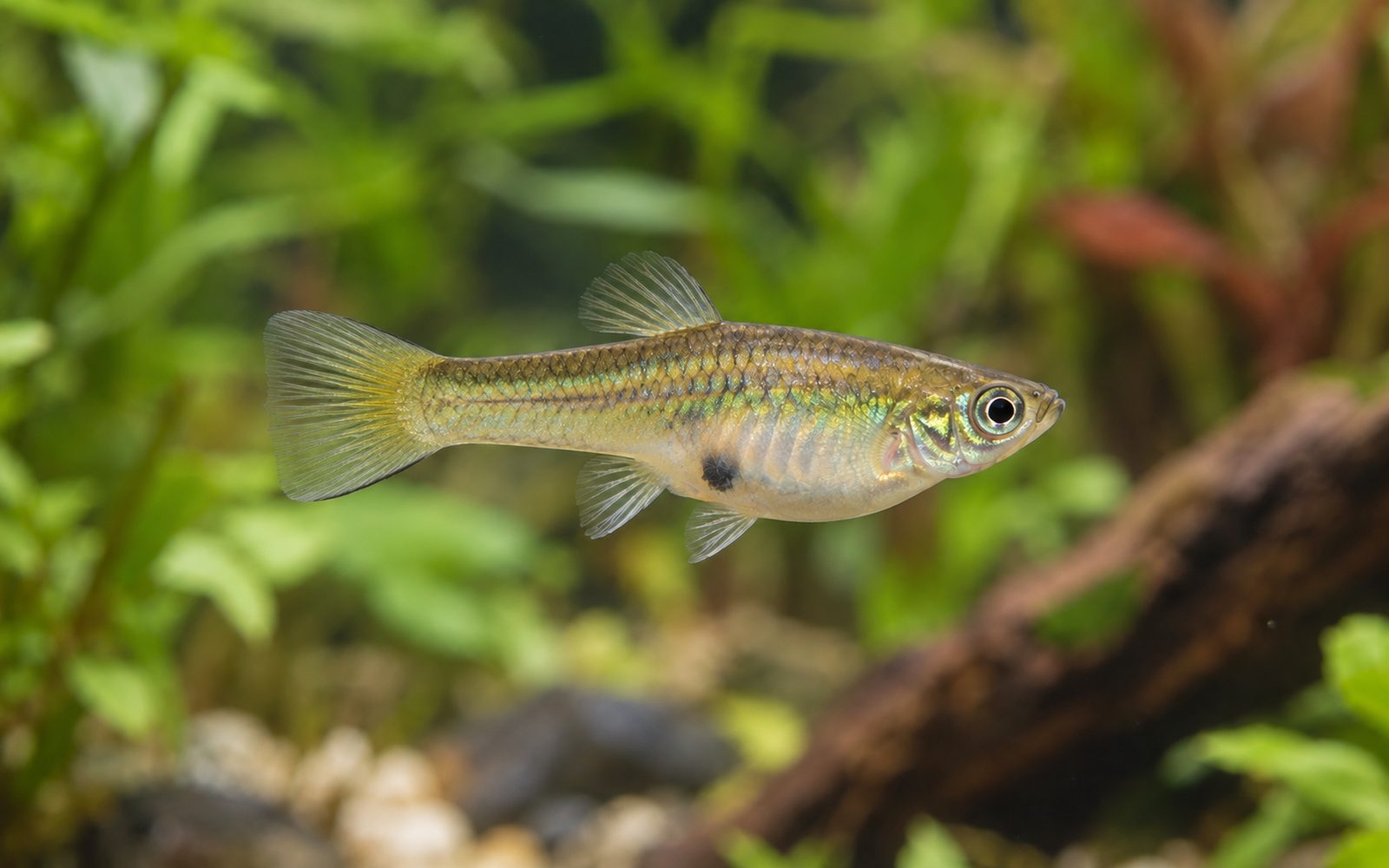
The Endler's livebearer is a small livebearer very closely related to the guppy, described in Venezuela in the 1970s. The males are only 2–2.5 cm but very showy, with neon orange, green, black and blue patterns; there are lines such as "tiger", "black bar" and "N-class". Females are plain and silvery–olive.
It hybridizes easily with the guppy. Those who want to preserve the pure line do not keep Endlers in the same aquarium as guppies; some of the "Endlers" sold in stores are actually hybrids.
Natural Habitat
It lives in warm, hard, planted lagoons near the coast of Venezuela; wild populations are very limited.
Tank Setup
- Volume: 30 liters or more for a small group.
- Water: 24–27°C, hard and slightly alkaline water.
- Plants: dense plants and moss provide both hiding places for fry and grazing surfaces.
Diet
Omnivorous, with a small mouth. Micro granules, fine flakes, spirulina, frozen brine shrimp and cyclops.
Behavior and Compatibility
Peaceful and active. Males constantly chase females.
Good companions: red cherry and other shrimp (it leaves adults alone), otocinclus, small corydoras, celestial pearl danios, nerite snails.
Avoid: guppies (hybridization), large and active fish, fin nippers, any fish whose mouth it fits into.
Group and Colony Structure
As with guppies, there are two setups: 2–3 females per male (fry are inevitable) or a males-only group (at least 5 males; no fry, and the color display continues). In a nano aquarium a males-only group is the most practical solution for population control.
Breeding
A livebearer; gestation lasts 3–4 weeks and the female gives birth to 5–25 fry each time. Adults chase fry less than guppies do; in a densely planted aquarium the colony grows on its own.
Health and Common Problems
Hardy. It becomes prone to disease in soft, acidic water. Hardiness may decline in hybrid and heavily inbred lines.
Sexing
Males are small, neon-colored and have a gonopodium. Females are larger (3.5–4 cm), plain silvery–olive in color, with a fan-shaped anal fin and a dark gravid spot on the belly.
Tank mates
This list is calculated automatically from the species profile and grows as new species are added to the catalog. Try it in the planner for a definite answer.
Usually compatible
 Flame Tetra
 Blackfin Corydoras
 Polystictus Corydoras
 Emerald Cory
 Emerald Dwarf Rasbora
 Porthole Catfish
 Keyhole Cichlid
 Cryptocoryne Parva
 Gold Spot Pleco (L001)
 African Glass Catfish
Should not be kept together






Hobbyist notes
Things you won't find in books, learned by trial and error. The most helpful ones are on top.
Change history and contributors
- Page created · October 16, 2026