
Water parameters
Overview
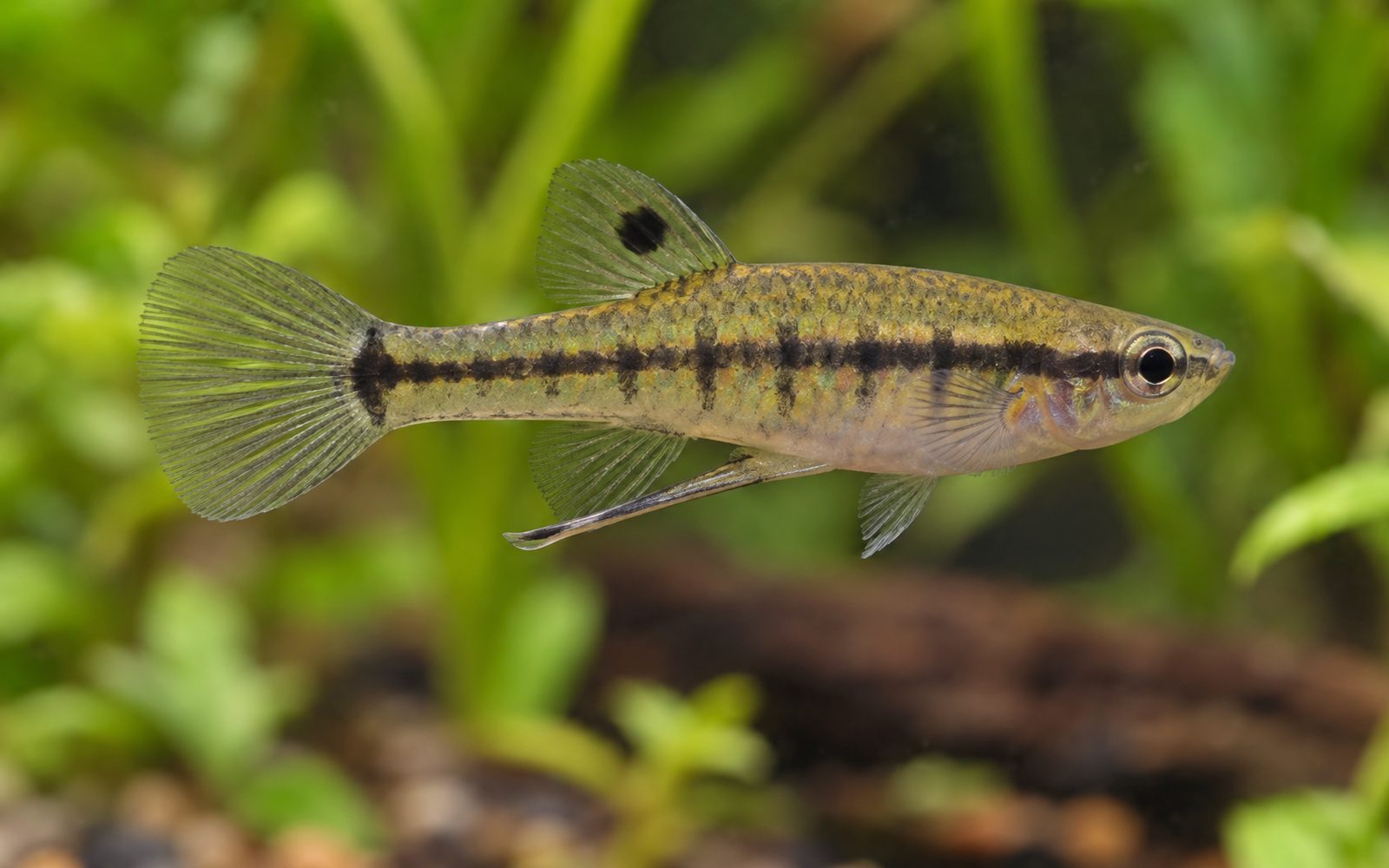
Despite the word "killifish" in its name, Heterandria formosa is not a killifish but a true livebearer related to the guppy. Males stay at 1.5–2 cm and females at around 3 cm; it is counted among the smallest vertebrates in North America. Its olive–tan body has a dark stripe running from head to tail, crossed by thin vertical bars.
What makes it special among livebearers is that it does not give birth to its fry all at once, but a few a day spread over two weeks. Its small size, docility and the fact that it leaves shrimp alone make it one of the most suitable fish for nano and shrimp aquariums.
Natural Habitat
It lives in marshes, densely vegetated ditches, ponds and slow-flowing streams on the coastal plain of the southeastern United States. These habitats are shallow, full of plants and algae, and without current. Because of the subtropical climate the water temperature drops noticeably in winter.
Tank Setup
- Volume: 20 liters is enough for a small colony; a more balanced population develops in 30–40 liters.
- Water: 20–25°C is ideal; it lives in an unheated room-temperature aquarium. pH 7–8, moderate hardness.
- Layout: very dense plants, moss (java moss) and floating plants. Open space can be limited.
- Filter: a sponge filter is ideal; strong flow and filters with strong suction tire the fry or suck them in.
Diet
Omnivorous, with a very small mouth. Flakes ground to powder, micro granules, newly hatched brine shrimp, cyclops and microworms are the most suitable foods. It cannot eat coarse foods. It also grazes microorganisms on plants and algae.
Behavior and Compatibility
Extremely peaceful. Males court females but chase them only lightly. When kept with large, active fish it hides and cannot feed enough; for this reason it is best kept alone or with very small, calm species.
Good companions: red cherry and other dwarf shrimp, nerites and other small snails, otocinclus, dwarf corydoras, Boraras rasboras.
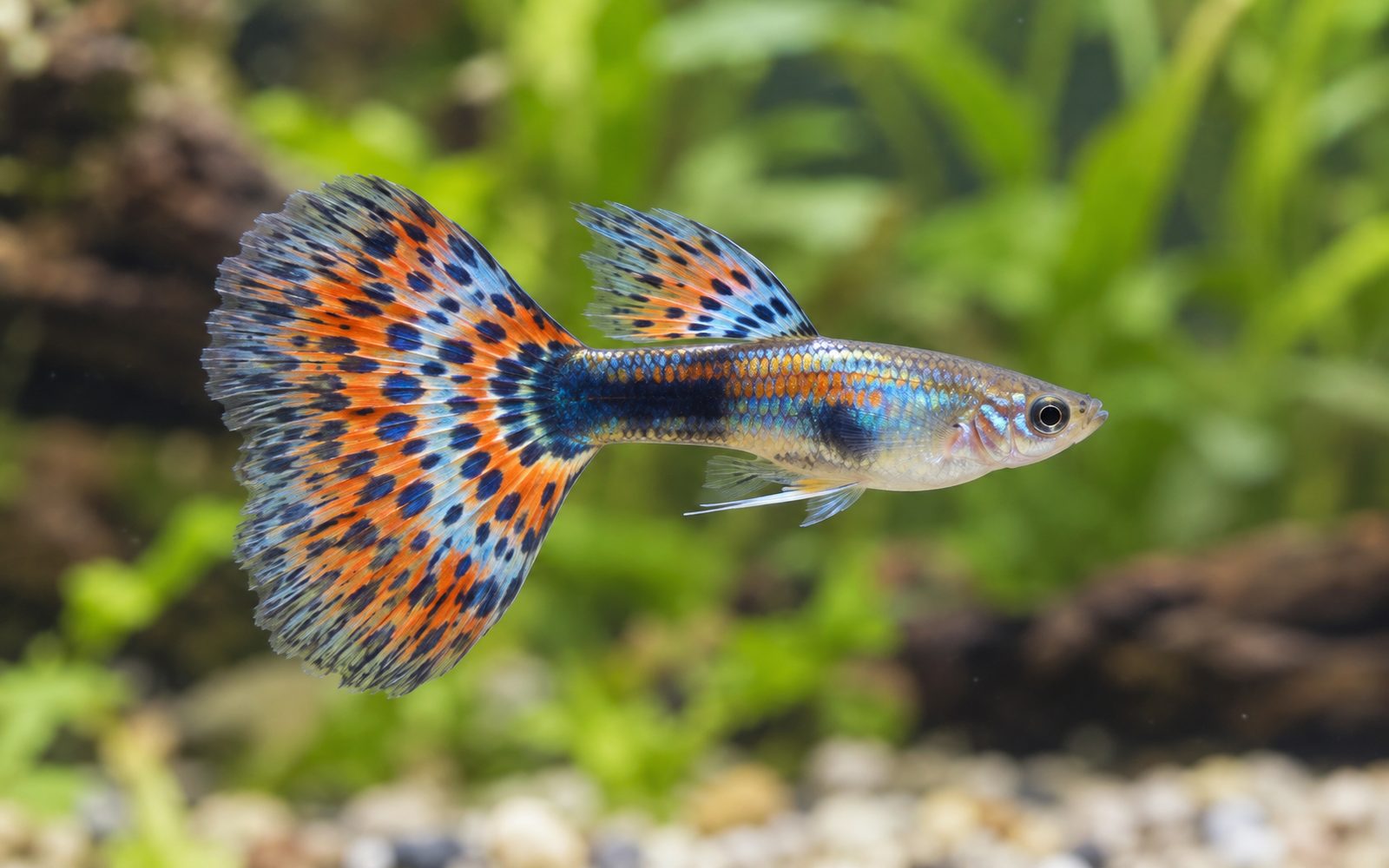
Avoid: species that snap up food quickly, including Endler's livebearers and guppies, any fish it fits into the mouth of, large and curious species.
Group and Colony Structure
It is kept as a colony: at least 6 individuals, about 2 females per male. When the aquarium is densely planted, the fry grow up among the adults and the colony sustains itself. The population grows slowly compared with other livebearers.
Breeding
The female carries embryos at different stages of development at the same time (superfetation). As a result the fry are not born all at once but 1–3 a day over 1–2 weeks. Newborns are 5–7 mm long and immediately eat powdered food and newly hatched brine shrimp. Adults rarely chase the fry; in a densely planted aquarium almost all of them survive.
Health and Common Problems
Hardy. Because of its small size it is sensitive to sudden water changes and medication doses; make water changes small and frequent. Starvation is the most common problem in an aquarium shared with large fish. Inbreeding can lead to small, weak fry over time; adding new blood from time to time is recommended.
Sexing
Males are small and carry a gonopodium that is long relative to body size. Females are nearly twice as large, with a full belly; they have a dark spot on the anal fin as well as on the dorsal fin.
Tank mates
This list is calculated automatically from the species profile and grows as new species are added to the catalog. Try it in the planner for a definite answer.
Usually compatible
 Flame Tetra
 Blackfin Corydoras
 Polystictus Corydoras
 Emerald Cory
 Emerald Dwarf Rasbora
 Porthole Catfish
 Keyhole Cichlid
 Cryptocoryne Parva
 Gold Spot Pleco (L001)
 Guppy
Guppy
Should not be kept together






Hobbyist notes
Things you won't find in books, learned by trial and error. The most helpful ones are on top.
Change history and contributors
- Page created · October 16, 2026