
Water parameters
Overview
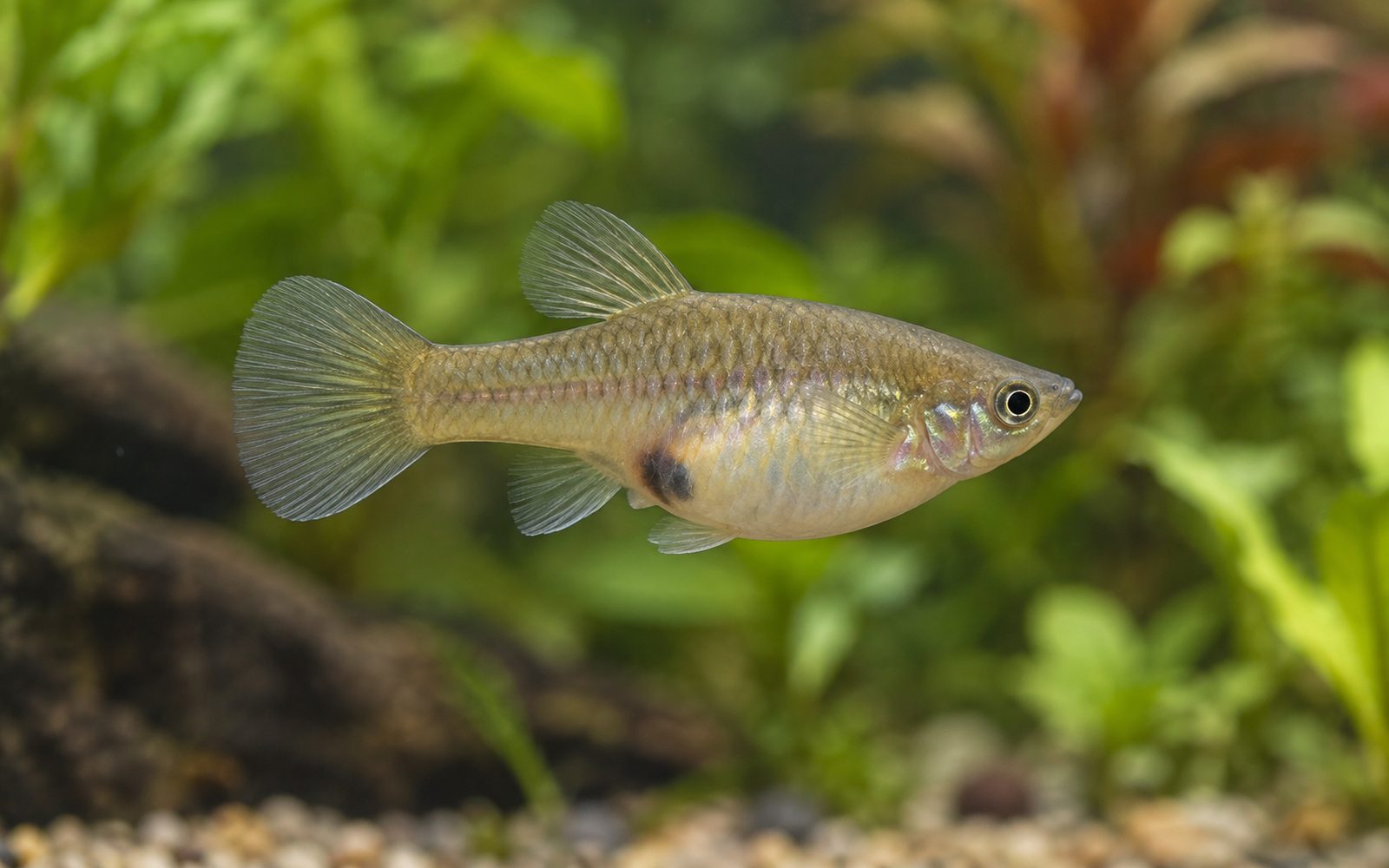
With countless color and tail varieties, the guppy is the most widespread aquarium fish in the world. Males are small (3–3.5 cm) but showy; females are larger (5–6 cm) and plain. Their livebearing, their ability to breed in any conditions and their hardiness make them ideal for beginners.
A warning: because the same lines have been crossed for many years, some fancy guppies in stores are not as hardy as they used to be. Fish from a reliable breeder or hobbyist are generally healthier.
Color and Fin Varieties
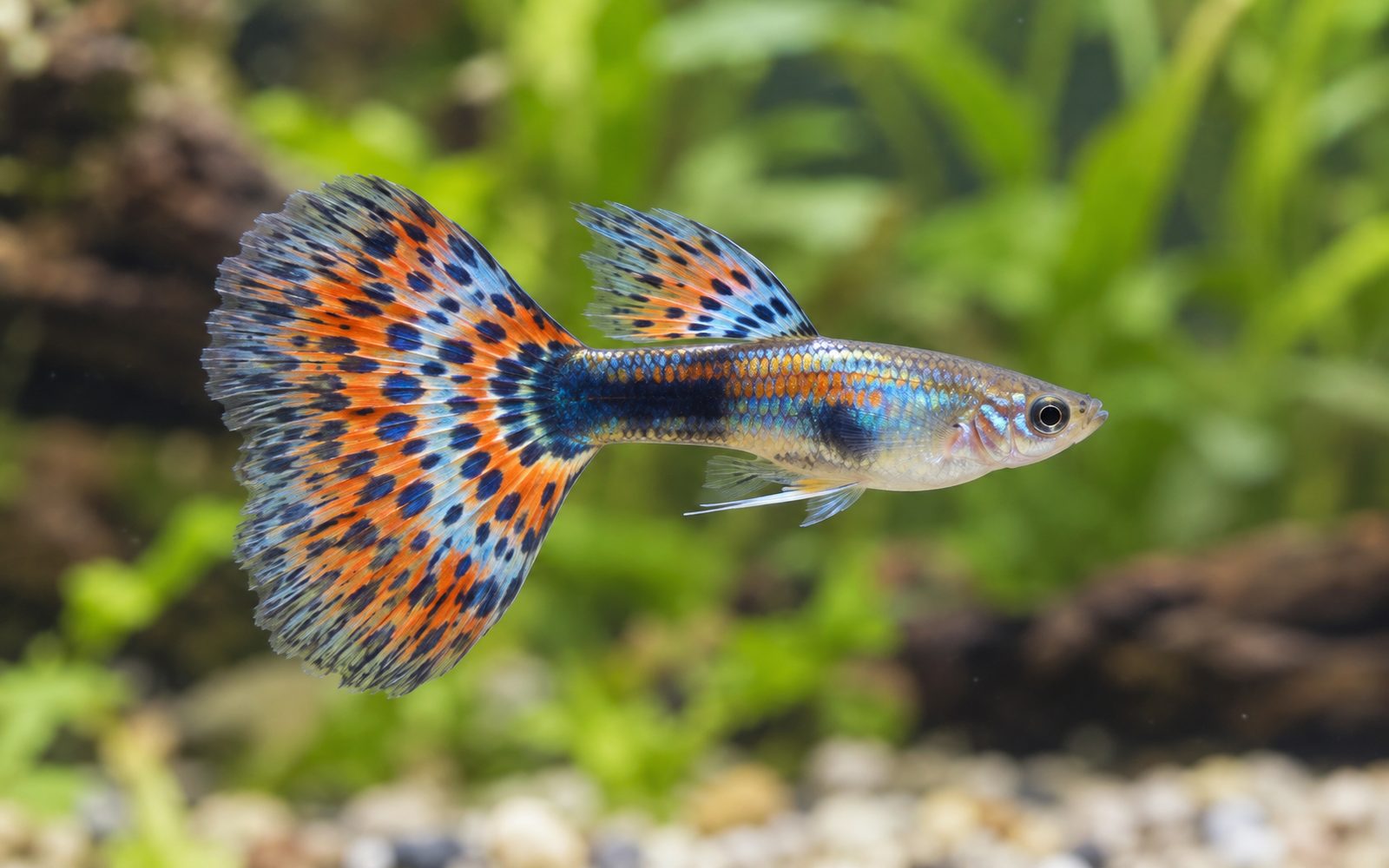
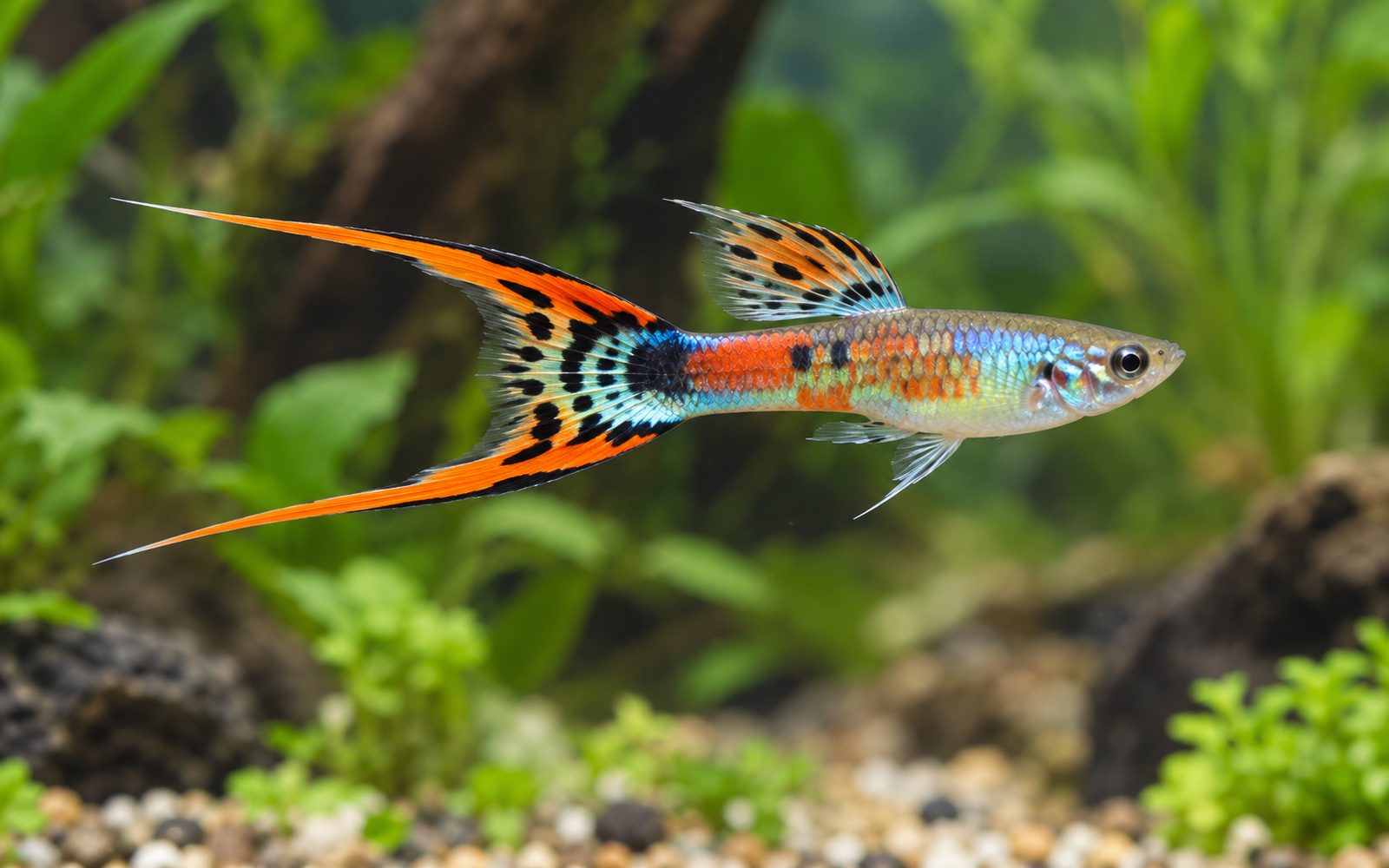
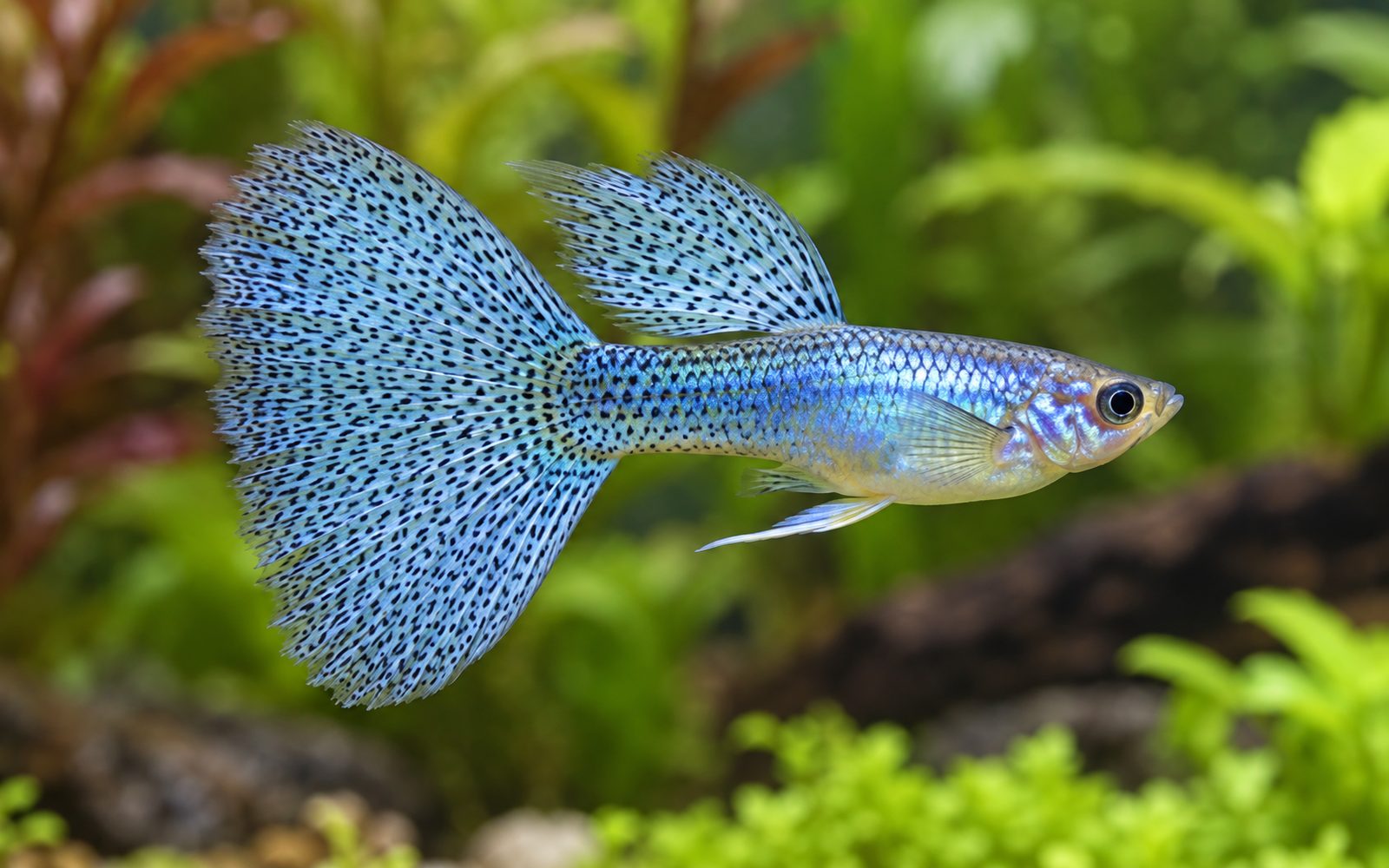
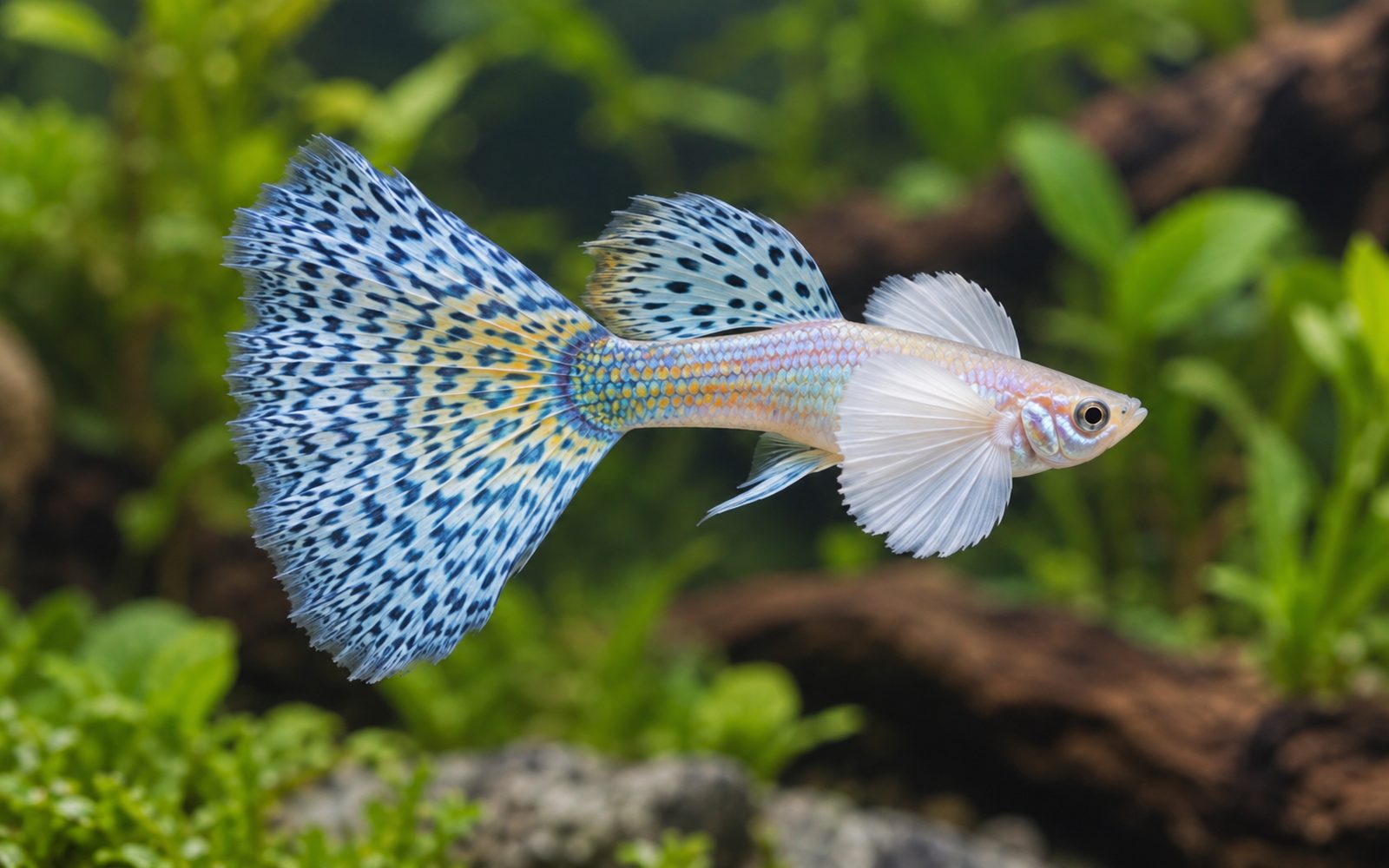
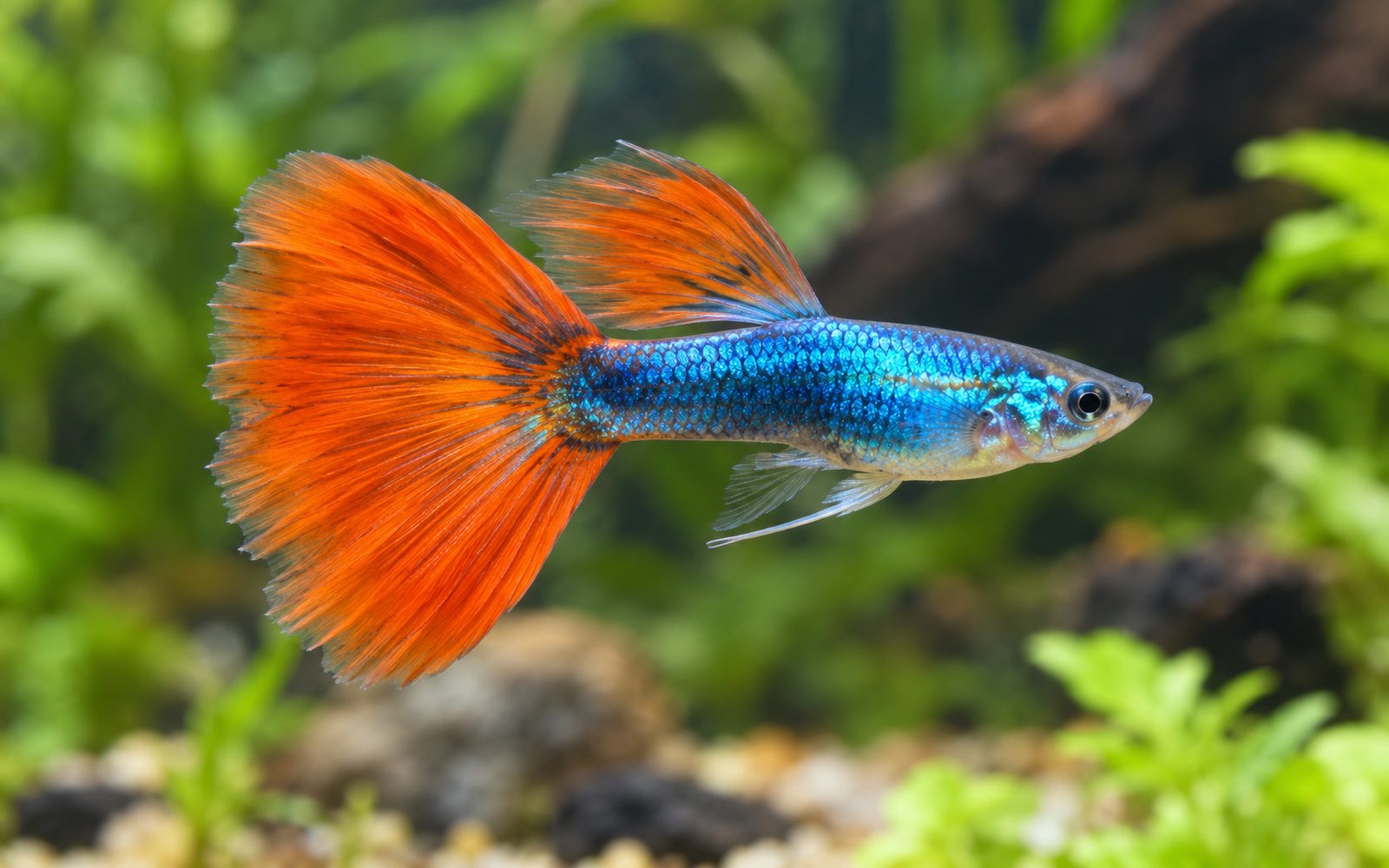
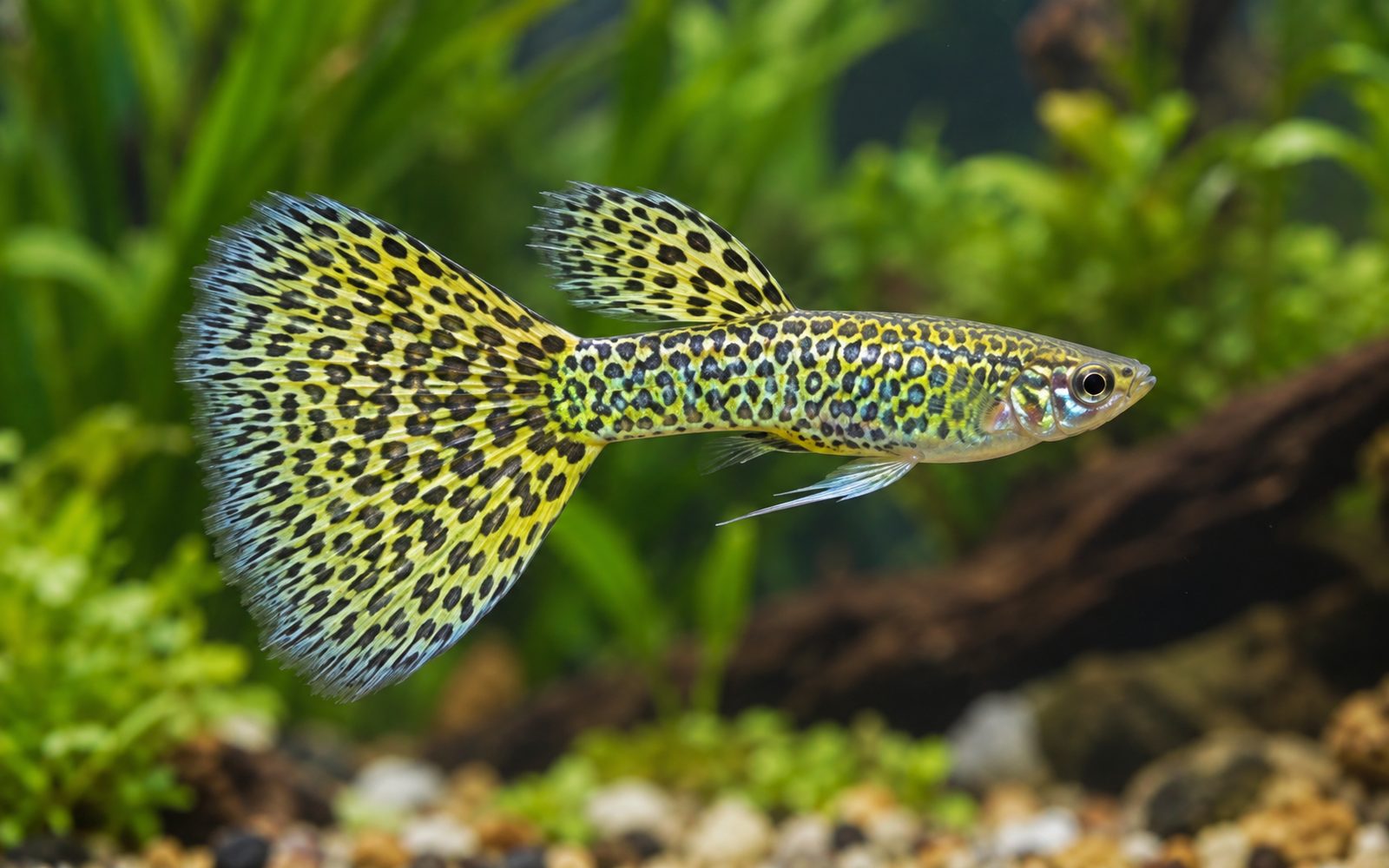
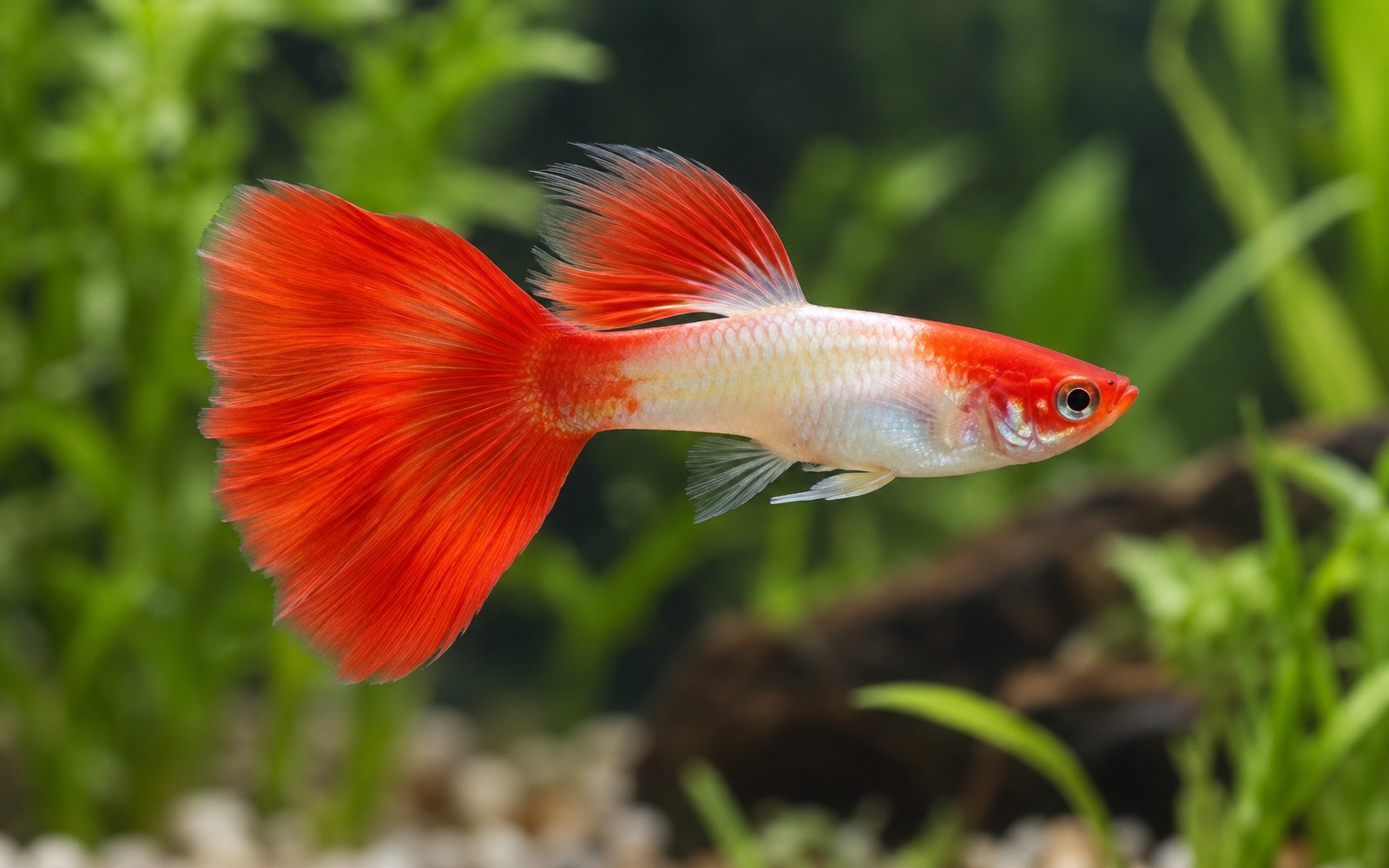
Through more than a century of breeding, the guppy has reached hundreds of varieties. Variety names usually describe two things: color and pattern (cobra, tuxedo, mosaic…) and tail shape (delta, fantail, double sword…). The same fish can be both a "red mosaic" and a "delta tail". The varieties below are described by the males; females mostly have plain bodies and carry a faded version of the variety's color in their tails.
- Cobra (snakeskin): an interlocking pattern of dark rings and mesh on the body resembling snakeskin; the same spotted pattern on the tail. Green, yellow and red tones exist.
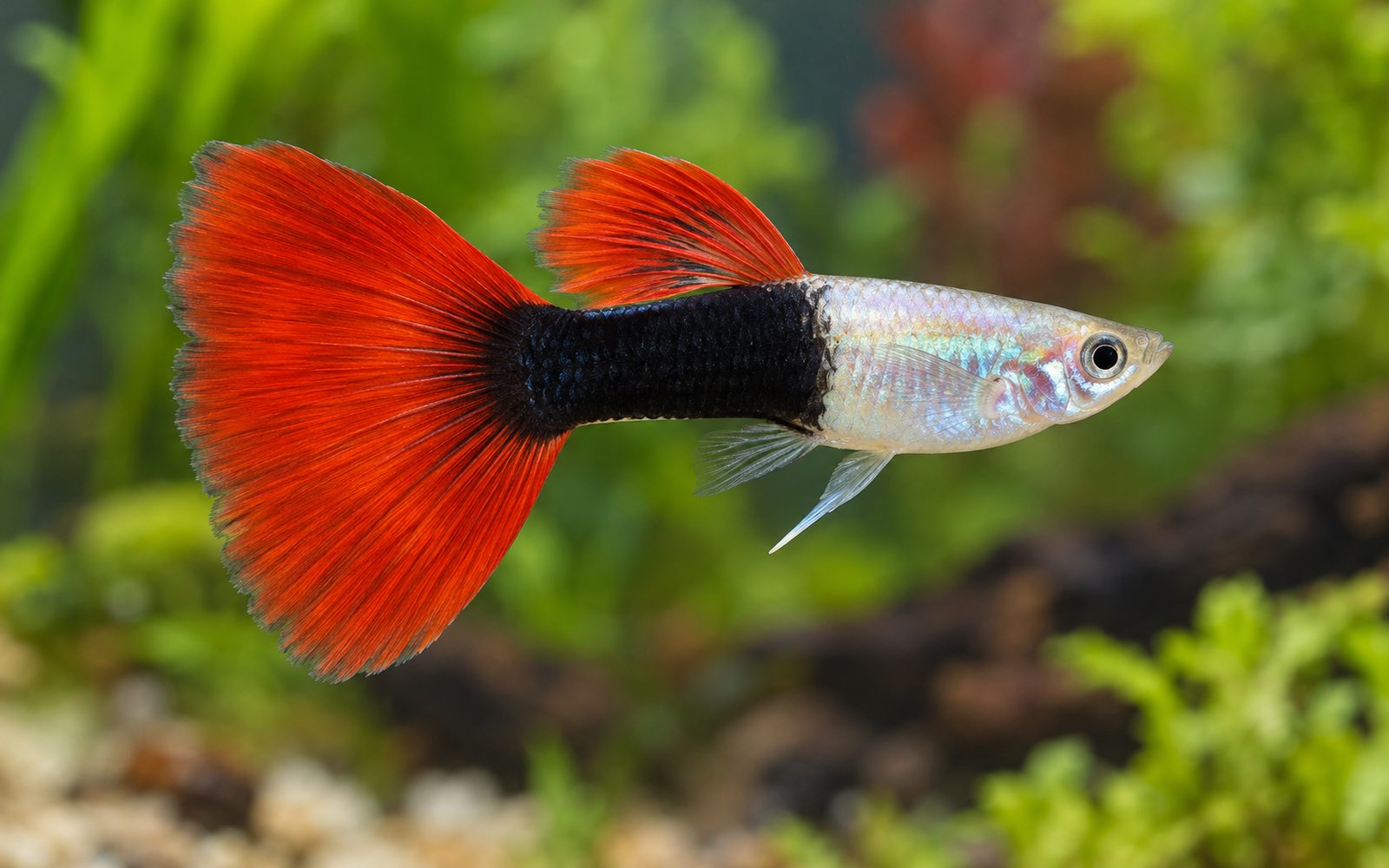
- Tuxedo (half black): the rear half of the body is deep black or navy blue, the front half light-colored. The best known is the "half black red", with a red tail.
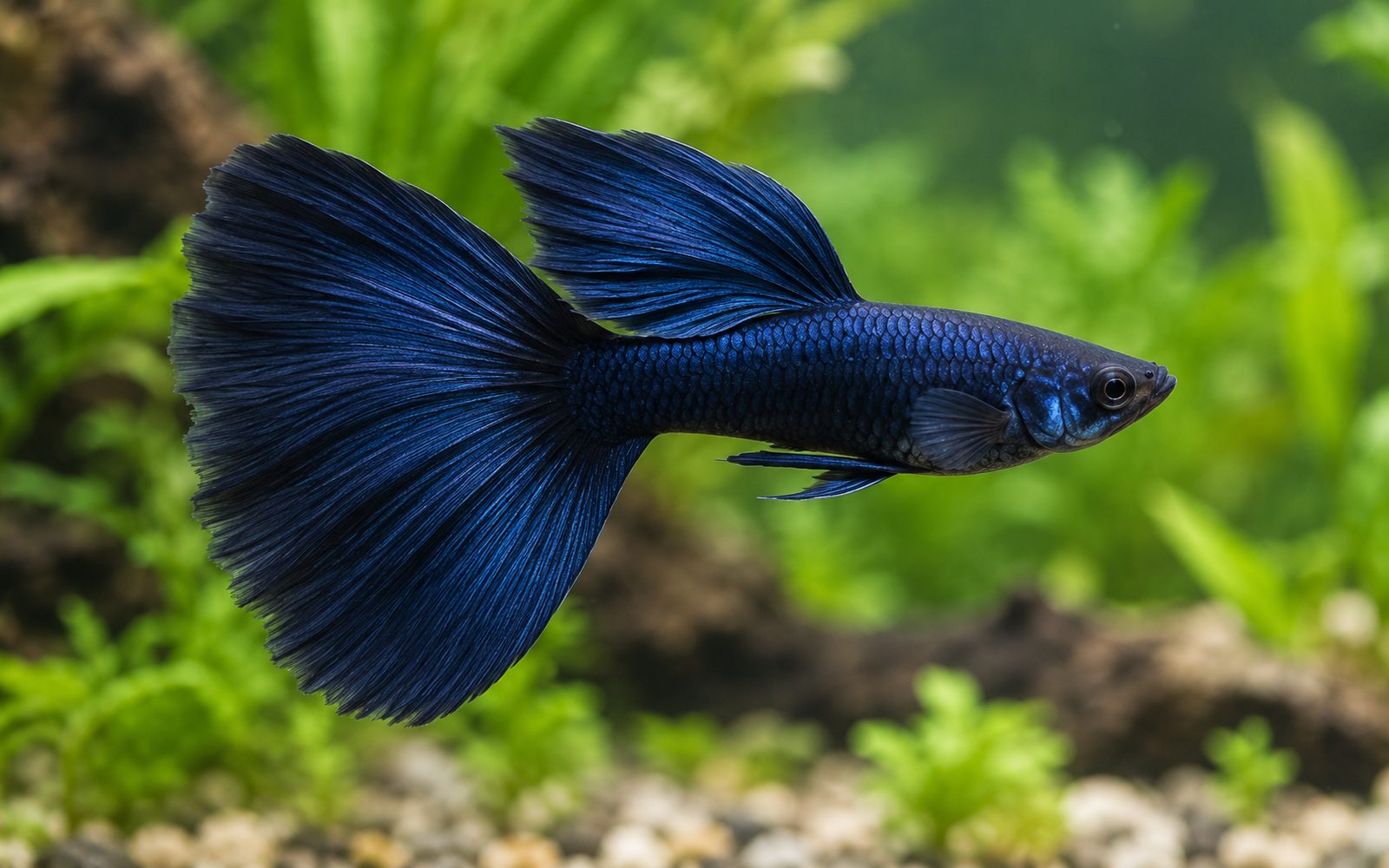
- Moscow: a single, dark, glossy color from head to tail: blue, green, purple or black. It is large with long fins; the color darkens with age.
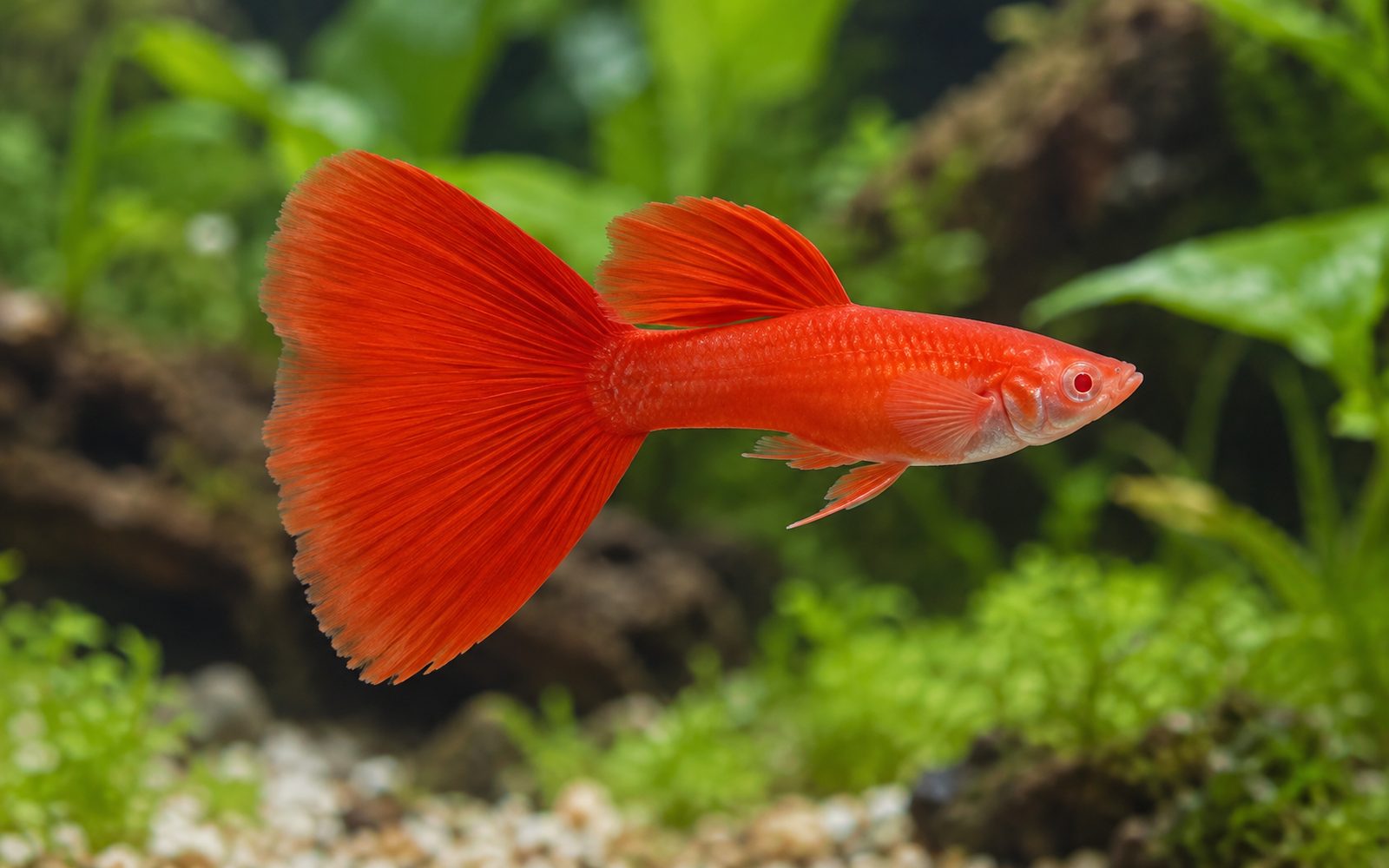
- Full red: the body and all fins are red. The albino form (red eyes) is very common; in a clean line there are no patches of other colors on the body.
- Dumbo (big ear): very large, wing-like pectoral fins. This trait can be combined with other colors (e.g. "dumbo red"); because of its large fins it does not like strong flow.
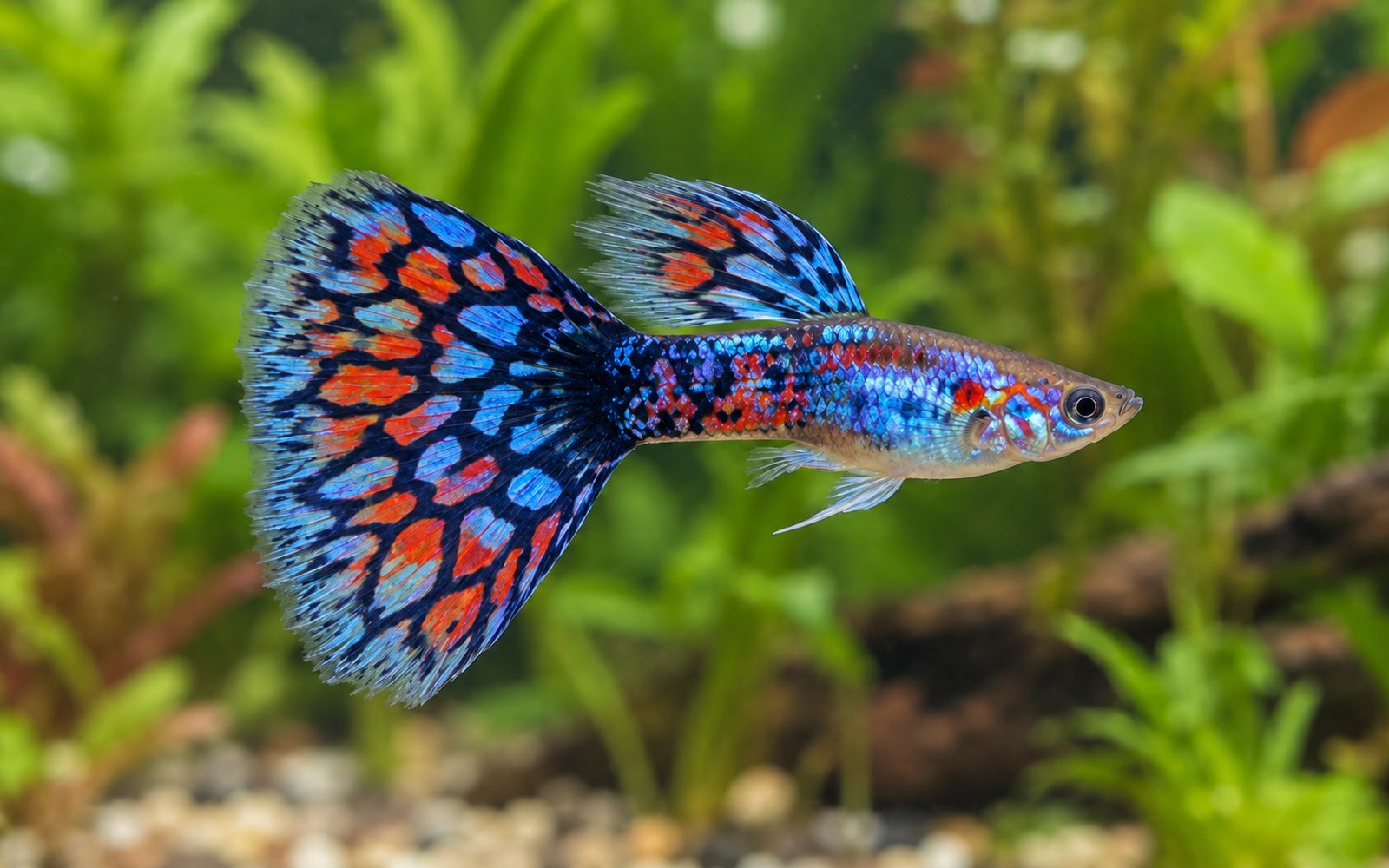
- Mosaic: irregular, intermingling dark blotches on the tail create a mosaic look; dark at the base of the tail, lighter toward the edge. Blue and red mosaics are common.
- Grass: the tail is covered with small, evenly distributed spots resembling grass seeds. Blue grass is the best known.
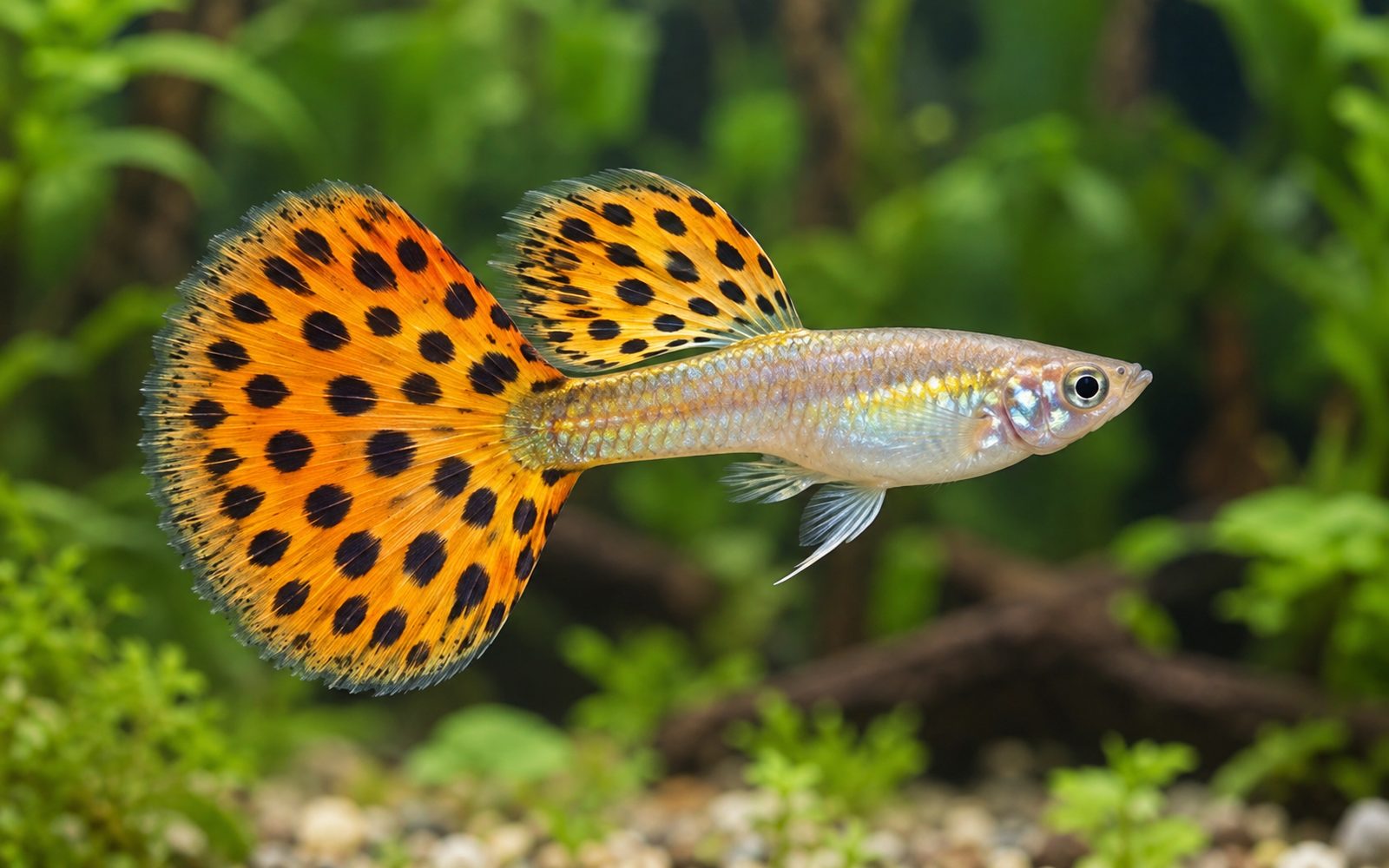
- Leopard: large, distinct, round black spots on a yellow or orange background on the tail.
- Koi: a white–cream body, red head and red tail; it takes its name from its resemblance to koi carp.
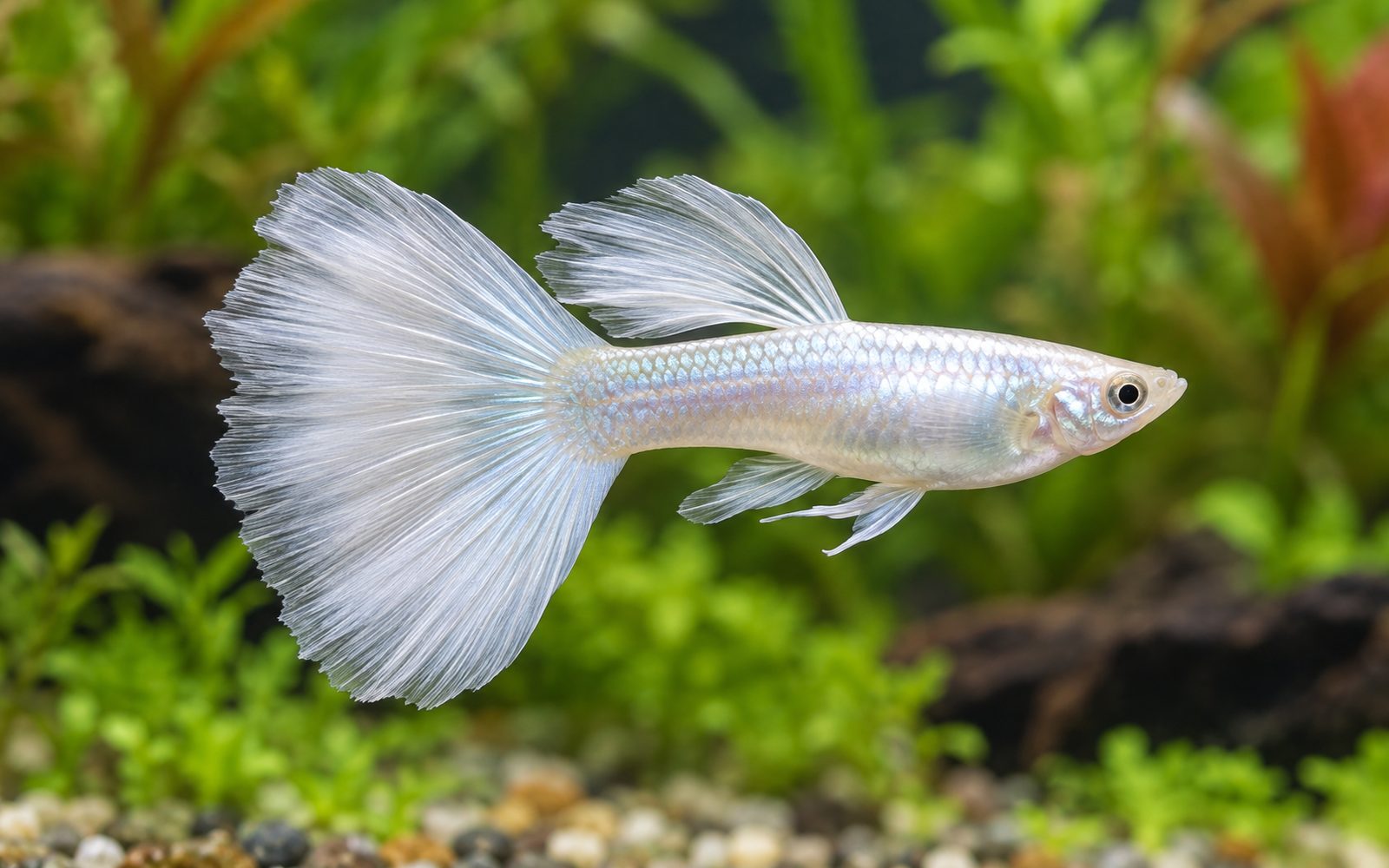
- Platinum: shiny, metallic white–silver scales covering the body; in the "full platinum" form the fins are white as well.
- Japan blue: a bright, metallic turquoise–blue sheen on the front part of the body; the tail is usually orange or red.
- Double sword: two thin extensions from the upper and lower edges of the tail, with a short middle. It should not be confused with the swordtail species; it is a guppy tail shape.
Keeping a line: varieties are preserved only if individuals from the same line are bred among themselves. If different varieties breed together, within a few generations mixed, colorless "hybrid" guppies appear. Those who want a specific variety keep only that line and separate fry that do not meet the color–pattern criteria.
Natural Habitat
In the wild it lives in warm, clear or slightly turbid streams, ponds and ditches; it has adapted even to waters around human settlements. Because it feeds on mosquito larvae, it has been deliberately released in many countries.
Tank Setup
- Volume: 40 liters for a small group, 60 liters or more for a larger one. Because they multiply quickly, a large aquarium is always an advantage.
- Water: 24–26°C is ideal. It likes moderately hard to hard, neutral to slightly alkaline water (pH 7–8); it is prone to disease in very soft, acidic water.
- Plants: dense plants such as java moss and hornwort help the fry hide.
- Flow: long-tailed males tire in strong flow; soften the filter outlet.
Diet
Omnivorous; it accepts almost any food. Make quality flakes or micro granules the staple and add brine shrimp, daphnia or mosquito larvae a few times a week. Foods containing spirulina enhance colors. Feed small amounts often; guppies are never full, and excess food spoils the water.
Behavior and Compatibility
Peaceful and active. Males constantly chase females; for this reason they should be kept with at least 2–3 females per male, or a males-only group should be set up.
Good companions: platies, mollies, corydoras, otocinclus, zebra danios, shrimp.
Avoid: fin-nipping species such as tiger barbs shred the males' long tails. It should not be kept with bettas: a betta may see the guppy's colorful tail as a rival. Large cichlids see guppies as food.
Group and Colony Structure
There are two correct setups for guppies:
- Mixed group: 2–3 females per male. Males constantly chase females; if there are too few females, the females become exhausted, stressed and die early. Fry are inevitable in this setup.
- Males-only group: 5 or more males. There are no fry; the colorful males show off to each other but do not fight seriously.
A females-only group can also be set up, but most females bought from a store are already pregnant. To start, 2 males + 5 females or 6 males in 60 liters is a comfortable group.
Breeding
After a gestation of around 4 weeks, the female gives birth to 20–60 fry. The female can store sperm for months from a single mating; so even if the male is removed she can give birth several more times.
Adults eat the fry. Dense planting is enough to save some of the fry; if more are wanted, the female is moved to a separate tank close to giving birth. The fry are fed finely crushed food and newly hatched brine shrimp from day one and mature in 3–4 months.
Health and Common Problems
- Tail rot: appears after poor water quality or fin injury. Clean water and, if necessary, antibacterial treatment.
- Columnaris ("cotton mouth"): white, cottony patches on the mouth and body. It progresses quickly; early intervention is important.
- Gill and internal parasites: common in store-bought fish. Quarantine and, if necessary, antiparasitic treatment.
Keeping water values stable and avoiding overcrowding prevents most of these problems.
Sexing
Sexing is very easy. The male is small, colorful and long-tailed; its anal fin has been modified into a thin mating organ called the gonopodium. The female is larger and paler; her anal fin is fan-shaped and a dark gravid spot can be seen at the rear of her belly.
Tank mates
This list is calculated automatically from the species profile and grows as new species are added to the catalog. Try it in the planner for a definite answer.
Usually compatible
 Flame Tetra
 Blackfin Corydoras
 Polystictus Corydoras
 Emerald Cory
 Emerald Dwarf Rasbora
 Porthole Catfish
 Keyhole Cichlid
 Cryptocoryne Parva
 Gold Spot Pleco (L001)
 African Glass Catfish
Should not be kept together







Hobbyist notes
Things you won't find in books, learned by trial and error. The most helpful ones are on top.
Change history and contributors
- Page created · October 16, 2026