
Water parameters
Overview
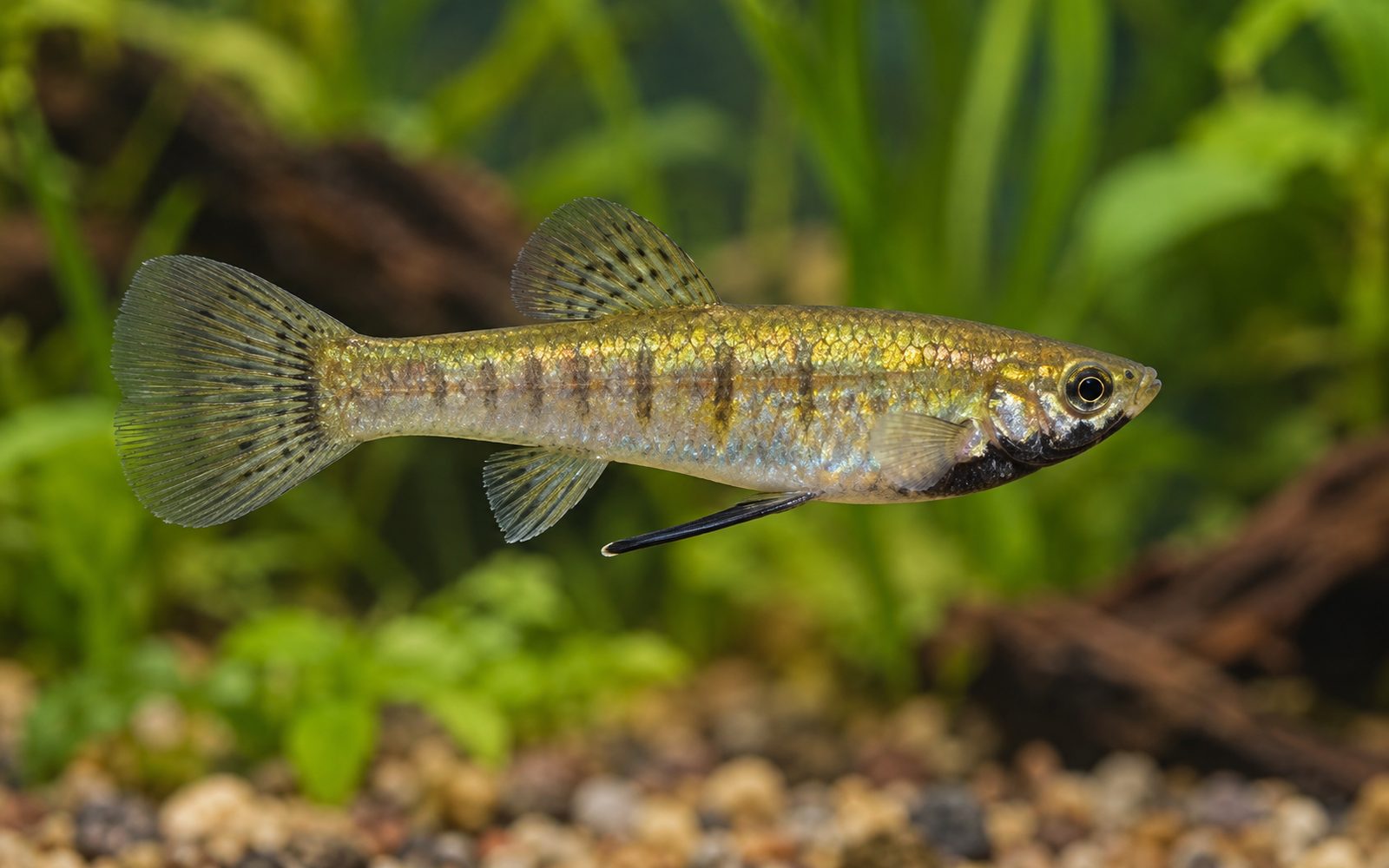
The metallic livebearer is a plain but elegant livebearer endemic to Cuba. Its silvery–olive body shines with golden-yellow and metallic tones in the light; there are thin, faint vertical bars along its sides. In some males the throat, chin and chest area and the long gonopodium are velvet black; in stores these forms are sold as "black-chin".
It is not as showy in color as a guppy or platy, but its docility, small size and hardiness make it a good choice for calm community aquariums. The males' gonopodium is quite long relative to the body and ends in a curved hook.
Natural Habitat
It lives in slow-flowing streams, irrigation canals, ponds and vegetated shore waters in the lowland and hill regions of Cuba. The water is warm, moderately hard and mostly planted; the fish form schools in shallow areas close to the shore.
Tank Setup
- Volume: 54–60 liters for a group of 6–8.
- Water: 23–27°C, pH 7–8, moderate hardness.
- Layout: dense plants, floating plants and moss, with a small open area in the middle. A dark substrate brings out the metallic sheen.
- Maintenance: a 25% water change every week; calm water with gentle flow.
Diet
Omnivorous. Flakes and micro granules, spirulina food, frozen brine shrimp, daphnia and cyclops. Live foods improve colors and the condition of the females. It also grazes microorganisms on algae and plant surfaces.
Behavior and Compatibility
Peaceful and somewhat shy; it becomes bolder in a large group. Males chase females but do not harm them. If kept with large, active species it may lose out in the competition for food.
Good companions: small rasboras, Endler's livebearers, platies, corydoras, otocinclus, dwarf shrimp, nerite snails.
Avoid: large and aggressive species, fin-nipping barbs, large livebearers that snap up food quickly.
Group and Colony Structure
It is kept in small groups: at least 5 individuals, 2–3 females per male. This ratio prevents the females from being chased excessively. Males put on brief displays toward each other but do not fight seriously. Black-chin and plain males live together in the same group without problems.
Breeding
A livebearer. Gestation lasts about 4 weeks; depending on her size, the female gives birth to 10–50 fry. The fry are small but well developed; they eat powdered food, microworms and newly hatched brine shrimp from day one. Adults may eat the fry; in a densely planted aquarium some survive on their own.
Health and Common Problems
Hardy. Fin rot and white spot can appear in poor water, and columnaris in soft water. After shipping it may be shy and pale; this improves within a few days. Quarantine new fish for 2 weeks.
Sexing
Males are smaller and slimmer; they have a gonopodium that is very long relative to body size, with a curved tip. In some males the throat and gonopodium are black. Females are larger and plumper, with a fan-shaped anal fin.
Tank mates
This list is calculated automatically from the species profile and grows as new species are added to the catalog. Try it in the planner for a definite answer.
Usually compatible
 Flame Tetra
 Blackfin Corydoras
 Polystictus Corydoras
 Emerald Cory
 Emerald Dwarf Rasbora
 Porthole Catfish
 Keyhole Cichlid
 Cryptocoryne Parva
 Gold Spot Pleco (L001)
 African Glass Catfish
Should not be kept together






Hobbyist notes
Things you won't find in books, learned by trial and error. The most helpful ones are on top.
Change history and contributors
- Page created · October 16, 2026