
Water parameters
Overview
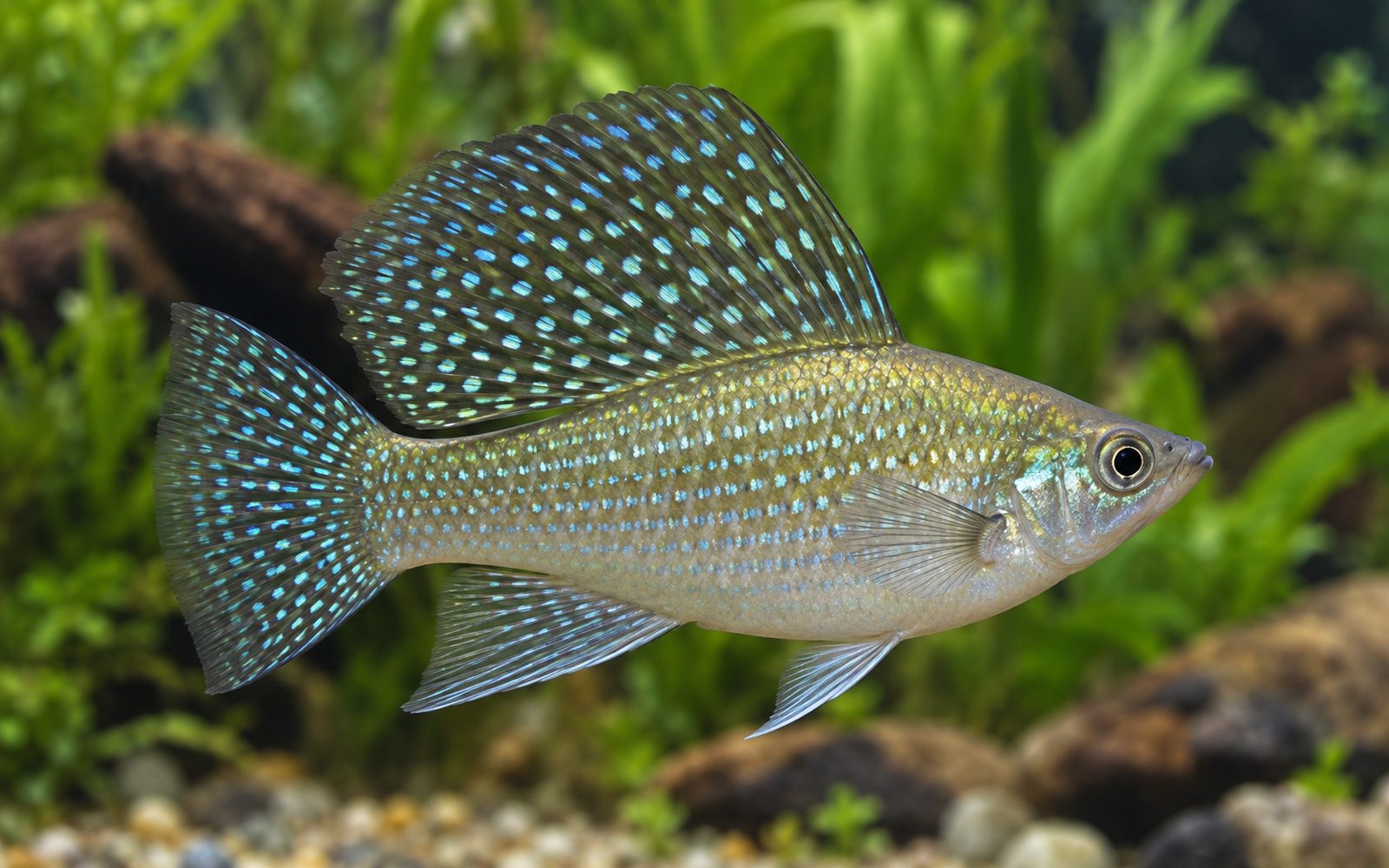
As the name suggests, the giant sailfin molly is the largest of the sailfin mollies. The adult male's dorsal fin has 18–19 rays; in its close relative, the sailfin molly (P. latipinna), this number is around 13–14. As a result the velifera male's sail is both longer and noticeably taller. The body is decorated with rows of shiny spots on a silvery–green background; during courtship the blue–green shimmer on the sail stands out.
The pure wild line is rare in stores. Many of the large, sail-finned fish sold as "sailfin molly" carry some of this species' blood. Because of both its size and its water requirements it is not suited to small aquariums, but to large, hard-water setups.
Natural Habitat
It lives only along the coast of Mexico's Yucatán Peninsula, in seaside lagoons, coastal lakes and brackish waters where fresh water mixes with the sea. These waters are warm and hard, and their salinity varies with the season. Because it is endemic to a narrow area, coastal development and pollution in its habitat directly affect the species.
Tank Setup
- Volume: at least 250 liters and a 120 cm tank length for a small group. A long, deep tank is essential for the sail to develop.
- Water: 25–28°C, pH 7.5–8.5, very hard water. 2–5 g of sea salt per liter noticeably supports its health.
- Cleanliness: a large fish that eats a lot; it needs a strong filter and a 30% water change every week.
- Layout: a wide open area, with tough-leaved, salt-tolerant plants (anubias, java fern) along the edges and stones that grow algae.
Diet
It feeds mainly on plant matter. Spirulina flakes and granules should be the staple; blanched spinach, zucchini and peas should be given regularly. Frozen brine shrimp, mysis or bloodworms are added a few times a week. It constantly grazes soft algae in the aquarium.
Behavior and Compatibility
Peaceful toward other species. Males display to each other by spreading their sails and standing side by side; these displays rarely end in injury. Males pursue females persistently, so more females are kept.
Good companions: sailfin mollies and other large mollies, swordtails, rainbowfish suited to hard, salty water, Ancistrus plecos.
Avoid: species that need soft, acidic water, fin-nipping barbs and tetras, species that cannot tolerate salty water long-term.
Group and Colony Structure
2–3 females per male is recommended. 2 males and 4–6 females is a suitable start in 250 liters. More than one male brings out the displays and reduces the pressure a single male puts on the females. If kept in the same aquarium as the sailfin molly it hybridizes; those who want a pure line keep the species separate.
Breeding
A livebearer. Gestation is around 4–6 weeks; large females can give birth to dozens, sometimes more than a hundred, fry at a time. The fry are born large and are fed crushed flakes, powdered spirulina and newly hatched brine shrimp from day one. The males' sail develops late; in some males it can take a year to reach full size.
Health and Common Problems
- Shimmy: a sign of soft water or low temperature; it usually goes away once salt and hardness are corrected.
- Columnaris and fungus: common in unsalted, soft and dirty water.
- Torn sails: a cramped aquarium and sharp decor wear down the sail.
- Quarantine: large mollies are sensitive to shipping stress; keep newcomers separate for 2 weeks.
Sexing
In males the anal fin has been modified into a gonopodium, and they have a huge, tall dorsal fin. Females have larger bodies and deep bellies; their dorsal fins are small and rounded, and their anal fins are fan-shaped.
Tank mates
This list is calculated automatically from the species profile and grows as new species are added to the catalog. Try it in the planner for a definite answer.
Usually compatible
 Yellow Regal Peacock
 Firemouth Cichlid
 Rainbow Cichlid
 Red Hump Eartheater
 Egyptian Mouthbrooder
 Yellow Tail Acei
Amazon Molly
Yellow Tail Acei
Amazon Molly
 Butterfly Goodeid
American Flagfish
Anatolian Killifish
Butterfly Goodeid
American Flagfish
Anatolian Killifish
Should not be kept together






Hobbyist notes
Things you won't find in books, learned by trial and error. The most helpful ones are on top.
Change history and contributors
- Page created · October 16, 2026