
Water parameters
Overview
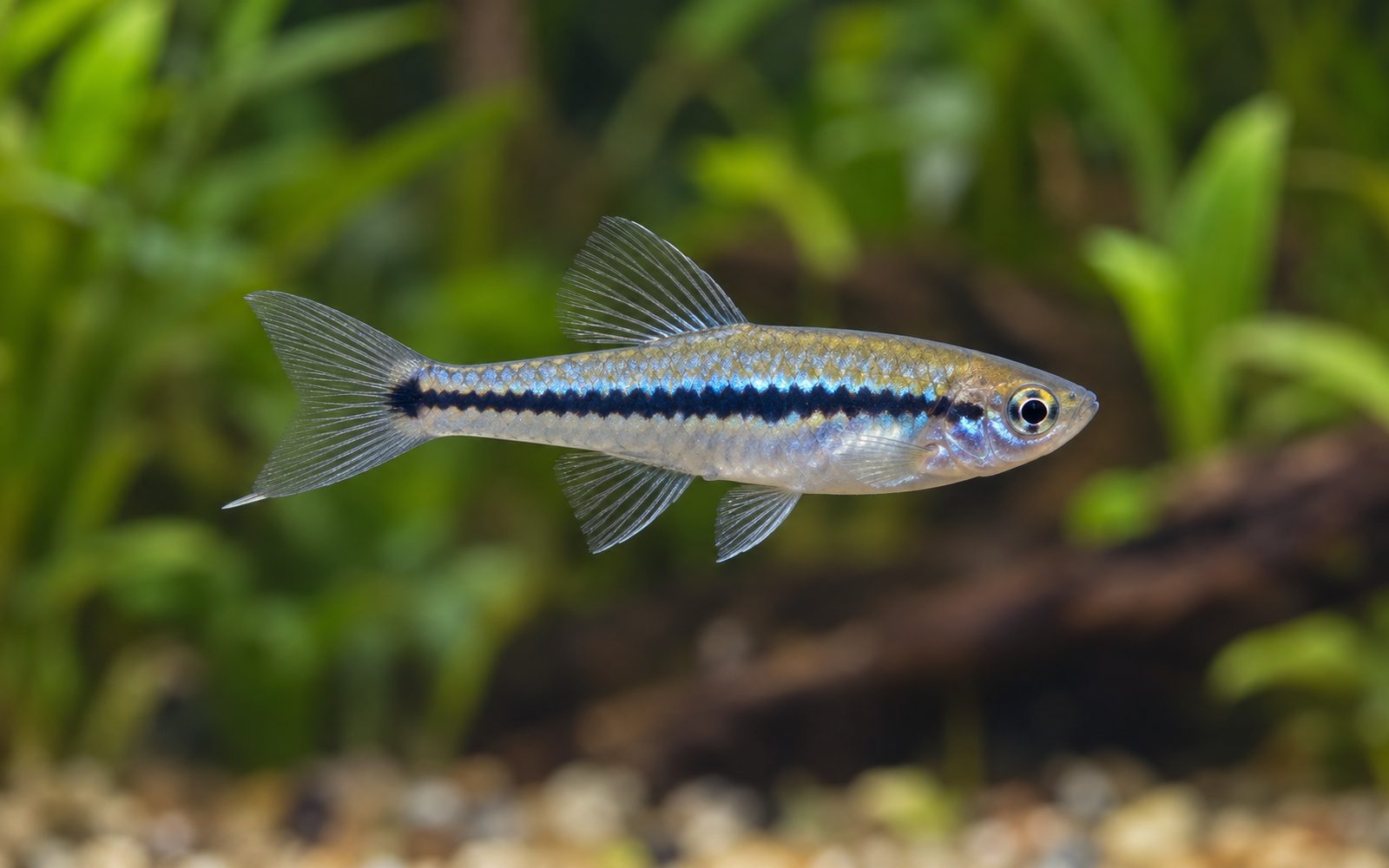
The pygmy swordtail is the smallest species among the swordtails. Despite its name, most males either have no sword at all or only a short one, no more than a small point on the lower edge of the tail. The body is silvery and shimmers bluish in the light; there is a dark zigzag stripe along the sides.
Being calm, docile and small makes it attractive for nano aquariums and shrimp setups. Unlike pet-store swordtails, however, it is shy and needs clean, oxygen-rich water. For this reason it is better suited to hobbyists with an established clean-water routine than to beginners.
Natural Habitat
In Mexico it lives in the clear, flowing and planted stretches of a few rivers in the Pánuco basin. The water is moderately hard, rich in oxygen and at a relatively stable temperature year-round. The fish form groups along the banks where the current slows, among plants and stones.
Tank Setup
- Volume: 40 liters for a small colony; a more balanced group can be established in 60 liters.
- Water: 23–25°C, pH 7–8, moderate hardness. Oxygen is important; use a filter that agitates the surface.
- Flow: gentle flow; the fish do not like still, warm water.
- Layout: dense plants, stones and roots, with a small open area in the middle. A dark substrate makes the fish bolder.
Diet
Omnivorous, with a small mouth. Micro granules, fine flakes, frozen cyclops, brine shrimp and daphnia. Live foods improve colors and the condition of the females. It also grazes algae and biofilm.
Behavior and Compatibility
Extremely peaceful and somewhat shy. It swims more comfortably in a group; if kept in small numbers it hides. Males court females calmly and rarely fight among themselves.
Good companions: dwarf shrimp, otocinclus, small corydoras, Boraras and small rasboras, nerite snails.
Avoid: large, active fish, fin-nipping species, other Xiphophorus species (hybridization).
Group and Colony Structure
It is kept as a colony: at least 6, ideally 10 or more individuals, about 2 females per male. In a large group the fish swim more boldly and the females are not worn out by the attention of a single male. To keep the line pure it should not be kept with other Xiphophorus species.
Breeding
A livebearer. Gestation lasts about 4 weeks; the female gives birth to a small number of fry (usually 5–20). The fry are small and are fed powdered food, microworms and newly hatched brine shrimp. Adults rarely chase the fry; in a densely planted aquarium the colony grows slowly but steadily.
Health and Common Problems
Sensitive to poor water quality and low oxygen; fading color, clamped fins and hiding are the first signs. Losses may occur after shipping; acclimate the fish slowly and quarantine them for 2 weeks.
Sexing
Males are smaller and slimmer and have a gonopodium; some have a short point on the lower edge of the tail. Females are slightly larger, with a full belly and a fan-shaped anal fin.
Tank mates
This list is calculated automatically from the species profile and grows as new species are added to the catalog. Try it in the planner for a definite answer.
Usually compatible
 Flame Tetra
 Blackfin Corydoras
 Polystictus Corydoras
 Emerald Cory
 Emerald Dwarf Rasbora
 Porthole Catfish
 Keyhole Cichlid
 Cryptocoryne Parva
 Gold Spot Pleco (L001)
 African Glass Catfish
Should not be kept together







Hobbyist notes
Things you won't find in books, learned by trial and error. The most helpful ones are on top.
Change history and contributors
- Page created · October 16, 2026