
Water parameters
Overview
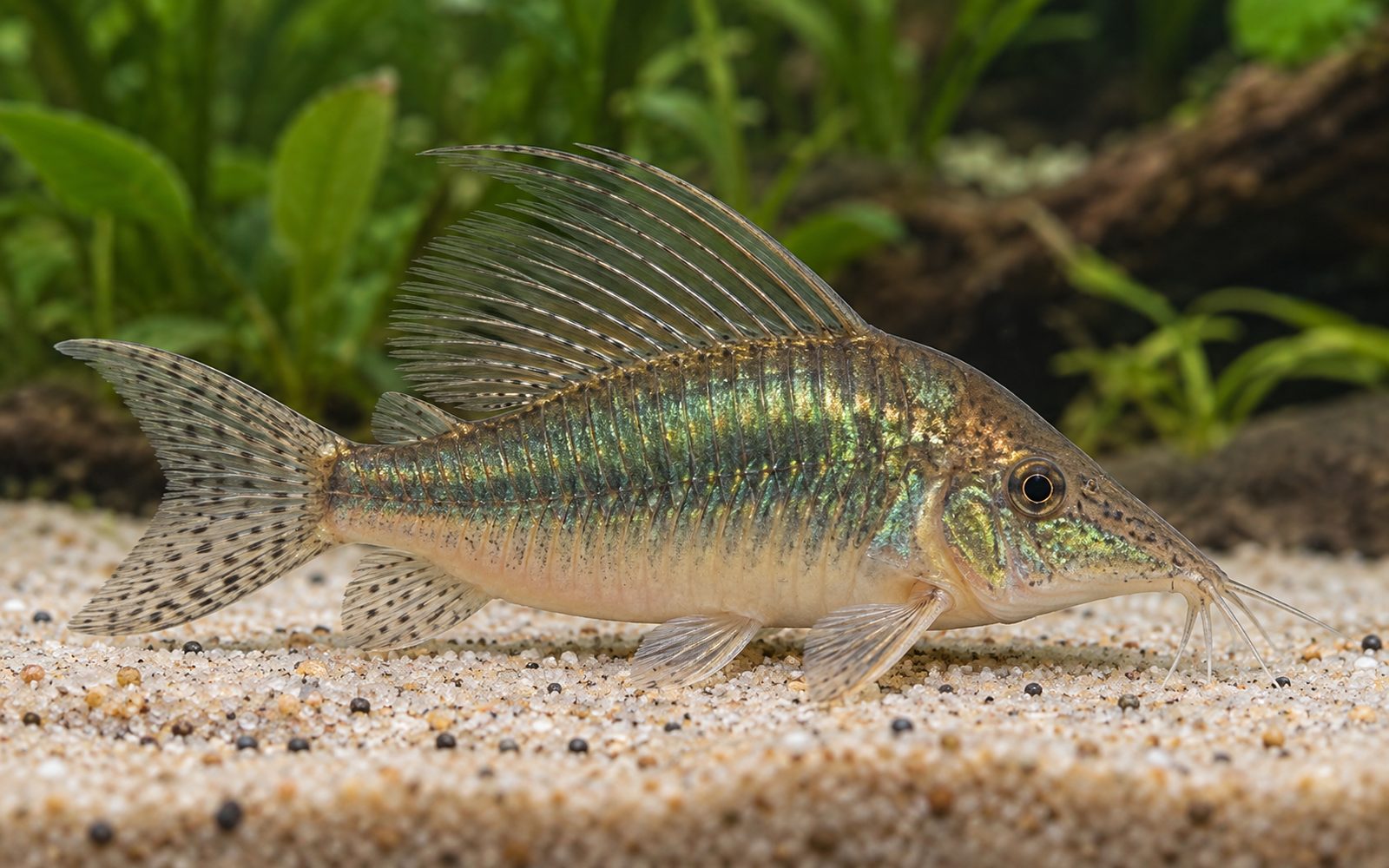
Brochis multiradiatus is a close relative of the emerald corydoras (Brochis splendens) and, like it, carries a metallic green–bronze sheen. It is distinguished by two clear features: its long, pointed snout (the source of the name "hognose") and a very long dorsal fin of 17–18 rays that runs along the back. Its scientific name also describes this "many-rayed" fin. Adults reach 8–9 cm. It comes from the Napo basin of Ecuador and Peru and is found in the trade far less often than the emerald corydoras.
Tank Setup
- At least 120 liters for a group of 5–8; a large footprint.
- Very fine, soft sand substrate; it digs deep into the sand with its long snout.
- 22–26°C, soft to moderately hard, clean and well-oxygenated water.
- Regular water changes and a mature aquarium.
Diet
Sinking tablets and granules, frozen bloodworms, tubifex and brine shrimp. It searches for food buried in the sand with its snout; a diet supplemented with frozen food suits it well.
Behavior and Compatibility
A peaceful, calm bottom dweller; it sifts the bottom in a group. Despite its size, it leaves fish and shrimp alone.
Good companions: medium-sized tetras, peaceful barbs, gouramis, angelfish, dwarf cichlids, other corydoras.
Avoid: aggressive cichlids that claim the bottom, large predators, sharp substrate.
A short profile for this species
The Hognose Brochis page has the basics, but the sections below have not been written yet. If you keep this species, write a section from your own experience; it will be published under your name after editor approval.
Tank mates
This list is calculated automatically from the species profile and grows as new species are added to the catalog. Try it in the planner for a definite answer.
Usually compatible
 Flame Tetra
 Blackfin Corydoras
 Polystictus Corydoras
 Emerald Betta
 Emerald Cory
 Emerald Dwarf Rasbora
 Porthole Catfish
 Keyhole Cichlid
 Geophagus surinamensis
 Cryptocoryne Parva
Should not be kept together






Hobbyist notes
Things you won't find in books, learned by trial and error. The most helpful ones are on top.
Change history and contributors
- Page created · October 16, 2026