
Water parameters
Overview
The Mekong puffer is recognized by its pointed head, which resembles an arrowhead. It is an ambush predator: half-buried in the substrate or sand, it waits without moving for hours or even days and catches prey passing nearby in a single strike. It can match its color to the substrate. It reaches around 15 cm and is a fish with personality that recognizes its owner and comes alive at feeding time.
Tank Setup
- At least 100 liters for a single individual; a large footprint.
- Fine sand substrate and a few rocks and roots; an area where it can rest half-buried.
- 25–27°C, water close to neutral; no salt needed.
- As a puffer it fouls the water heavily; a good filter and regular water changes are essential.
Diet
Carnivorous. Offer snails, shrimp, mussels and fish fillet; shelled foods are needed to wear down the teeth. As an ambush predator it eats infrequently; two to three meals a week are enough for adults.
Behavior and Compatibility
Although it looks motionless, it is extremely aggressive; it bites or eats any fish that comes near it.
Good companions: none; it must be kept alone.
Avoid: all fish, shrimp, snails and other puffers.
A short profile for this species
The Mekong Puffer page has the basics, but the sections below have not been written yet. If you keep this species, write a section from your own experience; it will be published under your name after editor approval.
Tank mates
This list is calculated automatically from the species profile and grows as new species are added to the catalog. Try it in the planner for a definite answer.
Usually compatible
 Banded Jewel Cichlid
 Spotted Tilapia
 Flowerhorn
 Jack Dempsey
 Redhead Cichlid
 Red Devil Cichlid
 Red Terror Cichlid
 Convict Cichlid
 Cryptocoryne Parva
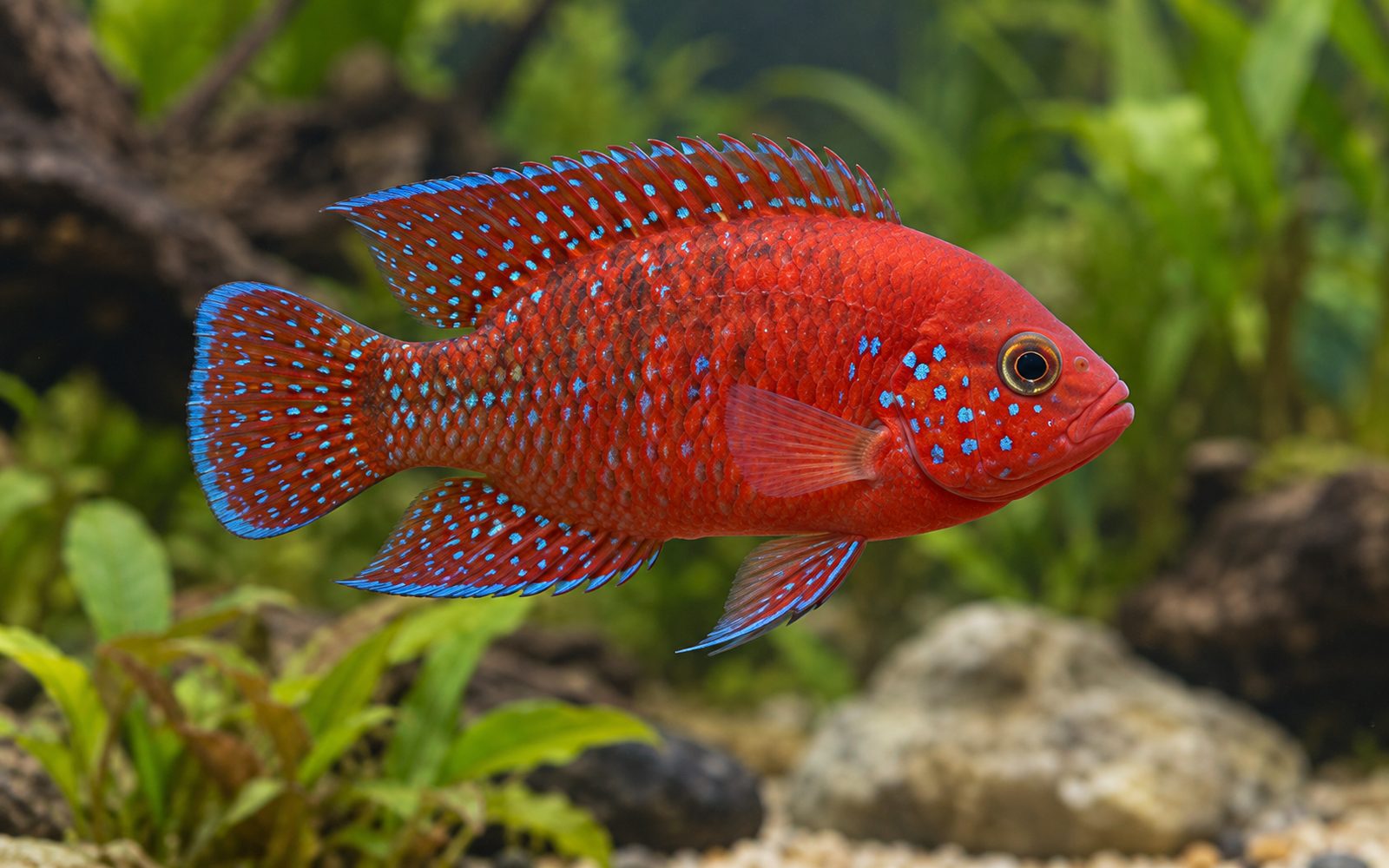 Lifalili Jewel Cichlid
Should not be kept together








Hobbyist notes
Things you won't find in books, learned by trial and error. The most helpful ones are on top.
Change history and contributors
- Page created · October 16, 2026